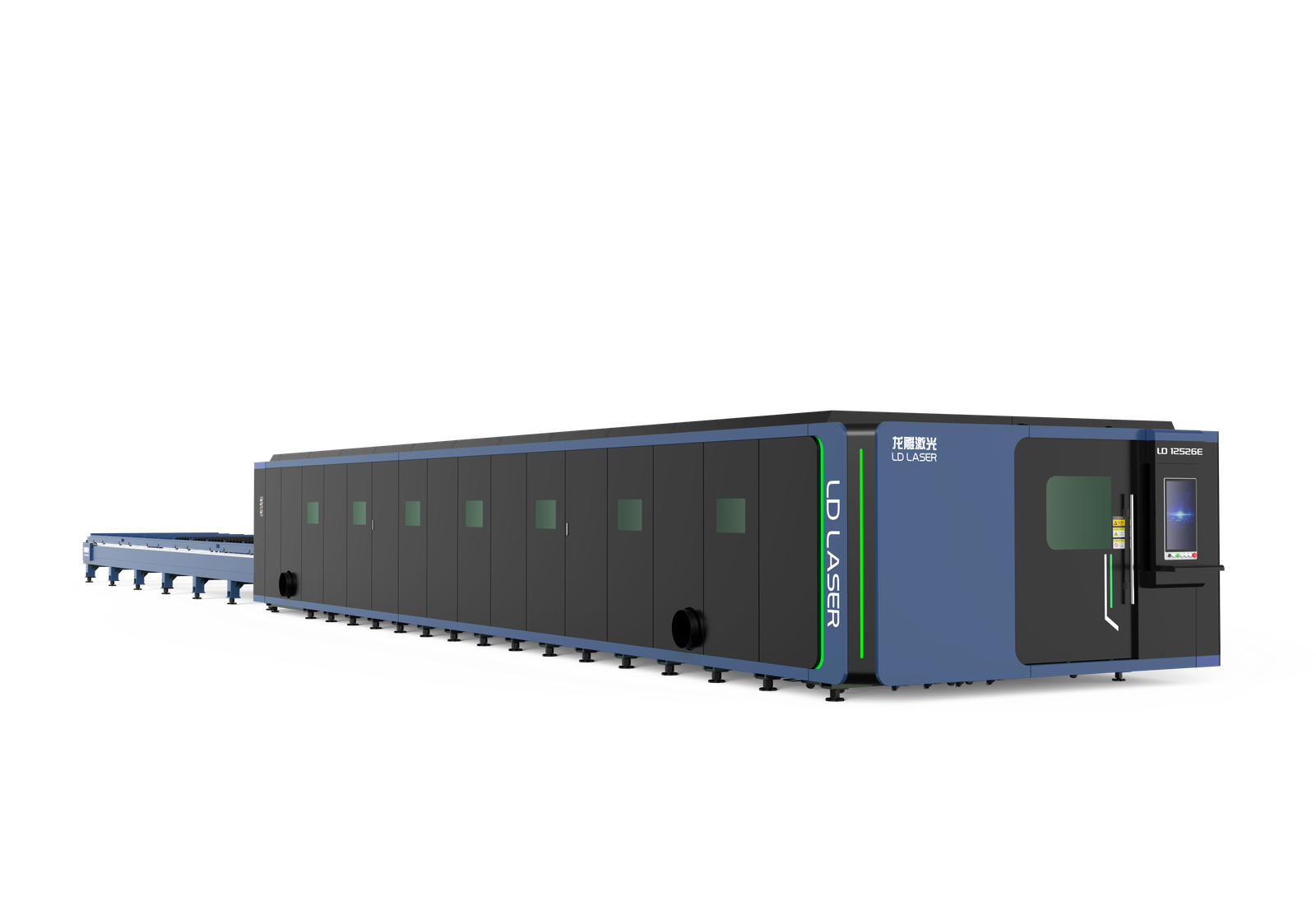
Modern tube laser systems face a persistent challenge where material waste typically ranges from 15-25% of total stock due to unusable end remnants and inefficient cutting sequences. Traditional approaches leave substantial tail materials that accumulate as scrap, directly impacting manufacturing margins and material costs. Zero tail material cutting technology addresses this inefficiency through algorithmic optimization and adaptive processing capabilities. The quantifiable benefits extend beyond immediate cost reduction, creating systematic improvements that fundamentally transform operational economics.
Klíčové poznatky
Advanced nesting algorithms optimize part placement and cutting sequences to minimize spacing requirements and eliminate tail waste.
Zero tail systems increase material utilization rates from 85-90% to 98-99% efficiency through precise tube positioning and cutting.
Automated tube loading and servo-driven chuck mechanisms reduce setup times by 20-30% while maintaining cut quality.
Real-time parameter adjustment and predictive kerf compensation account for material variations and thermal effects during cutting.
Implementation delivers 15-25% material savings, reducing waste handling costs and environmental impact for tube processing operations.
Understanding Traditional Tube Cutting Waste and Its Impact on Manufacturing Costs
When manufacturers utilize conventional tube cutting methods, material waste emerges as a significant cost driver that directly impacts operational profitability. Traditional cutting approaches generate substantial tail material—the unusable remnant sections that remain after completing cutting operations. This waste typically ranges from 3-8% of total material volume, translating to thousands of dollars in lost material costs annually for medium-scale operations.
The economic impact extends beyond raw material losses. Tail waste increases material handling requirements, storage needs, and disposal costs while reducing overall equipment efficiency. Manufacturing facilities experience decreased throughput as operators must frequently replace shortened tubes and manage accumulated waste materials.
Conventional cutting methods also create scheduling inefficiencies when operators attempt manual optimization to minimize waste. These efforts often result in extended setup times and reduced production rates. Advanced waste reduction strategies become essential for maintaining competitive margins, particularly in high-volume manufacturing environments where material costs represent 40-60% of total production expenses.
Advanced Nesting Algorithms and Cutting Sequence Optimization Techniques
Modern tube laser systems address these waste challenges through sophisticated nesting algorithms that mathematically enhance part placement and cutting sequences to eliminate tail material generation. These advanced computational methods analyze part geometries, material properties, and cutting parameters to determine ideal arrangements that maximize tube utilization while maintaining production efficiency.
Contemporary nesting optimization employs several critical strategies:
- Dynamic part rotation algorithms that evaluate multiple angular orientations to minimize spacing requirements between components
- Multi-pass cutting sequence planning that prioritizes structural integrity during intermediate cutting stages
- Real-time material property assessment that adjusts cutting parameters based on tube wall thickness variations
- Predictive kerf compensation modeling that accounts for laser beam characteristics and thermal effects
These systems achieve sequence efficiency through continuous analysis of cutting path lengths, torch movements, and pierce point optimization. Advanced software integrates machine learning capabilities to refine nesting patterns based on historical cutting data, resulting in measurable reductions in material waste and improved cycle times.
Technology Components Enabling Zero Tail Material Processing
Three fundamental technology components form the backbone of zero tail material processing systems in tube laser operations. Advanced laser technology serves as the primary cutting mechanism, featuring high-precision beam control systems that maintain consistent cut quality throughout the entire tube length. These systems incorporate adaptive power modulation and real-time focal point adjustment to compensate for material variations and positioning tolerances.
Sophisticated material handling systems constitute the second critical component, utilizing servo-driven chuck mechanisms and automated tube loading equipment. These systems guarantee precise tube positioning and continuous material flow while minimizing setup times between cutting cycles.
The third component involves integrated measurement and feedback systems that monitor tube dimensions, detect material inconsistencies, and adjust cutting parameters dynamically. Laser interferometry and vision-based sensing technologies provide real-time data for maintaining peak cutting conditions, enabling operators to achieve complete material utilization without compromising part quality or dimensional accuracy.
Quantifying Benefits: Cost Savings, Efficiency Gains, and Environmental Impact
Implementation of zero tail material cutting systems delivers measurable financial returns through multiple operational vectors. Cost reduction manifests through eliminated waste material expenses, reduced raw material procurement requirements, and decreased scrap handling costs. Manufacturing facilities report 15-25% material savings when implementing thorough zero tail protocols.
Resource efficiency improvements extend beyond material conservation to encompass operational parameters:
- Material utilization rates increase from typical 85-90% to 98-99% efficiency levels
- Setup time reduction of 20-30% through automated nesting and cutting sequences
- Inventory management optimization requiring 15-20% less raw material stock
- Labor cost savings through reduced material handling and waste processing activities
Environmental impact metrics demonstrate significant improvements in carbon footprint reduction. Manufacturing operations achieve measurable decreases in waste stream volumes, transportation requirements for raw materials, and energy consumption per finished component. These combined factors establish zero tail material cutting as a financially and environmentally sustainable manufacturing approach.
Implementation Strategies and Best Practices for Zero Tail Cutting Systems
Successful deployment of zero tail cutting systems requires systematic planning and methodical execution across multiple operational domains. Initial implementation begins with thorough material flow analysis, identifying current waste patterns and establishing baseline metrics for subsequent performance evaluation. Operators must recalibrate cutting techniques to accommodate continuous processing workflows, eliminating traditional stop-start cycles that generate remnant materials.
Software integration represents a critical component, requiring precise programming of cutting sequences and material handling protocols. Production scheduling algorithms must be optimized to maximize tube utilization while maintaining quality standards. Personnel training focuses on new operational procedures, emphasizing real-time monitoring and adaptive control strategies.
Quality assurance protocols require modification to address continuous cutting processes. Regular calibration of laser parameters ensures consistent performance across extended production runs. Material tracking systems must capture real-time waste reduction metrics, enabling data-driven optimization. Maintenance schedules should account for increased operational demands while preventive measures minimize downtime risks.
Conclusion
Zero tail material cutting transforms tube laser operations from wasteful processes into precision-engineered systems that extract maximum value from every material inch. Through advanced algorithms, optimized sequences, and real-time control technologies, manufacturers achieve 98-99% utilization rates while reducing setup times and operational costs. The quantifiable benefits—spanning economic savings, efficiency improvements, and environmental impact reduction—demonstrate that implementing zero tail cutting strategies represents not merely an upgrade, but a fundamental shift toward sustainable, data-driven manufacturing excellence.