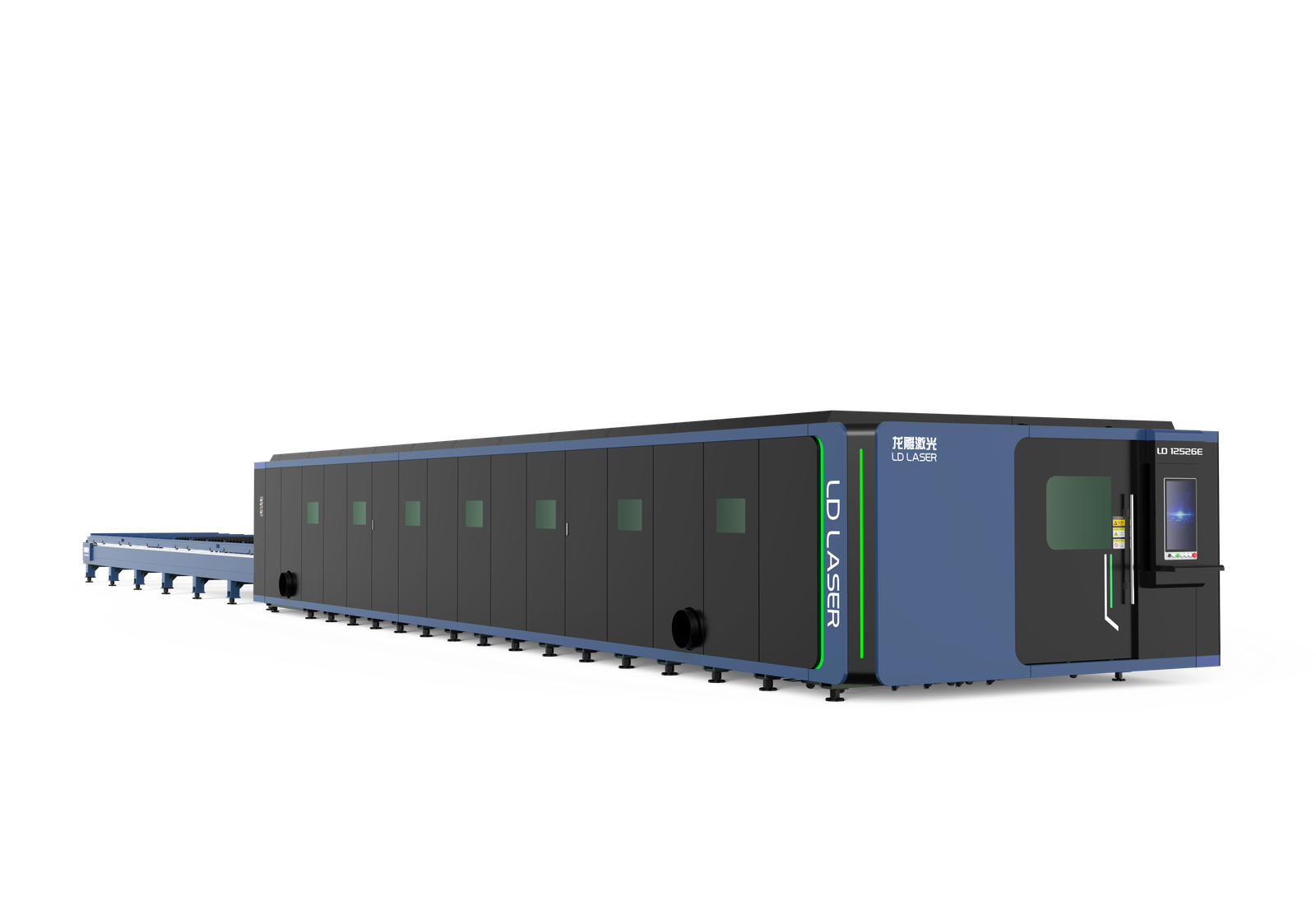
Modern tube laser manufacturing demands precise focal distance control to achieve ideal cutting results, yet traditional systems struggle with height variations inherent in tube profiles and material inconsistencies. Real-time height adjustment technology addresses this challenge through integrated sensor networks that continuously monitor vertical positioning during cutting operations. The system’s closed-loop feedback mechanism enables automatic corrections within microseconds, maintaining consistent beam focus regardless of tube geometry fluctuations. However, successful implementation requires careful consideration of sensor selection, calibration protocols, and algorithm optimization parameters.
Wichtigste Erkenntnisse
Advanced sensor arrays enable continuous real-time height detection using laser distance sensors and capacitive systems with micrometer accuracy.
Closed-loop control systems with PID controllers automatically adjust focal distance within ±0.01mm tolerances for optimal cutting performance.
Machine learning algorithms analyze operational data to optimize parameter combinations for different materials and non-traditional tube geometries.
Predictive maintenance and remote diagnostics enhance equipment lifecycle management while reducing setup time by 40% across applications.
Real-time height adjustment achieves ±0.05mm dimensional accuracy while reducing heat-affected zones and minimizing rejected parts by 25-30%.
Understanding Follow-Up Support Technology in Tube Laser Systems
When tube laser machines operate in industrial environments, follow-up support technology encompasses integrated monitoring systems, Algorithmen zur vorausschauenden Wartungund remote diagnostic capabilities that maintain Betriebseffizienz throughout the equipment lifecycle. These systems utilize advanced sensor arrays for continuous height detection, enabling real-time adjustments during cutting operations. Machine learning algorithms process operational data to identify performance deviations before they impact production quality.
Support efficiency depends on seamless integration between hardware components and software protocols. Automated feedback loops monitor laser focal distance, material positioning, and cutting parameters simultaneously. Diagnostic modules analyze vibration patterns, thermal signatures, and beam characteristics to predict maintenance requirements.
Cloud-based platforms aggregate Leistungskennzahlen from multiple machines, creating extensive databases for optimization strategies. This data-driven approach reduces unplanned downtime by 40-60% while extending equipment lifespan. Advanced support systems also incorporate adaptive Steuerungsmechanismen that automatically compensate for material variations and environmental factors affecting cutting precision.
Key Components and Sensors for Real-Time Height Detection
Real-time height detection in tube laser follow-up support systems relies on precision sensor technologies that continuously monitor and adjust cutting head position relative to material surfaces. Laser distance sensors provide non-contact measurement capabilities with micron-level accuracy, enabling rapid response to surface variations during high-speed cutting operations. Capacitive height detection systems offer complementary sensing technology that maintains consistent standoff distances through electrical field measurement, particularly effective for conductive tube materials where laser sensors may experience interference.
Laser Distance Sensors
Laser distance sensors integrate triangulation or time-of-flight measurement principles to deliver precise real-time height detection capabilities essential for maintaining ideal focal distance during tube laser cutting operations. These sensors achieve laser accuracy within micrometers by employing sophisticated measurement techniques that continuously monitor the distance between the cutting head and workpiece surface. Triangulation-based systems utilize laser beam reflection angles to calculate distance variations, while time-of-flight sensors measure light travel duration for distance determination. Both technologies provide rapid response rates exceeding 10 kHz sampling frequencies, enabling instantaneous height adjustments. The sensors’ compact design allows integration into confined tube processing environments while maintaining measurement stability across varying surface finishes and material reflectivity conditions, ensuring consistent cutting quality throughout complex tubular geometries.
Capacitive Height Detection
Capacitive height detection systems leverage electromagnetic field variations to measure distance changes between the sensor probe and conductive workpiece surfaces with nanometer-level precision. These sensors generate oscillating electric fields that create capacitive coupling with metallic tube surfaces. Distance variations alter the capacitance measurement values proportionally, enabling continuous height sensing throughout laser processing operations.
The detection mechanism operates independently of surface texture, oxidation, or thermal conditions that compromise optical systems. Signal conditioning circuits convert capacitance fluctuations into voltage outputs with sub-micron resolution capabilities. Response times typically achieve microsecond-level performance, supporting real-time feedback control during high-speed cutting sequences. Multi-channel configurations enable simultaneous monitoring of multiple tube sections, providing extensive height data for complex geometries requiring precise standoff distance maintenance across varying workpiece profiles.
Automatic Adjustment Mechanisms and Control Algorithms
Während traditional tube laser operations require constant manual intervention, modern automatic adjustment mechanisms integrate hochentwickelte Steuerungsalgorithmen that continuously monitor cutting parameters and execute real-time corrections without operator input. These adaptive control systems analyze multiple variables simultaneously, including material thickness variations, cutting speed fluctuations, and thermal effects on the workpiece.
The feedback systems employ closed-loop control architecture, where sensors continuously transmit height data to central processing units. Advanced algorithms process this information within milliseconds, calculating ideal height adjustments based on predetermined cutting profiles and real-time conditions. PID controllers regulate actuator movements with precision tolerances of ±0.01mm, ensuring consistent focal point positioning throughout complex cutting sequences.
Machine learning algorithms enhance performance by analyzing historical cutting data and identifying ideal parameter combinations for specific material types and geometries. This predictive capability reduces setup times and minimizes waste while maintaining superior cut quality across varying production requirements.
Benefits of Consistent Focal Distance Management
When focal distance remains precisely controlled throughout tube laser operations, manufacturers achieve markedly improved cut quality metrics, including reduced heat-affected zones, minimized dross formation, and enhanced edge finish consistency. Maintaining ideal focal positioning directly correlates with enhanced tolerance levels, enabling manufacturers to achieve Abmessungsgenauigkeit within ±0.05mm across complex tube geometries.
Controlled beam divergence results from consistent focal distance management, ensuring power density remains uniform throughout cutting cycles. This stability reduces thermal distortion by 40-60% compared to systems with variable focal positioning. Material waste decreases greatly as edge quality improvements eliminate secondary finishing operations.
Process repeatability increases when focal distance variations remain within 0.1mm parameters. Manufacturers report 25-30% reduction in rejected parts when implementing consistent focal management systems. Additionally, cutting speeds can be improved without compromising quality, as stable focal conditions enable higher traverse rates while maintaining precise kerf geometry and dimensional accuracy requirements.
Implementation Strategies for Different Tube Cutting Applications
How can manufacturers enhance focal distance management across diverse tube cutting scenarios? Implementation strategies must address the unique requirements of different materials, wall thicknesses, and geometric configurations. For thin-walled stainless steel tubes, precise focal positioning within ±0.1mm guarantees clean edge quality without thermal distortion. Carbon steel applications require adjusted focal offset parameters to accommodate material density variations and heat dissipation characteristics.
Heavy-wall tube cutting demands dynamic focal distance adjustments throughout the cutting process, compensating for material removal and thermal expansion effects. The support system monitors real-time cutting conditions, automatically recalibrating focal parameters based on material feedback sensors and cutting speed variations.
Application versatility extends to komplexe Geometrien where traditional fixed-focal systems fail. Oval, rectangular, and multi-profile tubes require adaptive focal management that responds to changing surface distances. Advanced algorithms calculate ideal focal trajectories, maintaining consistent energy density across irregular contours. This systematic approach reduces setup time by 40% while improving cut quality consistency across varied tube cutting applications, regardless of material composition or geometric complexity.
Maintenance and Calibration Requirements for Optimal Performance
Achieving consistent performance from these adaptive focal management systems erfordert systematic maintenance protocols that preserve measurement accuracy and mechanical precision. Regular maintenance procedures include cleaning optical sensors to prevent contamination-induced measurement drift, inspecting actuator mechanisms for wear patterns, and verifying servo motor response characteristics. Weekly sensor calibration validates distance measurement accuracy against certified reference standards, while monthly geometric alignment checks guarantee beam positioning remains within specified tolerances.
Kritisch calibration techniques involve multi-point height verification across the cutting envelope, laser power stability assessment, and focal position accuracy validation. Operators must document baseline performance metrics during initial setup, establishing reference points for ongoing comparison. Temperature compensation algorithms require periodic adjustment to account for thermal expansion effects on mechanical components. Preventive replacement schedules for consumable elements, including protective windows and filter assemblies, prevent performance degradation. Data logging systems track calibration drift patterns, enabling predictive maintenance scheduling that minimizes production interruptions while maintaining ideal cutting quality standards.
Schlussfolgerung
Die Follow-Up Support System transforms tube laser operations into a precisely orchestrated symphony of sensors and algorithms. Like a master craftsman’s steady hand maintaining perfect distance from the workpiece, automated height adjustment mechanisms eliminate dimensional drift and thermal inconsistencies. Real-time sensor feedback creates an invisible safety net beneath each cut, ensuring focal parameters remain locked within specified tolerances. This technological precision converts chaotic manufacturing variables into predictable, repeatable outcomes across diverse tube geometries.