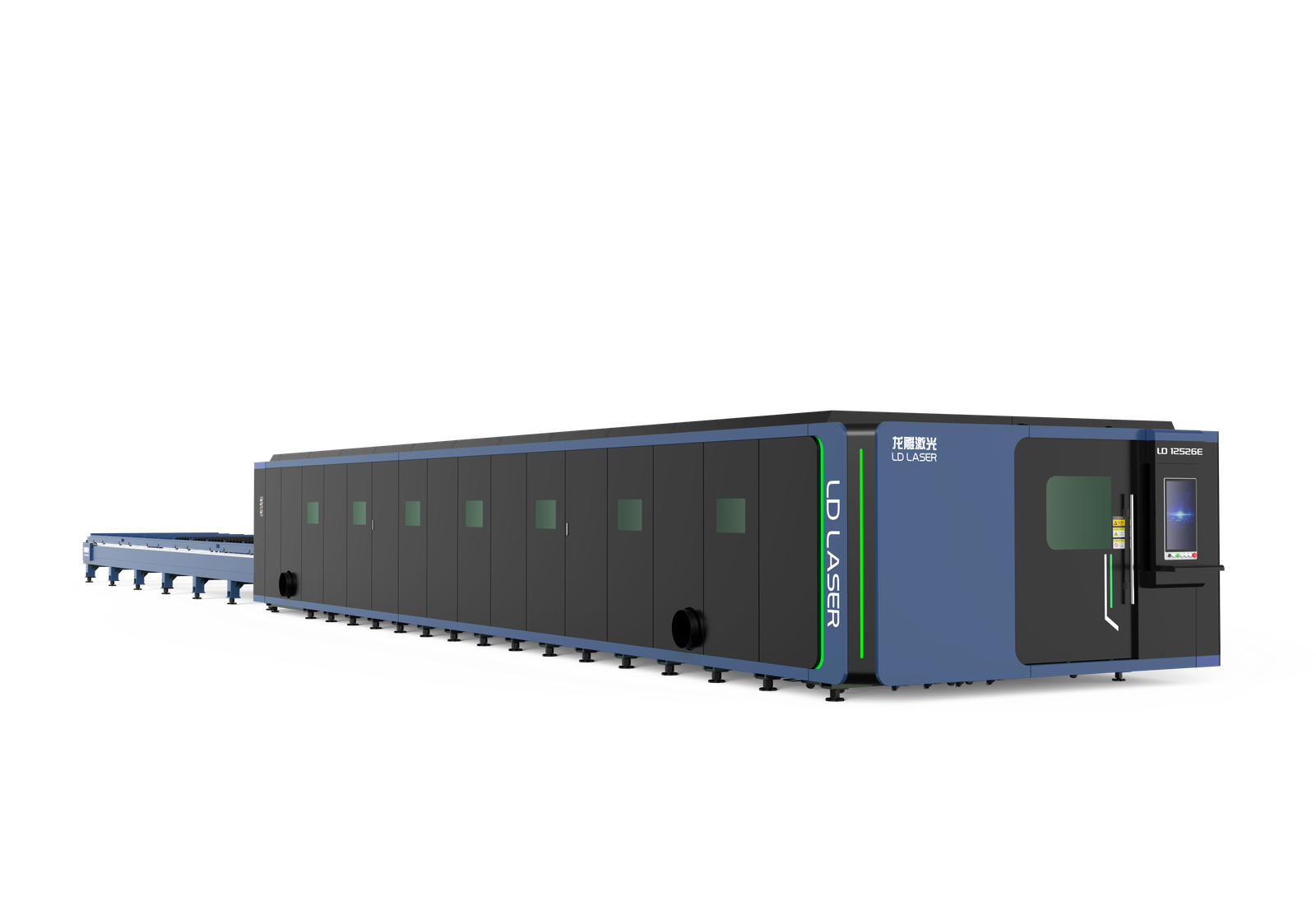
Steel structure fabrication facilities implementing automated laser cutting systems report productivity improvements of 1,500% over conventional plasma and oxy-fuel methods. Advanced fiber laser technology operating at power densities exceeding 10^6 W/cm² enables cutting speeds reaching 25 meters per minute while maintaining dimensional tolerances within ±0.1mm. These systems integrate CNC motion control with real-time adaptive feedback, eliminating operator variability and reducing material waste to less than 2%. The economic implications extend far beyond simple speed improvements.
Principales conclusiones
Automated steel cutting systems achieve 15X productivity gains through fiber laser technology with 10-15kW power densities and 95% electrical efficiency.
Cutting speeds reach 15-25 meters per minute on structural steel while maintaining ±0.05mm positional accuracy through advanced CNC motion systems.
Labor costs decrease by 60-70% with reduced operator requirements and material handling automation that reduces idle time by 80%.
Smart cutting patterns and optimized nesting deliver 35-45% savings per fabricated component with typical payback periods of 18-24 months.
Systems exceed traditional plasma cutting speeds by 300-500% while achieving 99.7% uptime through predictive maintenance protocols.
The Science Behind 15X Productivity Gains in Automated Steel Cutting
Automated steel cutting systems achieve 15X productivity gains through the convergence of high-powered fiber laser technology, precision motion controly intelligent material handling protocols. Fiber lasers deliver 10-15kW power densities with 95% electrical efficiency, enabling cutting speeds of 15-25 meters per minute on structural steel. CNC motion systems provide ±0.05mm positional accuracy while maintaining continuous operation cycles. Automated material handling eliminates manual loading delays, reducing idle time by 80%.
Key laser cutting advantages include minimal heat-affected zones, zero mechanical tool wear, and simultaneous multi-part processing capabilities. However, automation challenges encompass initial capital investment requirements, skilled technician training protocols, and integration complexities with existing production workflows. Advanced algorithms optimize cutting path sequences and nest configurations, maximizing material utilization rates while minimizing cycle times through predictive maintenance scheduling.
Precision Control Systems That Eliminate Human Error and Material Waste
Precision control systems in automated steel cutting environments leverage advanced sensor technology to maintain cutting tolerances within ±0.1mm across multiple material thicknesses and compositions. These integrated sensor networks continuously monitor laser power output, beam positioning, and material surface conditions to execute real-time adjustments that prevent dimensional deviations before they occur. Real-time quality monitoring algorithms process sensor data at microsecond intervals, automatically correcting cutting parameters and eliminating the 12-15% material waste typically associated with manual operator intervention.
Advanced Sensor Technology Integration
Innovation in sensor technology has revolutionized steel structure laser cutting by introducing real-time feedback mechanisms that monitor cutting parameters with sub-millimeter accuracy. These systems continuously analyze beam focus, material positioning, and thermal conditions to maintain peak cutting performance throughout production cycles.
Advanced sensor accuracy enables immediate detection of dimensional variations, surface irregularities, and alignment deviations. Automated feedback loops instantly adjust laser power, velocidad de corte, and focal distance based on sensor data, ensuring calidad constante across all fabricated components.
Thermal sensors detecting heat-affected zone expansion
Optical sensors measuring kerf width variations in real-time
Capacitive sensors monitoring material thickness fluctuations
Vision systems tracking beam positioning accuracy
Vibration sensors identifying mechanical resonance issues
This integrated approach eliminates manual interventions while maximizing material utilization efficiency.
Real-Time Quality Monitoring
Multiple quality monitoring systems now operate simultaneously during laser cutting operations, creating extensive oversight that tracks dimensional accuracy, surface finish characteristics, and structural integrity parameters across every cut sequence. These integrated systems deliver thorough quality assurance through continuous measurement protocols that detect deviations within microseconds of occurrence.
| Monitoring Parameter | Measurement Frequency |
|---|---|
| Cut Width Variance | 1000 Hz |
| Heat Affected Zone | 500 Hz |
| Edge Perpendicularity | 250 Hz |
| Surface Roughness | 100 Hz |
Advanced algorithms analyze performance metrics in real-time, automatically adjusting laser power, cutting speed, and gas flow rates to maintain ideal conditions. The system identifies potential defects before completion, triggering immediate corrections that prevent material waste. This proactive approach eliminates post-processing inspection requirements while ensuring consistent output quality across all fabricated components.
Comparing Traditional Fabrication Methods vs. Laser Automation Performance
Traditional plasma cutting, oxy-fuel torches, and mechanical shearing have dominated steel fabrication for decades, yet these conventional methods face significant performance limitations when measured against modern laser cutting automation systems.
Performance metrics reveal substantial disparities between traditional methods and laser advantages across multiple operational parameters:
Cutting speed differentials of 300-500% favor laser systems over plasma cutting on medium-thickness steel plates
Heat-affected zones measure 0.1-0.3mm with laser cutting versus 2-5mm with conventional thermal processes
Dimensional accuracy achieves ±0.05mm tolerance with laser automation compared to ±1.0mm with mechanical shearing
Material waste reduction reaches 15-25% through optimized nesting algorithms unavailable in manual operations
Setup time decreases from 45-60 minutes to 5-10 minutes per job changeover
These quantifiable improvements demonstrate laser automation’s superior eficacia operativa and precision capabilities.
Cost Analysis: Labor Reduction and Material Savings Through Smart Cutting
Quantifying the economic impact of laser cutting automation reveals substantial cost reductions across labor expenses and raw material consumption within steel fabrication operations. Labor costs decrease through reduced operator requirements, with automated systems requiring 60-70% fewer personnel compared to traditional cutting methods. Precision programming eliminates manual layout processes, reducing skilled labor dependency while maintaining cutting accuracy within ±0.1mm tolerances.
Material efficiency improvements stem from optimized nesting algorithms that maximize sheet utilization rates by 15-25%. Smart cutting patterns minimize kerf waste and reduce scrap generation through calculated material flow. Real-time parameter adjustments optimize cutting speeds while maintaining edge quality, reducing secondary machining requirements. Combined operational savings typically achieve 35-45% cost reduction per fabricated component, with payback periods averaging 18-24 months for medium-scale steel fabrication facilities implementing extensive laser automation systems.
Complex Architectural Projects Made Simple With Advanced Laser Technology
Advanced laser cutting technology transforms intricate architectural steel projects by enabling precise fabrication of complex geometries that previously required extensive manual intervention and specialized tooling. Modern laser cutting applications streamline the production of sophisticated structural elements through automated programming and multi-axis cutting capabilities.
Contemporary architectural design benefits from laser precision through:
Curved facade panels with millimeter-accurate tolerances for seamless assembly
Perforated decorative screens featuring patrones intrincados and varying hole densities
Custom joint connections with complex angles eliminating field welding requirements
Tapered structural members maintaining consistent wall thickness throughout changes
Sculptural elements incorporating organic shapes impossible with conventional cutting methods
These capabilities reduce project timelines by eliminating iterative prototyping phases while ensuring precisión dimensional across all components. The technology enables architects to realize ambitious designs without compromising structural integrity or fabrication feasibility.
Real-World Case Studies of Construction Companies Achieving Maximum Efficiency
When Turner Construction implemented automated laser cutting systems across their structural steel operations, project delivery times decreased by 34% while residuos materiales dropped to less than 2% across fifteen major commercial projects spanning eighteen months. Skanska reported similar results after deploying fiber laser technology, achieving 89% reduction in cutting errors and eliminating secondary finishing operations on 67% of structural components. Initial automation challenges included operator training protocols and integration with existing CAD systems, requiring three-month adjustment periods. Success metrics consistently demonstrated ROI achievement within fourteen months across multiple contractors. Mortenson Construction documented 42% labor cost reduction while maintaining quality standards exceeding industry benchmarks. These implementations validate automation’s capacity to transform traditional steel fabrication workflows into precision manufacturing processes.
Technical Specifications and Capabilities of Modern Steel Cutting Systems
Contemporary fiber laser systems operating at 6-15 kilowatts deliver cutting speeds exceeding 1,200 inches per minute on structural steel up to 1.5 inches thick, with positional accuracy maintained within ±0.003 inches across cutting beds spanning 60 by 240 feet.
Advanced steel fabrication equipment incorporates automated material handling systems that process sheets weighing up to 13,000 pounds without operator intervention. Nitrogen assist gas pressures reaching 300 PSI enable clean edge finishes eliminating secondary operations.
Critical performance specifications include:
Beam quality factor (M²) below 1.05 for consistent kerf geometry
Servo-driven axis acceleration rates of 2G maintaining precision
Automatic nozzle changing systems reducing setup times to 30 seconds
Real-time height sensing maintaining ideal standoff distances
Integrated CAD/CAM software supporting nested cutting patterns
Modern laser cutting systems achieve 99.7% uptime through predictive maintenance protocols and redundant component architectures, maximizing steel fabrication throughput while maintaining dimensional tolerances.
Implementation Strategies for Transitioning to Automated Laser Fabrication
While shifting from traditional cutting methods to automated laser fabrication requires thorough planning, successful implementation hinges on systematic evaluation of existing workflows and infrastructure capacity. Organizations must assess power requirements, floor space configurations, and material handling systems before deployment.
| Implementation Phase | Critical Requirements |
|---|---|
| Infrastructure Assessment | Power capacity, ventilation systems |
| Equipment Integration | CAD/CAM software compatibility |
| Workforce Training | Operator certification, safety protocols |
| Process Optimization | Material flow redesign, quality controls |
| Performance Validation | Throughput metrics, precision testing |
Effective automation techniques include staged rollouts starting with high-volume components, followed by complex geometries. Extensive workforce training programs guarantee operators understand laser parameters, safety procedures, and maintenance protocols. Data collection during initial phases enables continuous refinement of cutting parameters and production schedules.
Future Developments in Construction Automation and Competitive Market Positioning
The construction automation sector is experiencing rapid technological convergence as artificial intelligence, machine learning algorithms, and advanced sensor systems integrate with laser cutting platforms to create autonomous fabrication ecosystems. Companies are establishing competitive differentiation through proprietary software development, specialized material handling capabilities, and real-time quality control systems that optimize production throughput while maintaining dimensional accuracy standards. Industry analysis indicates that market leaders are investing in modular automation architectures and predictive maintenance protocols to capture emerging opportunities in mass customization and just-in-time steel fabrication workflows.
Emerging Automation Technologies
Innovation in steel structure laser cutting automation continues accelerating through advanced technologies that promise to reshape construction manufacturing processes. Digital twins enable real-time simulation and optimization of cutting parameters, while robotic welding systems integrate seamlessly with automated fabrication lines to create extensive manufacturing solutions.
Emerging technologies transforming steel structure automation include:
AI-powered vision systems that detect material defects and adjust cutting paths in real-time
Collaborative robots equipped with adaptive gripping mechanisms for complex geometry handling
Edge computing platforms processing sensor data for millisecond-level decision making
Predictive maintenance algorithms analyzing vibration patterns to prevent equipment failures
Augmented reality interfaces guiding operators through complex setup procedures
These innovations collectively drive unprecedented efficiency gains while reducing human error rates and operational costs across industrial fabrication environments.
Market Differentiation Strategies
Companies implementing advanced laser cutting automation technologies must establish clear market positioning strategies that leverage their technological capabilities to capture competitive advantages within the construction manufacturing sector. Product differentiation emerges through precision tolerances, accelerated delivery schedules, and complex geometric capabilities that traditional cutting methods cannot achieve. Organizations develop niche marketing approaches by targeting specialized segments including high-rise construction, industrial fabrication, and architectural steelwork requiring intricate designs. Data analytics integration enables companies to demonstrate measurable value propositions through documented efficiency metrics, waste reduction percentages, and quality consistency rates. Strategic positioning emphasizes technological superiority, operational reliability, and scalable production capacity. Market leaders establish premium pricing structures justified by superior performance metrics, reduced project timelines, and enhanced fabrication accuracy that directly impact client profitability and project success rates.
Industry Innovation Trends
Emerging technological convergence patterns indicate that integración de la inteligencia artificial, Internet of Things connectivityy machine learning algorithms will fundamentally transform steel structure fabrication processes within the next decade. Robotic advancements are accelerating manufacturing evolution through autonomous quality control systems y predictive maintenance protocols.
Key innovation trajectories include:
Collaborative robots performing complex welding operations alongside human operators
Real-time material optimization algorithms reducing waste by 35-40%
Digital twin technology enabling virtual prototyping and stress analysis
Blockchain-based supply chain tracking for material provenance verification
Augmented reality guidance systems for assembly and inspection procedures
Advanced sensor networks will enable continuous process monitoring, while adaptive cutting parameters will automatically adjust based on material composition variations. These developments position early adopters to capture significant competitive advantages through enhanced precision, reduced lead times, and improved cost structures.
Conclusión
The convergence of fiber laser technology y CNC automation represents the industrial forge reshaping steel fabrication’s landscape. Data validates 15X productivity multipliers through precision-controlled cutting velocities reaching 25 meters per minute, while systematic elimination of human error reduces material waste coefficients. This technological evolution transforms complex architectural geometries from laborious puzzles into streamlined manufacturing sequences. Steel structures emerge as precisely engineered symphonies, where each automated cut contributes to optimized delivery timelines and quantifiable cost reduction metrics across fabrication operations.