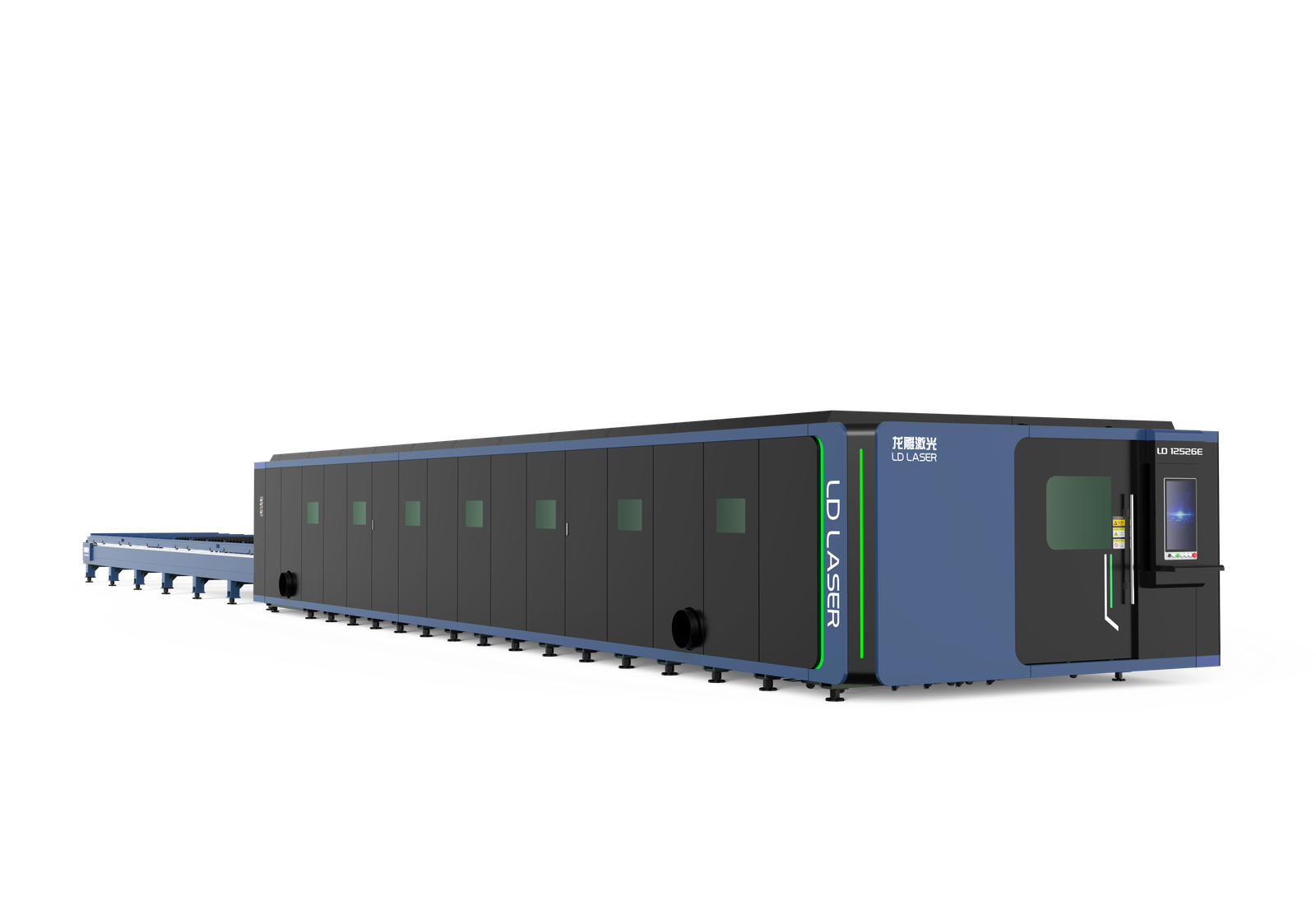
High-precision reducer technology represents a critical advancement in laser cutting equipment performance, where positioning accuracy tolerances of ±10 arcseconds directly translate to cut precision within ±0.025 mm. These mechanical systems achieve backlash reduction below 1 arcminute through advanced gear geometries and bearing configurations. The technology’s impact extends beyond dimensional control to influence edge quality, material waste reduction, and overall throughput optimization. However, the specific mechanisms driving these performance improvements reveal unexpected challenges in implementation.
Principales conclusiones
Harmonic drive and cycloidal reducers achieve positioning accuracy within ±10 arcseconds with backlash below 1 arcminute for superior laser cutting precision.
High-precision reducers improve dimensional tolerances from ±0.05mm to ±0.01mm, enhancing cut quality and reducing material waste significantly.
Advanced reducer technology increases production throughput by 25-40% while maintaining consistent edge quality and geometric accuracy during high-speed operations.
Real-time monitoring systems with 20kHz encoder feedback loops ensure optimal beam positioning and trajectory consistency for complex cutting geometries.
Predictive maintenance strategies reduce downtime costs by 25-30% while extending reducer operational life by 40% through automated lubrication programs.
Types of High-Precision Reducers Used in Laser Cutting Systems
When selecting motion control components for laser cutting applications, manufacturers typically employ three primary categories of high-precision reducers: harmonic drive reducers, planetary gear reducers, and cycloidal reducers. Harmonic drive units deliver exceptional precisión de posicionamiento with backlash levels below 1 arcminute, making them ideal for precise beam positioning systems. Their compact gearbox configurations provide reduction ratios from 50:1 to 320:1 with torque ratings ranging from 5 to 2,000 Nm.
Planetary gear reducers offer robust performance in high-duty cycle operations, featuring multiple gear stages that distribute load effectively. These systems achieve reduction ratios between 3:1 and 100:1 with superior torque density characteristics.
Cycloidal reducers excel in applications requiring zero backlash and high shock resistance. Their unique design incorporates rolling contact mechanisms that eliminate sliding friction, resulting in extended operational life and consistent performance under varying thermal conditions typical in industrial laser cutting environments.
Key Performance Benefits of Advanced Reducer Technology
Advanced reducer technology delivers measurable improvements en laser cutting precision through enhanced angular accuracy, reduced mechanical backlashy superior thermal stability. These systems utilize advanced materials including hardened steel gears and precision-machined components that maintain dimensional stability under varying operational loads.
Key performance benefits include:
- Positioning Accuracy Enhancement – High-precision reducers achieve angular positioning tolerances within ±10 arcseconds, enabling micron-level cutting precision for complex geometries and intricate patterns.
- Thermal Management Optimization – Advanced materials with superior heat dissipation properties maintain consistent performance across temperature variations, preventing thermal drift that compromises cut quality.
- Seamless System Integration – Modular reducer designs facilitate direct integration with servo motors and CNC controllers, reducing mechanical complexity while improving response times and eliminating transmission losses.
These technological advances result in improved edge quality, reduced material waste, and enhanced repeatability across production runs, making high-precision reducers essential components for modern laser cutting applications.
Positioning Accuracy and Backlash Reduction in Laser Applications
Achieving sub-micron positioning accuracy in laser cutting systems requires advanced reducer technologies that minimize backlash through precision-engineered gear meshes and preload mechanisms. Modern precision motion control systems integrate strain wave gearing and harmonic drive configurations to eliminate mechanical play while maintaining consistent torque transmission throughout the operational envelope. Backlash elimination techniques employ dual-motor compensation algorithms and real-time feedback systems that continuously monitor and correct positional deviations during high-speed cutting operations.
Precision Motion Control Systems
Laser cutting systems demand positioning accuracies within ±0.01mm to maintain cut quality and dimensional tolerances across varying material thicknesses and cutting speeds. High-precision reducers enable these stringent requirements through advanced motion control systems that integrate seamlessly with servo motors y feedback mechanisms. Motion control advancements incorporate real-time position monitoring with encoder feedback loops operating at 20kHz frequencies. Modern actuator technologies utilize harmonic drive reducers with gear ratios ranging from 50:1 to 320:1, delivering exceptional repeatability.
Key components of precision motion control systems include:
- Servo motor integration – Direct coupling with zero-backlash harmonic reducers for instantaneous response
- Feedback control loops – Absolute encoders providing 0.001° resolution for continuous position verification
- Acceleration profiling – Optimized motion trajectories reducing mechanical stress while maintaining 2G acceleration capabilities
Backlash Elimination Techniques
Backlash elimination represents the most critical factor in achieving sub-micron positioning accuracy required for high-quality laser cutting operations. Advanced reducers employ precision-engineered gear geometries with controlled tooth profiles to minimize mechanical clearances. Backlash measurement protocols utilize laser interferometry and encoder feedback systems to quantify positional deviations during directional changes.
| Técnica | Accuracy Achieved | Implementation Cost |
|---|---|---|
| Preload Springs | ±2 μm | Low |
| Split Gear Design | ±0.5 μm | Medium |
| Active Compensation | ±0.1 μm | High |
Backlash compensation algorithms continuously monitor encoder feedback, calculating correction factors for directional reversals. These systems integrate real-time position data with predictive models, enabling instantaneous adjustments that maintain cutting path integrity. Modern implementations achieve positioning repeatability within 0.1 micrometers, ensuring consistent edge quality across complex geometries.
Impact on Cut Quality and Dimensional Control
High-precision reducers directly influence laser cutting performance through their control of beam positioning accuracy and trajectory consistency. The mechanical precision of reducer components translates to measurable improvements in dimensional tolerance adherence, with typical enhancements ranging from ±0.02mm to ±0.005mm depending on material thickness and cutting speed parameters. Advanced reducer technologies enable sustained dimensional accuracy across extended cutting operations by minimizing cumulative positioning errors that would otherwise compound into significant geometric deviations.
Precision Motion Control
Achieving dimensional tolerances within ±0.025 mm requires servo motors and drive systems to execute commanded trajectories with minimal deviation from programmed tool paths. High-precision reducers enable servo motors to maintain positional accuracy through reduced backlash and improved torque transmission efficiency. Advanced robotics integration depends on consistent angular positioning to guarantee laser focal point accuracy during complex cutting operations.
Critical precision motion control parameters include:
- Backlash reduction below 1 arcminute – Eliminates positioning errors during directional changes and maintains cut geometry consistency
- Repeatability within ±0.01 mm – Guarantees identical part reproduction across production runs through consistent mechanical positioning
- Dynamic response optimization – Minimizes settling time to 50 milliseconds for rapid acceleration/deceleration cycles without overshoot
These specifications directly correlate with achieved dimensional accuracy and surface finish quality in precision laser cutting applications.
Dimensional Accuracy Enhancement
Dimensional accuracy enhancement through high-precision reducers directly influences cut quality outcomes by minimizing mechanical positioning errors that propagate through the entire laser cutting system. Advanced reducer technology achieves sub-arc-minute positioning repeatability, enabling consistent adherence to stringent tolerance standards across production runs. The mechanical precision translates into measurable improvements in edge quality, kerf consistency, and geometric accuracy.
| Performance Metric | Standard Reducers | High-Precision Reducers |
|---|---|---|
| Positioning Error | ±0,05 mm | ±0.01mm |
| Edge Deviation | ±0.08mm | ±0.02mm |
| Geometric Tolerance | ±0.12mm | ±0,03 mm |
Dimensional inspection protocols validate these improvements through coordinate measuring machine verification, demonstrating four-fold accuracy gains. The enhanced mechanical stability reduces post-processing requirements while maintaining consistent part dimensions throughout extended production cycles, directly impacting manufacturing efficiency and quality assurance metrics.
Maintenance and Operational Efficiency Improvements
Enhancing maintenance protocols for high-precision reducers directly correlates with improved eficacia operativa and extended equipment lifespan in laser cutting systems. Cost effective maintenance strategies minimize unplanned downtime while maximizing throughput performance. Operational best practices focus on predictive maintenance schedules that monitor reducer performance metrics continuously.
Advanced monitoring systems track critical parameters including vibration patterns, temperature fluctuations, and lubricant quality indicators. These data-driven approaches enable technicians to identify potential failures before they impact production schedules. Precision maintenance protocols typically reduce overall costes de mantenimiento by 25-30% compared to reactive repair strategies.
Key operational efficiency improvements include:
- Predictive Analytics Integration – Real-time monitoring systems detect anomalies 72 hours before critical failures occur
- Scheduled Lubrication Programs – Automated dispensing systems maintain ideal lubricant levels, extending reducer life by 40%
- Performance Baseline Documentation – Thorough tracking enables precise identification of degradation patterns and ideal replacement intervals
Industry Applications and Manufacturing Advantages
Manufacturing sectors across aerospace, automotive, electronics, and heavy machinery industries rely on high-precision reducers to achieve the exacting tolerances required for laser cutting applications. These components enable precise motion dynamics control, delivering positioning accuracies within ±0.001 inches across multi-axis systems.
| Sector industrial | Key Manufacturing Advantages |
|---|---|
| Aeroespacial | Complex geometry cutting with 0.05mm precision for turbine components |
| Automoción | High-speed sheet metal processing with reduced cycle times |
| Electrónica | Micro-cutting capabilities for circuit boards and semiconductor wafers |
| Heavy Machinery | Thick plate cutting with consistent edge quality and minimal heat-affected zones |
Advanced cutting technologies benefit considerably from reducer integration, achieving backlash reduction below 1 arcminute while maintaining torque multiplication ratios exceeding 100:1. Production throughput increases by 25-40% compared to standard gear systems, while material waste decreases through improved path accuracy. The technology enables continuous operation at elevated speeds without compromising dimensional stability, supporting lean manufacturing initiatives across diverse industrial applications.
Conclusión
While traditional cutting systems struggle with cumulative positioning errors exceeding 50 arcseconds, high-precision reducers deliver sub-10 arcsecond accuracy. Where conventional equipment generates material waste rates of 3-5%, advanced reducer technology reduces waste below 1%. The stark contrast between imprecise mechanical systems producing ±0.1mm tolerances and precision reducers achieving ±0.025mm dimensional control demonstrates quantifiable performance superiority. Manufacturing operations shift from reactive maintenance cycles to predictive monitoring protocols, fundamentally transforming laser cutting efficiency.