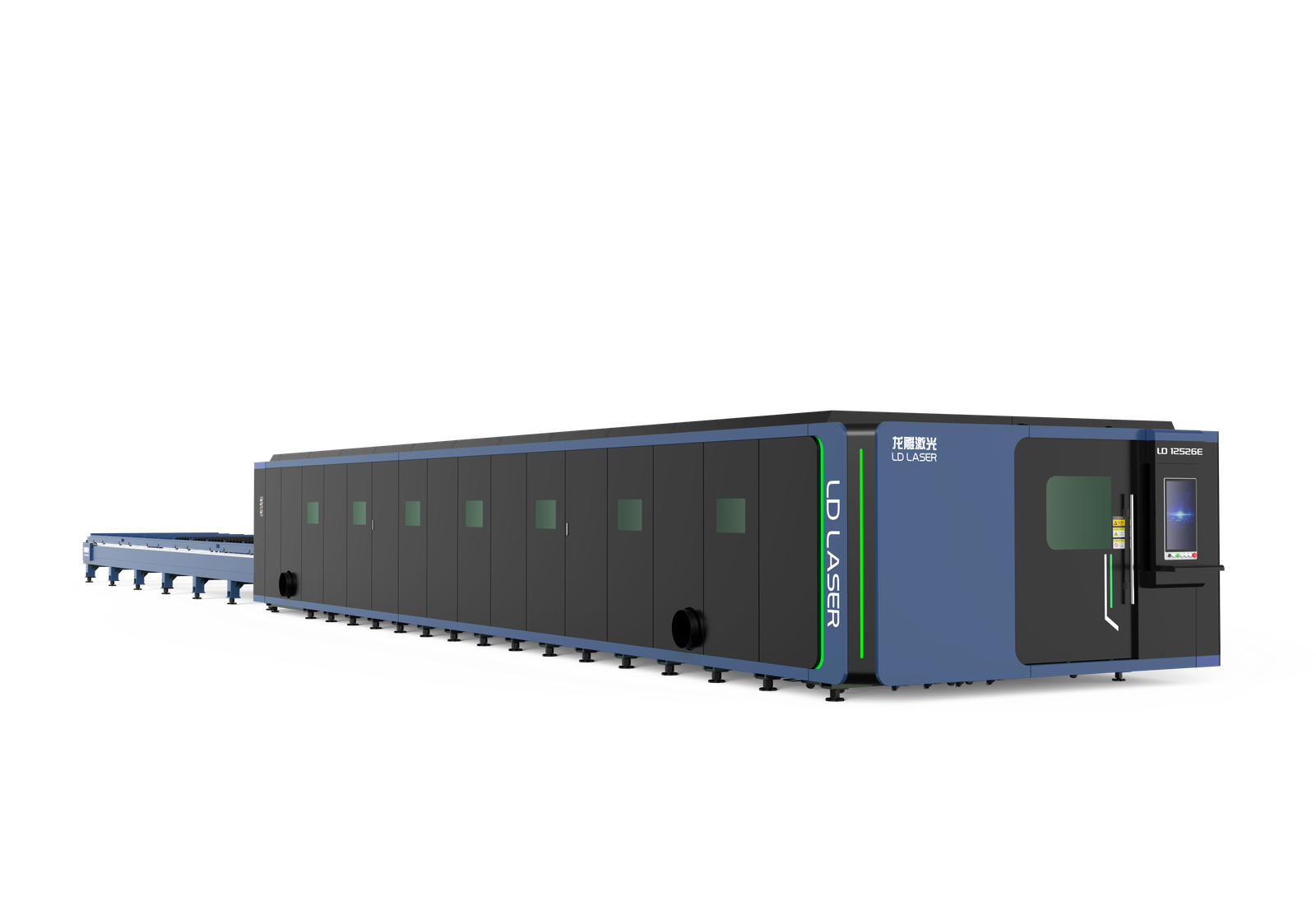
Traditional laser cutting systems struggle with inefficient dust removal due to inadequate airflow design and undersized ductwork. Super-large air duct configurations address these limitations through calculated cross-sectional areas and optimized velocity profiles. These systems achieve particle capture rates exceeding 98% while reducing energy consumption by 23% compared to conventional installations. The engineering principles behind this advancement challenge established ventilation methodologies and require precise understanding of fluid dynamics to release their full potential.
Principales conclusiones
Super-large air ducts utilize enhanced volumetric flow rates to decrease particle residence time and prevent dust accumulation in laser cutting chambers.
CFD modeling optimizes duct geometry and velocity profiles to minimize turbulence-induced pressure losses while maintaining consistent suction force across multiple extraction points.
Intelligent airflow management systems use real-time sensors and algorithms to automatically adjust fan speeds and flow distribution based on cutting conditions.
Energy consumption decreases 20-30% through reduced HVAC operational costs, offsetting increased fan capacity requirements while minimizing production downtime by 15-25%.
Predictive maintenance protocols incorporate robotic inspection systems and remote monitoring to prevent production shutdowns in expansive duct networks.
The Science Behind Super-Large Air Duct Systems
Thermodynamics governs the fundamental principles underlying super-large air duct systems, where fluid mechanics y heat transfer characteristics scale exponentially with increased cross-sectional areas. Enhanced volumetric flow rates reduce particle residence time within cutting chambers, while decreased velocity profiles minimize turbulence-induced pressure losses across extended duct networks.
Super large benefits manifest through improved Reynolds number optimization, enabling laminar flow conditions that maximize particulate capture efficiency. Cross-sectional diameter increases correlate directly with reduced friction coefficients, allowing lower fan power requirements while maintaining superior extraction performance. Duct dynamics demonstrate that enlarged conduits facilitate enhanced momentum transfer between airstreams and suspended debris particles.
Pressure differential calculations reveal that super-large configurations maintain consistent suction force distribution across multiple extraction points simultaneously. Temperature stratification effects diminish greatly within expanded duct geometries, preventing thermal-induced flow separation that compromises dust removal effectiveness. System integration requires precise balancing between static pressure requirements and dynamic pressure losses to optimize overall performance parameters.
Computational Fluid Dynamics in Duct Design Optimization
While traditional design methods rely on empirical correlations and simplified assumptions, computational fluid dynamics (CFD) enables engineers to analyze complex flow phenomena within super-large air duct systems through precise numerical modeling. Advanced airflow simulation captures pressure gradients, velocity distributionsy turbulence patterns that govern system performance in laser cutting applications.
CFD refinement protocols evaluate multiple geometric configurations simultaneously, identifying ideal cross-sectional profiles, branch angles, and shift zones that maximize duct efficiency. Three-dimensional modeling reveals flow separation zones, pressure losses, and particle trajectories that empirical methods cannot predict accurately. Engineers utilize Reynolds-averaged Navier-Stokes equations and large eddy simulation techniques to characterize dust-laden airstreams within complex ductwork geometries.
Parametric studies through CFD frameworks enable systematic evaluation of design variables including diameter ratios, curvature radii, and collector placement strategies. This computational approach reduces prototype testing requirements while achieving superior aerodynamic performance in super-large duct networks, ensuring effective dust removal at industrial scales.
Key Engineering Principles for Maximum Dust Capture
Building upon CFD-validated geometries, effective dust capture in super-large air duct systems depends on maintaining ideal velocity profiles that prevent particle settling while minimizing energy consumption. Critical design parameters include strategically positioned capture hoods that create controlled airflow dynamics near cutting zones, ensuring particles enter the system before dispersing into ambient air.
Optimal duct sizing balances transport velocity requirements con pressure drop constraints. Velocity ratios between 1.2-1.8 times particle settling velocity maintain suspension while preventing excessive turbulence that could redistribute contaminants. Cross-sectional alterations must incorporate gradual expansions to minimize flow separation and dead zones where particles accumulate.
Dust particle interactions with duct walls require surface treatments that reduce adhesion while promoting smooth transport. Strategic placement of access ports enables maintenance without disrupting airflow patterns. Proper branch connections maintain uniform velocity distribution across multiple collection points, preventing preferential flow paths that compromise system-wide capture efficiency.
Intelligent Airflow Management Technologies
As industrial facilities increasingly demand adaptive dust collection systems, intelligent airflow management technologies integrate advanced sensor networks con automated control systems to enhance capture efficiency in real-time. These systems employ pressure differential sensors, particle counters, and velocity meters to continuously monitor dust concentration and airflow patterns throughout the duct network.
Smart airflow algorithms analyze sensor data to automatically adjust fan speeds, damper positions, and flow distribution based on cutting operations and material characteristics. Machine learning capabilities enable predictive adjustments that anticipate dust generation patterns before they occur.
Adaptive ventilation systems respond dynamically to varying production schedules by modulating extraction rates according to actual demand rather than operating at constant maximum capacity. Zone-based control allows independent management of multiple cutting stations while maintaining ideal system balance. Real-time feedback loops guarantee consistent capture velocity at source points while minimizing energy consumption through intelligent power management protocols.
Installation Requirements and Spatial Considerations
Where should engineers position super-large air ducts to maximize system performance while accommodating structural constraints? Strategic placement requires thorough spatial planning that balances airflow efficiency with facility limitations. Engineers must evaluate ceiling heights, structural beam locations, and access pathways to determine best routing configurations.
Installation guidelines mandate minimum clearance distances from heat sources, electrical systems, and maintenance zones. Ductwork positioning should minimize directional changes while maintaining laminar flow characteristics. Support structures require reinforcement calculations based on system weight and vibration loads.
Spatial planning encompasses equipment accessibility for routine maintenance and component replacement. Engineers must consider future expansion requirements and integration with existing infrastructure. Proper spacing between parallel duct runs prevents thermal interference and acoustic resonance.
Critical factors include foundation load distribution, seismic considerations, and fire safety compliance. Installation positioning directly impacts system efficiency, with poorly planned layouts reducing performance by thirty percent. Strategic spatial allocation guarantees maximum dust removal effectiveness while preserving operational flexibility.
Performance Metrics and Efficiency Measurements
Quantitative assessment of super-large air duct systems requires detailed monitoring of volumetric flow rates, pressure differentials, and energy consumption patterns. Performance benchmarks establish baseline measurements for ideal dust extraction effectiveness, while efficiency standards dictate acceptable operational parameters across varying laser cutting conditions.
| Metric Category | Measurement Parameter | Target Range |
|---|---|---|
| Flow Performance | Volumetric Flow Rate | 15,000-25,000 CFM |
| Pressure Systems | Static Pressure Drop | 2.5-4.0 inches H₂O |
| Energy Efficiency | Power Consumption | 75-95 kW |
| Filtration Rate | Particle Capture | 99.5-99.9% |
| System Response | Airflow Recovery Time | 3-8 seconds |
Real-time monitoring systems track these parameters continuously, enabling immediate adjustments when performance deviates from established thresholds. Advanced sensor networks measure particle concentration levels, duct velocity profiles, and filter loading conditions. These extensive measurements guarantee sustained operational efficiency while maintaining consistent dust removal effectiveness throughout extended production cycles.
Cost-Benefit Analysis of Super-Large Duct Implementation
While initial capital expenditures for super-large air duct systems represent substantial investments ranging from $150,000 to $400,000, thorough financial modeling demonstrates favorable returns through operational savings y productivity gains. Cost savings materialize through reduced maintenance frequencies, extending from monthly to quarterly intervals, and decreased filter replacement requirements due to larger surface areas and improved debris distribution. Enhanced operational efficiency generates revenue increases of 15-25% through minimized production downtime and consistent cut quality maintenance.
Energy consumption analysis reveals 20-30% reductions in total HVAC operational costs despite increased fan capacity requirements. Labor allocation optimization occurs as operators spend less time on equipment maintenance and quality control interventions. Payback periods typically range from 18-36 months depending on facility utilization rates and existing infrastructure conditions. Long-term benefits include extended laser component lifecycles, reduced insurance premiums through improved safety compliance, and enhanced manufacturing capacity without proportional increases in environmental control infrastructure investments.
Maintenance Protocols for Large-Scale Ventilation Networks
The maintenance protocols for super-large air duct systems require systematic approaches that address the unique challenges of expansive ventilation networks spanning multiple production zones. These protocols must incorporate advanced inspection techniques utilizing robotic crawlers y thermal imaging to identify wear patterns, blockages, and structural integrity issues across extensive ductwork. Predictive maintenance schedules become critical when managing systems that cannot undergo frequent shutdowns without significant production impact.
Key maintenance elements include:
Remote monitoring systems integrated with IoT sensors for real-time performance tracking and anomaly detection
Modular access points strategically positioned throughout the network to enable efficient cleaning and component replacement
Scheduled system upgrades incorporating improved materials and aerodynamic enhancements during planned maintenance windows
Cross-zone isolation protocols allowing selective maintenance while maintaining operational capacity in unaffected production areas
Comprehensive documentation of maintenance activities enables optimization of future protocols and supports continuous improvement of system reliability and performance metrics.
Future Developments in Industrial Air Management Systems
As industrial facilities evolve toward greater automation and sustainability, air management systems are undergoing fundamental transformations that integrate artificial intelligence, advanced materials science, and autonomous control mechanisms. Next-generation systems leverage machine learning algorithms to predict airflow patterns and optimize duct configurations in real-time based on operational demands and environmental conditions.
Automation integration enables seamless coordination between air management systems and production equipment, automatically adjusting ventilation parameters during different manufacturing phases. Smart sensors continuously monitor particle concentrations, temperature gradients, and pressure differentials, triggering adaptive responses without human intervention.
Innovative filtration technologies incorporate nanostructured materials and electrostatic precipitation systems that achieve superior particle capture rates while reducing energy consumption. Modular duct designs allow rapid reconfiguration as production layouts change. Advanced computational fluid dynamics modeling enables predictive maintenance scheduling, identifying potential system failures before they occur. These developments position industrial air management as a critical component of Industry 4.0 manufacturing ecosystems.
Conclusión
Super-large air duct systems function as the circulatory arteries of modern laser cutting operations, delivering precision-engineered airflow management that transforms industrial dust removal capabilities. These thermodynamically optimized networks demonstrate measurable performance gains through CFD-validated design protocols, achieving superior particle capture efficiency while minimizing operational overhead. The integration of intelligent airflow technologies with large-scale ventilation infrastructure establishes new benchmarks for industrial air management, positioning these systems as critical infrastructure components for next-generation manufacturing environments.