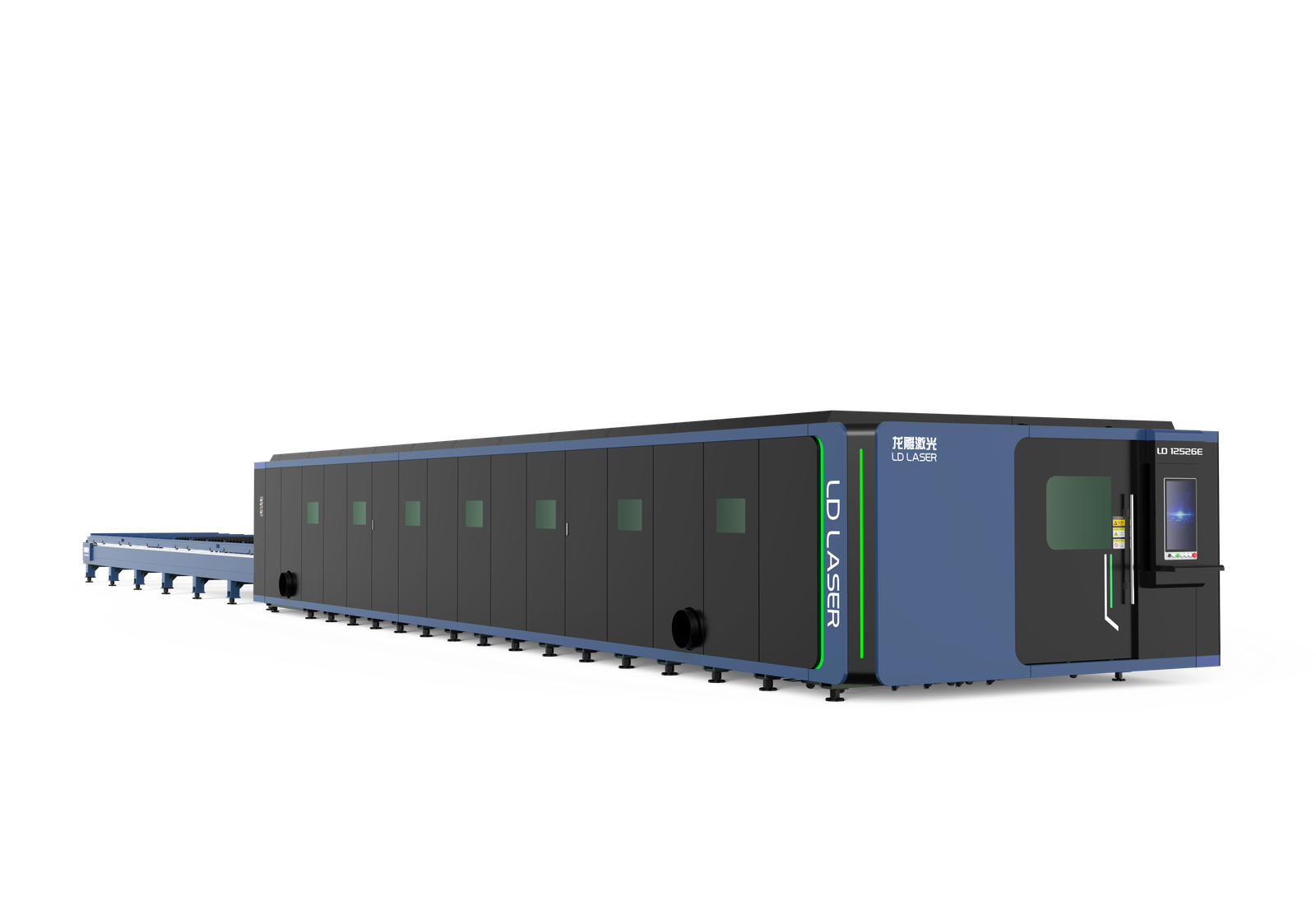
You’re witnessing a manufacturing revolution where fiber lasers achieve ±0.1mm tolerances while cutting through steel pipes at speeds reaching 15 meters per minute. When you combine 6kW laser power with precisely controlled focal points, you’ll eliminate the inconsistencies that plagued traditional cutting methods. Your production efficiency jumps 400% while material waste drops to less than 2%. But mastering this technology requires understanding the complex interplay between beam dynamics, thermal managementet real-time parameter adjustments that separate exceptional results from mediocre ones.
Principaux enseignements
Laser cutting achieves precision tolerances of ±0.1mm, representing a 300-400% productivity increase over traditional manual fabrication methods.
Fiber laser technology cuts at 2-3 meters per minute with energy densities exceeding 10^6 watts/cm² for superior accuracy.
Material properties like thermal conductivity and reflectivity require specific parameter adjustments and thermal management strategies for optimal results.
Quality control uses coordinate measuring machines and laser interferometry to maintain tolerances within thousandths of an inch.
Performance validation includes pressure testing, fatigue analysis, and bend testing to ensure structural integrity across diverse applications.
The Evolution From Manual Craftsmanship to Digital Precision
Before technologie de découpe au laser emerged in the 1960s, pipe fabrication relied entirely on manual techniques that required skilled craftsmen to measure, mark, and cut materials using handsaws, plasma torches, and mechanical cutting tools. You’d spend hours achieving tolerances that modern systems accomplish in minutes. Traditional techniques produced accuracy within ±0.5mm at best, while current laser systems deliver precision to ±0.1mm consistently.
The digital change transformed your workflow fundamentally. You now program cutting parameters directly into CNC systems, eliminating human measurement errors that plagued manual operations. Where traditional techniques required multiple setup changes and manual repositioning, digital systems execute complex cutting patterns without interruption. Your productivity increased 300-400% while material waste decreased by 60%.
Today’s fiber laser technology cuts 25mm steel pipe at 2-3 meters per minute, compared to manual plasma cutting’s 0.5 meters per minute. You’ve gained repeatability that guarantees every pipe meets exact specifications, revolutionizing manufacturing efficiency and quality standards across industrial applications.
Understanding Laser Technology and Beam Dynamics in Pipe Cutting
When you operate a laser cutting system on cylindrical pipes, you’re harnessing concentrated photons that deliver energy densities exceeding 10^6 watts per square centimeter to the material surface. Your beam profiling techniques determine cut quality through precise focal point control and power distribution mapping.
Laser wavelength selection directly impacts material absorption rates. Fiber lasers at 1.07 μm wavelengths provide superior absorption in steel and aluminum compared to CO2 systems at 10.6 μm.
| Paramètres | Fiber Laser | CO2 Laser |
|---|---|---|
| Wavelength | 1.07 μm | 10.6 μm |
| Steel Absorption | 8-12% | 4-6% |
| Power Efficiency | 30-40% | 8-15% |
| Beam Quality (M²) | 1.05-1.10 | 1.05-1.20 |
| Focal Spot Size | 20-50 μm | 100-200 μm |
Your beam’s gaussian intensity profile creates a heat-affected zone proportional to focal diameter and traverse speed. Controlling these parameters guarantees consistent kerf geometry and minimal thermal distortion across varying pipe diameters.
Critical Parameters: Speed, Power, and Focus Point Optimization
You’ll achieve ideal laser cutting results by precisely controlling three interconnected parameters that directly affect cut quality and efficiency. Your speed settings determine heat input and kerf width, while power level calibration guarantees consistent penetration through varying pipe wall thicknesses. Focus point positioning requires exact measurement to maintain beam concentration at the cutting interface, typically within ±0.1mm tolerance for precision applications.
Speed Settings Impact Quality
Although laser cutting parameters work interdependently, speed settings serve as the primary variable that determines cut quality, edge finish, and dimensional accuracy in precision pipe fabrication. You’ll find that speed effectiveness directly correlates with thermal input, affecting heat-affected zones and material distortion.
| Speed Setting | Impact sur la qualité |
|---|---|
| Too Fast | Incomplete cuts, rough edges |
| Ideal Range | Clean cuts, minimal HAZ |
| Too Slow | Excessive heat, warping |
| Variable Speed | Inconsistent edge quality |
| Matched to Material | Superior finish quality |
Your quality assurance protocols must account for material thickness, pipe diameter, and alloy composition when establishing speed parameters. Slower speeds increase dwell time, creating wider kerf widths and potential thermal damage. Conversely, excessive speeds compromise penetration depth and edge smoothness, requiring secondary finishing operations.
Power Level Calibration Methods
Power level calibration requires systematic testing across multiple material conditions to establish baseline parameters that guarantee consistent cut quality throughout your production runs. You’ll execute power adjustments through incremental testing, starting at 60% capacity and increasing by 5% intervals until you achieve ideal penetration without excessive heat-affected zones.
Document each setting’s performance metrics: kerf width, edge smoothness, and processing time. Your efficiency enhancement depends on correlating power levels with material thickness variations. Thicker pipe walls demand higher power settings, but excessive energy creates thermal distortion and slag formation.
Establish power matrices for different alloy compositions, as stainless steel requires 15-20% more energy than carbon steel. Calibrate your system weekly using test specimens to maintain consistent output quality and prevent drift in your cutting parameters.
Focus Point Positioning Techniques
Ideal focus point positioning determines the difference between clean, precise cuts and costly déchets de matériaux in laser pipe cutting operations. You’ll achieve superior results by positioning the focus point slightly below the material surface, typically 0.5-2mm depending on pipe thickness and material composition.
Your focus point adjustments directly impact kerf width, qualité des bordset cutting speed efficiency. Monitor beam diameter measurements at the focal plane to maintain consistent cut quality across varying pipe geometries. Precision alignment requires automated focus tracking systems that compensate for pipe curvature and diameter variations during rotation.
You’ll need to recalibrate focus positioning when switching between materials or thicknesses. Advanced systems utilize capacitive sensors to maintain precise standoff distances, ensuring your focus point remains stable throughout complex cutting patterns and multi-axis operations.
Material Considerations and Thermal Management Techniques
You’ll need to evaluate material conductivité thermique, melting point, and reflectivity coefficients to establish ideal cutting parameters for each pipe specification. Implementing active cooling systems with nitrogen assist gas maintains consistent kerf quality while preventing heat-affected zone expansion beyond 0.1mm tolerances. Your thermal management strategy must account for material thickness variations and adjust pulse duration accordingly to eliminate slag formation and achieve repeatable edge geometries.
Material Selection Criteria
When selecting materials for precision pipe laser cutting, you must evaluate conductivité thermique, absorption characteristics, and heat-affected zone (HAZ) susceptibility to achieve ideal cut quality. Different material types respond uniquely to laser energy—stainless steel requires higher power settings due to low absorption rates, while carbon steel cuts efficiently with moderate parameters. Aluminum’s high thermal conductivity demands rapid cutting speeds to prevent heat buildup.
Critical selection factors include material thickness, chemical composition, and surface finish requirements. Application demands dictate whether you need corrosion resistance, strength-to-weight ratios, or specific mechanical properties. Cost considerations encompass raw material pricing, processing time, and post-cutting treatments. You’ll optimize results by matching laser wavelength to material absorption characteristics while considering downstream fabrication requirements and performance specifications.
Heat Dissipation Methods
How effectively you manage heat dissipation directly determines cut quality, précision dimensionnelle, and material integrity during precision pipe laser cutting operations. You’ll need robust les systèmes de refroidissement that maintain consistent temperatures across the cutting zone. Aluminum pipes require different thermal management than stainless steel due to varying thermal conductivity rates—aluminum conducts heat 16 times faster than steel.
You should implement active cooling through compressed air assist, liquid coolant circulation, or cryogenic systems for thick-walled applications. Monitor heat-affected zone width using thermal imaging to optimize parameters. Your cooling strategy must account for pipe diameter, wall thickness, and material composition. Insufficient heat management creates warping, metallurgical changes, and dimensional drift. You’ll achieve superior results by matching cooling intensity to material thermal conductivity and maintaining steady-state thermal conditions throughout the cutting process.
Quality Control and Tolerance Achievement in Modern Applications
Since modern manufacturing demands tolerances measured in thousandths of an inch, laser cutting technology has revolutionized quality control protocols for precision pipe fabrication. You’ll achieve superior precision standards through real-time monitoring systems that track cutting parameters continuously. These systems guarantee tolerance limits remain within ±0.0005 inches across all dimensions.
Your quality assurance process must integrate compliance regulations from industry standards like ASME and ISO specifications. Advanced inspection techniques utilize coordinate measuring machines (CMMs) and laser interferometry to verify dimensional accuracy. You’ll conduct flexibility assessment through bend testing protocols that evaluate material integrity post-cutting.
| Paramètres | Tolerance Range | Measurement Method |
|---|---|---|
| Wall Thickness | ±0.0003″ | Ultrasonic Testing |
| Diameter | ±0.0005″ | CMM Analysis |
| Finition de la surface | 32 Ra max | Profilometry |
| Straightness | 0.001″/ft | Laser Alignment |
| Heat Zone | <0.010" | Metallography |
Performance metrics track cutting speed, edge quality, and dimensional consistency. Reliability tests validate long-term structural integrity through fatigue analysis and pressure testing protocols.
Industry Applications: From Architecture to Automotive Excellence
Across five major industrial sectors, laser-cut precision pipes deliver specialized performance requirements that traditional manufacturing methods can’t achieve. You’ll find these components driving architectural innovations in modern building systems, where complex HVAC networks demand exact dimensional tolerances within ±0.1mm specifications.
In automotive advancements, you’re seeing laser-cut exhaust systems and fuel lines that meet stringent emission standards while reducing weight by 15-20%. Aerospace applications require pipes withstanding 3,000+ PSI pressures at temperatures exceeding 800°C. Medical device manufacturing depends on biocompatible titanium tubing with surface roughness below 0.8μm Ra.
Industrial processing plants utilize these pipes for chemical transfer systems, where corrosion resistance and leak-proof joints prevent costly downtime. You can achieve wall thickness variations under 0.05mm across entire pipe lengths, ensuring consistent flow rates and pressure distribution. Each sector’s demanding specifications validate laser cutting’s superiority over conventional pipe fabrication methods.
Conclusion
You’ve navigated the labyrinth of laser precision like Daedalus crafting his masterpiece—each parameter adjustment becoming a calculated stroke of genius. Your journey through beam dynamics, thermal management, and tolerance optimization has forged you into a modern artisan. With ±0.1mm accuracy as your compass and 400% productivity gains as your reward, you’re now wielding fiber laser technology to transform raw materials into precision instruments that’ll define tomorrow’s engineering landscape.