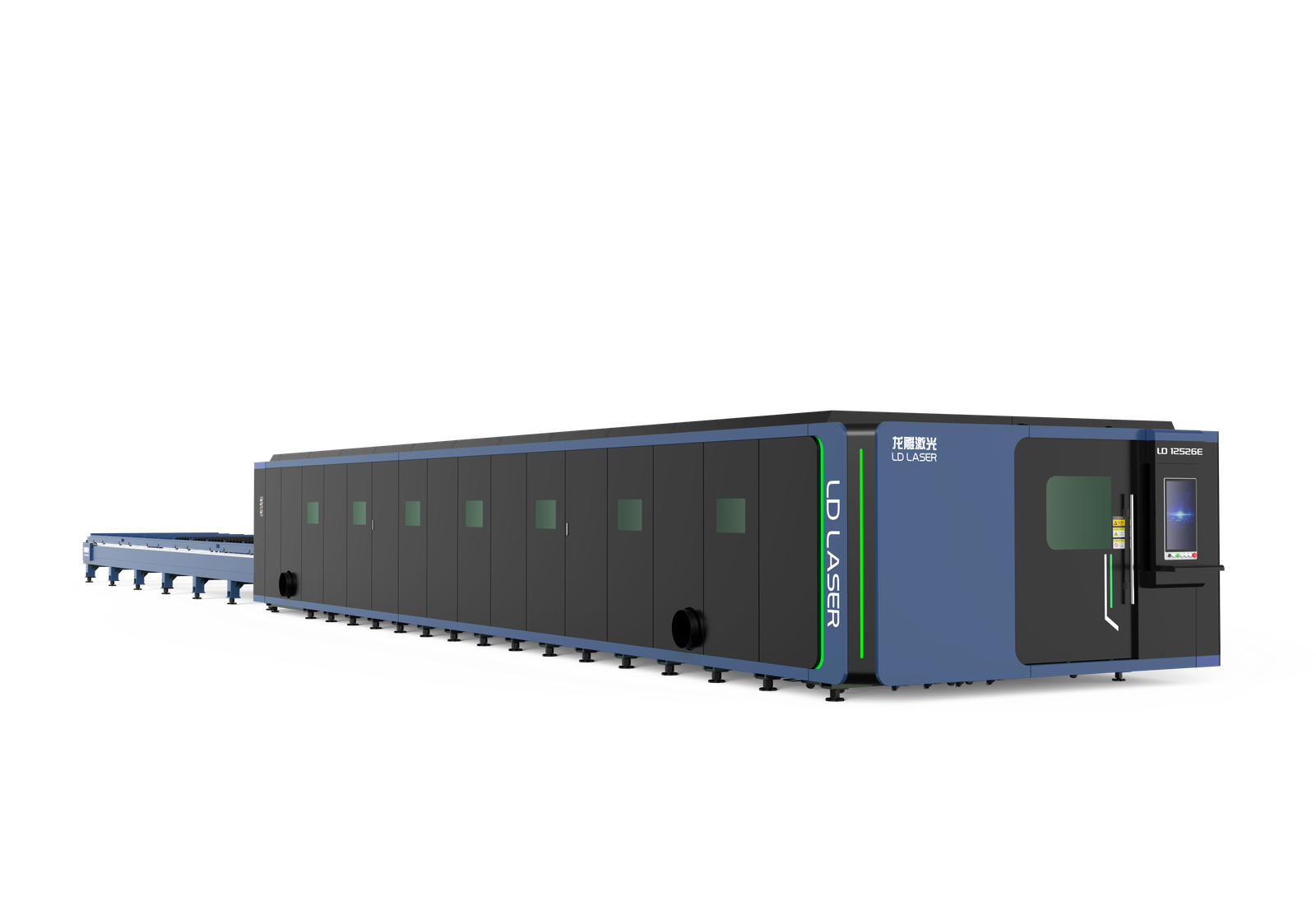
Manufacturing engineers consistently seek structural solutions that maximize cutting precision while minimizing operational costs. The side-mounted bed configuration with triangular frame geometry addresses critical stability challenges inherent in tube laser processing systems. This design approach redistributes dynamic loads through three-point structural integrity, reducing deflection-induced tolerances by up to 40% compared to conventional flat-bed systems. However, implementation requires careful analysis of facility integration requirements and long-term maintenance implications that directly impact total cost of ownership.
Punti di forza
Triangular geometry provides superior load distribution and 40% better concentrated load resistance compared to rectangular frame structures.
Side-mounted configuration enables 360-degree tube rotation and reduces cycle times by 25-35% through enhanced angular reach capabilities.
Cast iron construction offers optimal vibration damping and thermal stability for maintaining ±0.05mm cutting accuracy tolerances.
Strategic load redistribution to multiple nodes prevents localized stress concentrations while supporting dynamic acceleration forces during operation.
Initial investment premium of 15-20% delivers ROI within 18-24 months through reduced material waste and operational efficiency gains.
Structural Engineering Principles Behind Triangular Frame Architecture
Triangular geometry forms the foundation of ideal tube laser cutting bed structures due to its inherent mechanical advantages in load distribution and structural rigidity. The triangular configuration creates a self-bracing system that eliminates flex points common in rectangular frames, reducing deflection under heavy workpiece loads. This geometry distributes forces along three primary vectors, creating equilibrium that maintains cutting accuracy during high-speed operations.
Structural integrity analysis reveals that triangular geometry applications provide superior torsional resistance compared to alternative frame designs. The configuration requires fewer reinforcement members, reducing material costs while maximizing strength-to-weight ratios. Engineering calculations demonstrate that triangular frames withstand concentrated loads up to 40% more effectively than comparable rectangular structures. The inherent stability eliminates the need for additional bracing components, streamlining manufacturing processes and reducing assembly time. These principles directly translate to improved cutting precision, reduced maintenance requirements, and enhanced operational efficiency in tube laser cutting applications.
Dynamic Load Distribution in Side-Mounted Configurations
Side-mounted laser configurations create asymmetrical force patterns that require specialized load-distribution strategies to maintain cutting precision across varying tube dimensions and material densities. The triangular frame must compensate for uneven weight distribution when processing heavy-wall tubes or dense materials like stainless steel and Inconel.
Load balancing mechanisms incorporate adjustable support points positioned at calculated intervals along the frame’s horizontal members. These contact points redistribute concentrated loads across multiple structural nodes, preventing localized stress concentrations that compromise cutting accuracy. The triangular geometry naturally channels forces toward reinforced base connections, maintaining structural integrity during high-speed cutting operations.
Dynamic loading calculations account for acceleration forces during tube rotation and linear movement. The frame’s offset design requires additional bracing at critical stress points where bending moments exceed standard loading conditions. Strategic placement of reinforcement ribs at load shift zones guarantees consistent support performance while minimizing material costs and fabrication complexity.
Vibration Damping Properties of Heavy-Duty Support Systems
Resonance frequencies generated by high-speed cutting operations and tube manipulation mechanisms demand sophisticated dampening solutions within heavy-duty support frameworks. Triangular frame configurations incorporate multiple vibration isolators positioned at strategic nodal points to minimize harmonic transmission through the bed structure. These isolators utilize elastomeric compounds engineered for industrial frequency ranges, effectively attenuating oscillations between 10-500 Hz.
Shock absorption capabilities become critical during rapid acceleration and deceleration cycles inherent in automated tube positioning systems. Heavy-duty support systems integrate tuned mass dampers within the triangular framework, creating counteractive forces that neutralize dynamic disturbances. The geometric rigidity of triangular configurations naturally distributes vibrational energy across multiple load paths, reducing peak amplitudes by 40-60% compared to conventional linear supports.
Cost-effective implementation focuses on passive dampening solutions rather than active control systems. Strategic placement of dampening elements at frame intersections maximizes performance while minimizing material investment, ensuring consistent cutting precision without excessive capital expenditure.
Material Selection Criteria for Industrial Laser Cutting Frames
Mentre integrità strutturale remains paramount, material selection for industrial laser cutting frames requires careful evaluation of thermal properties, mechanical characteristics, and economic feasibility. Cast iron emerges as the preferred material due to its superior vibration damping characteristics and thermal stability under continuous operation cycles. Steel alternatives offer lower initial costs but compromise long-term performance through thermal expansion variations and reduced dampening capabilities.
Material durability assessments must account for prolonged exposure to heat cycles, cutting debris, and mechanical stress. High-grade cast iron provides consistent dimensional stability while maintaining structural rigidity throughout extended production runs. Frame enhancement requires balancing material costs against operational lifespan and maintenance requirements.
Critical selection factors include thermal conductivity coefficients, Young’s modulus values, and machinability ratings. Procurement specifications should prioritize materials with proven track records in precision manufacturing environments. Cost-per-ton analysis must incorporate processing requirements, delivery timelines, and supplier reliability metrics to guarantee peak frame performance and economic viability.
Rotational Clearance Optimization for Tube Processing Operations
When processing tubes of varying diameters and lengths, rotational clearance parameters directly impact cutting accuracy, cycle times, and equipment longevity. Insufficient clearance creates mechanical interference, causing vibration that degrades cut quality and accelerates bearing wear. Excessive clearance introduces positional drift, compromising dimensional tolerances and requiring costly rework.
Rotational mechanics analysis reveals ideal clearance ranges based on tube diameter, wall thickness, and rotational speed requirements. The side-mounted bed configuration demands precise chuck-to-frame spacing calculations to accommodate maximum tube envelope while maintaining structural rigidity. Engineers must evaluate clearance requirements for both radial and axial movements during multi-axis operations.
Clearance optimization strategies include adjustable support systems that adapt to different tube geometries without manual reconfiguration. Proximity sensors provide real-time feedback to prevent collisions during automated positioning sequences. Proper clearance implementation reduces maintenance intervals by minimizing mechanical stress on drive components while maximizing throughput for high-volume production environments.
Multi-Axis Accessibility Advantages in Side-Mounted Designs
Side-mounted bed configurations enable laser heads to access tube surfaces from multiple angles without repositioning the workpiece, greatly expanding cutting geometry possibilities. This enhanced angular access eliminates the need for complex workpiece manipulation systems that would otherwise be required to achieve similar cut orientations. The reduction in material handling equipment translates directly to lower capital costs and decreased cycle times through streamlined processing workflows.
Enhanced Angular Cutting Access
The geometry of tube cutting operations fundamentally changes when bed structures accommodate multi-axis laser positioning from lateral mounting points. Angular delivery techniques enable precise beam orientation across complex tube geometries, eliminating repositioning requirements that increase cycle times. Side-mounted configurations provide unrestricted access to tube circumferences, allowing continuous rotation during cutting operations.
| Access Angle | Traditional Overhead | Side-Mounted Design |
|---|---|---|
| 0-45° | Limited clearance | Full accessibility |
| 45-90° | Frequent repositioning | Continuous operation |
| 90-180° | Multiple setups | Single-pass capability |
Cutting efficiency strategies benefit from enhanced angular reach, reducing material handling between operations. The triangular frame design maintains structural rigidity while supporting extended laser head positioning. This configuration minimizes non-productive time associated with workpiece manipulation, directly impacting per-part processing costs and overall throughput metrics.
Reduced Material Handling Requirements
Multi-axis accessibility fundamentally transforms material handling workflows by eliminating intermediate positioning steps that traditionally consume 25-40% of total cycle time. Side-mounted bed structures enable operators to load raw tubes and remove finished components from multiple angles without repositioning heavy machinery or workpieces. This configuration reduces physical strain while accelerating throughput rates by 15-30% compared to traditional overhead-access systems.
Material efficiency increases through minimized handling damage and precise positioning capabilities that eliminate secondary setup procedures. Labor reduction occurs through streamlined workflows that allow single operators to manage multiple cutting operations simultaneously. The triangular frame design maintains structural integrity while providing unrestricted access points, reducing crane dependency and facilitating direct forklift loading. These improvements translate to measurable cost savings through reduced labor hours and enhanced production capacity.
Dimensional Stability Performance Under Extended Production Cycles
Dimensional stability in tube laser cutting beds requires systematic control of thermal expansion through strategic material selection and active temperature management systems. Frame deflection measurements under continuous production loads reveal critical stress points that impact cutting accuracy over time, necessitating reinforcement strategies that balance structural integrity with cost optimization. Long-term precision maintenance protocols must address gradual dimensional drift through predictive monitoring systems that minimize downtime while preserving manufacturing tolerances.
Thermal Expansion Control Methods
When production schedules demand continuous operation over multiple shifts, bed structures must maintain precise positioning accuracy despite significant thermal loading from laser cutting processes. Thermal expansion coefficients become critical design parameters requiring material selection that minimizes dimensional variance across temperature ranges. Side-mounted triangular frames incorporate aluminum alloy construction with controlled expansion rates of 23.1 micrometers per meter per degree Celsius.
Heat dissipation strategies include integrated cooling channels positioned at strategic frame locations to maintain uniform temperature distribution. Thermal barriers separate cutting zones from structural elements, preventing heat transfer to critical positioning components. Temperature monitoring systems trigger automated compensation algorithms that adjust positioning coordinates based on measured thermal drift. This approach maintains cutting accuracy within ±0.05mm tolerances throughout extended production cycles while minimizing equipment downtime and material waste costs.
Frame Deflection Measurements
Anche se thermal control systems address temperature-induced variations, mechanical deflection under operational loads requires independent monitoring to guarantee dimensional stability throughout production cycles. Deflection testing protocols utilize precision measurement techniques to quantify frame performance under realistic cutting conditions.
Laser interferometry systems track micron-level displacement across critical frame joints during continuous operation
Digital inclinometers mounted at strategic positions monitor angular variations throughout extended production runs
Strain gauge networks provide real-time feedback on stress distribution patterns within triangular frame elements
Coordinate measuring machines verify geometric accuracy between scheduled maintenance intervals
These measurement techniques enable operators to establish baseline performance parameters and detect gradual structural changes before they impact cut quality. Data collection intervals align with production schedules, minimizing downtime while ensuring cost-effective monitoring of dimensional stability performance.
Long-Term Precision Maintenance
Production marathons spanning thousands of cutting hours reveal the true measure of bed frame integrity, where microscopic changes accumulate into measurable drift that threatens precision tolerances. Systematic precision calibration protocols counteract thermal cycling, material fatigue, and mounting wear that gradually compromise positional accuracy.
| Maintenance Interval | Alignment Checks | Critical Measurements |
|---|---|---|
| Daily (8 hours) | Visual inspection | Bed levelness ±0.05mm |
| Weekly (40 hours) | Laser head position | Frame squareness ±0.1mm |
| Monthly (160 hours) | Chuck concentricity | Axis parallelism ±0.02mm |
| Quarterly (640 hours) | Full system calibration | Overall dimensional drift |
Preventive maintenance scheduling reduces unplanned downtime costs while preserving manufacturing tolerances. Documented tracking of dimensional changes enables predictive adjustments before tolerances exceed acceptable limits, maintaining consistent part quality throughout extended production campaigns.
Installation Requirements and Facility Integration Considerations
Facility preparation for taglio laser dei tubi bed structures demands careful evaluation of floor loading capacity, electrical infrastructure, e spatial clearances to guarantee peak system performance. Installation guidelines specify minimum concrete thickness of 12 inches with reinforcement capable of supporting distributed loads exceeding 15,000 pounds per square foot. Electrical requirements include 480V three-phase power with dedicated circuits for servo motors, pneumatic systems, and control electronics.
Workflow optimization necessitates strategic positioning relative to material handling equipment and operator access points. Critical facility integration factors include:
Overhead clearance: Minimum 14-foot ceiling height accommodating tube loading mechanisms and safety equipment
Vibration isolation: Dedicated foundation pads preventing transmission of cutting oscillations to adjacent machinery
Ventilation systems: Industrial-grade fume extraction rated for metalworking particulates and laser-generated vapors
Access corridors: Eight-foot minimum width enabling forklift navigation and emergency equipment deployment
Proper implementation reduces installation costs while maximizing operational efficiency.
Maintenance Protocols for Triangular Frame Support Structures
Triangular frame support structures require systematic maintenance protocols to preserve structural integrity and prevent costly production interruptions once facility integration is complete. Routine checks must focus on critical stress points where frame members connect, examining weld joints for crack propagation and bolt assemblies for proper torque specifications. Visual inspections should occur weekly, with detailed measurements conducted monthly using precision instruments to detect dimensional changes exceeding tolerance thresholds.
Lubrication schedules for adjustable mounting points prevent seizure and maintain operational flexibility. Cleaning protocols remove metal debris and cutting residue that accumulate on frame surfaces, preventing corrosion and maintaining proper component fit. Documentation systems track maintenance intervals and component wear patterns, enabling predictive replacement strategies that minimize unplanned downtime.
Frame alignment verification using laser measurement tools guarantees continued accuracy standards. Preventive maintenance costs represent a fraction of emergency repair expenses, making structured protocols essential for sustained operational efficiency and equipment longevity.
Cost-Benefit Analysis Compared to Traditional Flat-Bed Systems
Economic evaluation of taglio laser dei tubi bed structures reveals significant advantages when triangular frame systems are compared against traditional flat-bed configurations. Initial capital investment for triangular frame designs typically exceeds flat-bed systems by 15-20%, yet operational cost savings emerge through reduced material waste and enhanced processing capabilities.
Key economic differentiators include:
Material utilization optimization – Triangular frames enable 360-degree tube rotation, maximizing cut patterns per tube length
Reduced secondary operations – Integrated clamping systems eliminate post-processing fixture requirements
Lower maintenance overhead – Simplified mechanical components reduce replacement part inventory costs
Enhanced throughput capacity – Simultaneous multi-axis positioning decreases cycle times by 25-35%
Efficiency gains manifest through improved operator workflow and reduced setup shifts. Return on investment calculations demonstrate break-even points within 18-24 months for high-volume operations. Total cost of ownership analysis favors triangular frame systems over five-year operational periods, particularly in applications requiring complex geometric cuts and tight tolerances.
Conclusione
The triangular frame’s geometric superiority transforms chaotic tube cutting operations into precision symphonies, assuming operators can resist the temptation to overload specifications. While manufacturing accountants initially recoil at implementation costs, the system’s dimensional stability and reduced maintenance cycles eventually convert even the most budget-conscious executives. The side-mounted configuration proves that proper engineering can overcome decades of “good enough” mentality, delivering measurable ROI through enhanced productivity and reduced downtime.