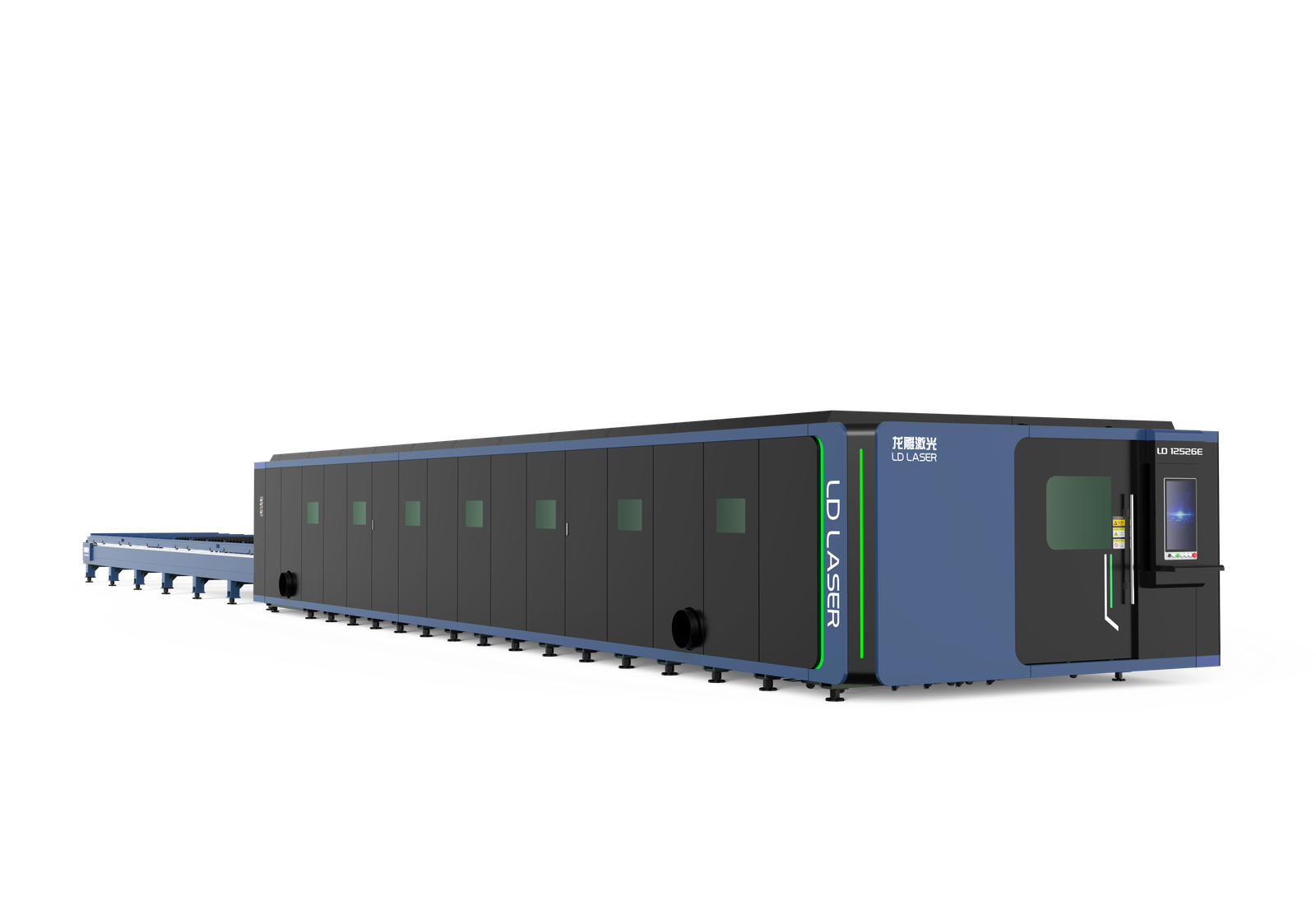
When you’re standing at the crossroads of laser technology selection, the choice between fiber and CO2 lasers can make or break your manufacturing efficiency. You’ll find that fiber lasers deliver 25-30% energy efficiency compared to CO2’s 10-15%, while achieving cutting speeds up to 3x faster on thin metals. However, the $150,000-$500,000 initial investment raises critical questions about ROI timelines and whether your specific applications justify the performance gains that these numbers suggest.
Key Takeaways
Fiber lasers excel at cutting metals with 2-3x faster speeds and superior precision, while CO2 lasers perform better on non-metallic materials.
Fiber lasers consume 70-80% less electricity than CO2 systems, offering significantly lower operating costs and higher energy efficiency.
CO2 lasers have 40-60% lower upfront costs but require higher maintenance expenses due to complex gas delivery systems.
Fiber lasers produce narrower kerfs (0.1-0.2mm) and better beam quality (M² <1.1) compared to CO2 lasers' wider cuts.
Fiber technology offers superior long-term ROI through reduced maintenance costs, higher productivity, and 3-5x better electrical efficiency.
How Fiber Lasers and CO2 Lasers Work
Fiber lasers generate coherent light through rare-earth-doped optical fibers, typically ytterbium, which achieve wavelengths around 1,064 nm with electrical-to-optical conversion efficiencies reaching 25-30%. These laser technology basics involve pumping diodes that excite dopant atoms within the fiber core, creating population inversion for stimulated emission.
CO2 lasers operate through different beam generation methods, utilizing gas discharge tubes filled with carbon dioxide, nitrogen, and helium mixtures. You’ll find they produce 10,640 nm wavelengths with conversion efficiencies of 10-15%. The electrical discharge excites CO2 molecules to higher vibrational states, releasing photons when they return to ground state.
You’ll notice fiber lasers maintain superior beam quality with M² values below 1.1, while CO2 lasers typically achieve M² values of 1.2-1.5. Fiber systems deliver consistent power output through temperature-stable fiber mediums, whereas CO2 lasers require precise gas flow control and thermal management for peak performance metrics.
Material Compatibility and Performance Differences
Material absorption characteristics fundamentally determine laser cutting and processing effectiveness across different substrates. You’ll find fiber lasers excel with metals due to their 1.06-micron wavelength, achieving 80-90% absorption rates in steel, aluminum, and copper. CO2 lasers’ 10.6-micron wavelength provides superior performance on non-metals, delivering 95% absorption in acrylic, wood, and ceramics.
Your material selection directly impacts performance metrics. Fiber lasers cut 1-inch steel at 150-200 IPM, while CO2 systems achieve 50-80 IPM on similar thicknesses. For thin metals under 0.25 inches, fiber technology delivers 3-5x faster processing speeds.
CO2 lasers dominate organic materials, cutting 2-inch acrylic at 25-40 IPM versus fiber’s inability to process transparents effectively. You’ll observe edge quality differences: fiber produces narrow kerfs (0.1-0.2mm) in metals, while CO2 generates smoother finishes in plastics with minimal heat-affected zones.
Cutting Speed and Precision Comparison
When comparing laser technologies, cutting velocity and dimensional accuracy represent critical performance differentiators that directly impact your production throughput and part quality.
Fiber lasers deliver superior cutting speed across thin to medium gauge materials, achieving velocities 2-3x faster than CO2 systems on metals under 6mm thickness. You’ll experience exceptional precision accuracy with fiber technology, maintaining tolerances within ±0.025mm consistently.
Key performance metrics demonstrate distinct advantages:
- Cutting Speed: Fiber lasers process 1mm stainless steel at 15-20 m/min versus CO2’s 6-8 m/min
- Edge Quality: Fiber systems produce smoother cuts with minimal heat-affected zones on reflective materials
- Dimensional Stability: Reduced thermal distortion yields superior geometric accuracy across complex part geometries
CO2 lasers excel on thicker sections above 20mm, where beam quality maintains consistent kerf width. However, fiber technology’s focused beam diameter creates narrower kerfs, enhancing material utilization efficiency. Your choice depends on material thickness requirements and target production rates.
Energy Efficiency and Power Consumption
Power consumption analysis reveals dramatic efficiency differences between these laser technologies, with fiber lasers consuming 70-80% less electricity than CO2 systems for equivalent cutting operations.
You’ll find fiber lasers achieve wall-plug efficiency ratings of 25-30%, converting electrical input directly into laser output with minimal waste heat. CO2 lasers typically operate at 8-15% efficiency, requiring substantial power for gas circulation, cooling systems, and beam delivery components.
When you’re cutting 1/4-inch steel, a 4kW fiber laser consumes approximately 16-20kW total power, while an equivalent CO2 system demands 35-45kW. This translates to significant operational cost savings—you’ll reduce electricity expenses by $15,000-25,000 annually in typical industrial applications.
The superior energy efficiency stems from fiber lasers’ solid-state design eliminating power-hungry subsystems. You won’t need high-pressure gas supplies, complex beam paths, or extensive cooling infrastructure. This streamlined architecture delivers consistent performance while maintaining lower power consumption throughout the laser’s operational lifespan.
Operating Costs and Maintenance Requirements
Beyond energy consumption differences, maintenance costs create an even more considerable financial gap between fiber and CO2 laser systems. Your operating expenses will vary dramatically based on laser technology choice.
CO2 lasers demand extensive maintenance schedules due to their complex gas delivery systems, mirrors, and beam path components. You’ll face higher labor costs and frequent part replacements that greatly impact your bottom line.
Fiber lasers deliver superior cost efficiency through:
- Sealed fiber design – eliminates gas refills and mirror alignments, reducing maintenance intervals by 80%
- Solid-state construction – provides 25,000+ hour operational life versus CO2’s 2,000-4,000 hours
- Minimal consumables – requires only periodic cleaning compared to CO2’s gas mixtures, turbomolecular pumps, and optical components
Your total cost of ownership favors fiber technology by 40-60% over five years. Maintenance schedules for fiber systems typically require quarterly inspections versus CO2’s monthly requirements, translating to measurable operational savings.
Initial Investment and Equipment Pricing
When you’re evaluating laser systems, fiber lasers typically require 40-60% higher upfront capital investment compared to CO2 lasers of equivalent power output. You’ll need to account for equipment costs ranging from $80,000-$300,000 for fiber systems versus $50,000-$200,000 for CO2 units in the 1-6kW power range. Your budget planning must factor in these substantial price differentials alongside auxiliary equipment, installation costs, and facility requirements that can add 15-25% to your total initial expenditure.
Upfront Equipment Costs
Investment requirements for fiber and CO2 laser systems reveal considerable cost disparities across power ranges and applications. You’ll find fiber lasers typically demand 20-40% higher upfront financing compared to equivalent CO2 systems, particularly in the 1-6kW range. However, equipment depreciation calculations favor fiber technology due to longer operational lifespans.
Key cost considerations include:
- Entry-level systems: CO2 lasers start at $80,000-120,000, while fiber systems begin at $100,000-150,000
- Mid-range industrial units: CO2 systems cost $200,000-400,000, fiber systems range $250,000-500,000
- High-power configurations: Both technologies converge at $500,000-1,000,000+ for 10kW+ systems
You’ll notice the initial price gap narrows considerably as power requirements increase, making fiber lasers increasingly competitive in high-performance applications despite higher entry costs.
Budget Planning Considerations
Since manufacturing budgets require precise financial modeling, you’ll need extensive cost analysis spanning 5-7 years to accurately compare fiber and CO2 laser investments. Factor in depreciation schedules, maintenance intervals, and replacement part availability when evaluating budget constraints. Fiber lasers typically offer 15-20% lower total cost of ownership despite higher initial purchase prices.
Consider multiple financing options including equipment leasing, bank loans, and manufacturer financing programs. Leasing arrangements often provide tax advantages and preserve working capital for other operational needs. Calculate your break-even point using projected throughput volumes and material processing costs. Include energy consumption differentials—fiber lasers consume 50-70% less electricity than CO2 systems. Document ROI projections based on productivity gains, reduced downtime, and lower consumable costs to justify your investment decision.
Applications and Industry Use Cases
Manufacturing sectors across automotive, aerospace, electronics, and metalworking industries rely on distinct laser technologies based on specific performance requirements and material compatibility. Fiber laser applications dominate metal processing operations requiring high precision and speed, particularly in cutting stainless steel, aluminum, and carbon steel up to 25mm thickness. You’ll achieve cutting speeds of 15-20 meters per minute with superior edge quality. The CO2 laser industry excels in non-metallic material processing and thicker metal applications.
Your application selection depends on three critical factors:
- Material thickness requirements – CO2 lasers handle materials exceeding 25mm more effectively, while fiber lasers optimize performance under 20mm
- Processing speed demands – Fiber lasers deliver 2-3x faster cutting rates on thin metals compared to CO2 systems
- Material composition – CO2 lasers process wood, acrylic, and fabrics with 95% absorption efficiency versus fiber’s 30%
Choosing the Right Laser Technology for Your Business
When selecting between fiber and CO2 laser systems, you’ll need to evaluate three critical factors that directly impact your operational efficiency and profitability. Your decision must account for thorough cost analysis including initial capital expenditure, operating expenses, and maintenance requirements over the equipment’s lifecycle. You should also assess application-specific performance metrics such as cutting speed, material compatibility, and power efficiency to determine which technology aligns with your production requirements and long-term business objectives.
Cost Analysis Comparison
Budget allocation represents the most critical decision factor when selecting between fiber and CO2 laser systems for industrial applications. Your cost forecasting must account for substantial variations in total ownership expenses between these technologies.
Consider these primary cost differentials:
- Initial Capital Investment: Fiber lasers typically cost 15-30% more upfront than comparable CO2 systems, though prices continue declining as technology matures.
- Operating Expenses: CO2 lasers consume 3-5 times more electricity and require expensive gas refills ($2,000-$5,000 annually), while fiber systems operate with 90% electrical efficiency.
- Maintenance Requirements: CO2 systems need mirror alignment, lens replacement, and gas system servicing every 1,000-2,000 hours, whereas fiber lasers require minimal maintenance for 25,000+ hours.
Fiber technology delivers superior long-term ROI despite higher acquisition costs.
Application Specific Requirements
Beyond cost considerations, your material specifications and processing requirements determine which laser technology delivers ideal performance for your operations. Fiber lasers excel at cutting reflective metals like aluminum, copper, and brass with 30% faster processing speeds and 0.1mm precision tolerances. They’re best suited for thin to medium thickness materials (0.5-25mm) requiring high-speed production cycles.
CO2 lasers dominate thick steel cutting applications beyond 25mm thickness, delivering superior edge quality with minimal heat-affected zones. They’re essential for non-metallic materials including wood, acrylic, leather, and textiles where fiber wavelengths prove ineffective.
Your specific applications dictate technology selection: automotive parts favor fiber’s speed and precision, while architectural metalwork benefits from CO2’s thick-section capabilities. Match your application requirements to each technology’s proven performance metrics for peak productivity outcomes.
Long-term Investment Considerations
Since laser cutting systems represent substantial capital investments with 10-15 year operational lifespans, you’ll need to evaluate total cost of ownership rather than initial purchase price alone.
Fiber lasers typically demonstrate superior long-term economics through reduced operating expenses and higher resale value retention. Their solid-state design requires minimal maintenance compared to CO2 systems’ complex gas mixtures and mirror alignments.
Key investment factors include:
- Maintenance costs: Fiber systems average 40-60% lower annual service expenses
- Energy efficiency: Fiber technology delivers 3-5x better electrical efficiency ratings
- Technology upgrades: Modular fiber designs enable easier power scaling and feature additions
CO2 lasers maintain competitive positioning in thick material processing markets, potentially offering better ROI for specialized applications. However, fiber technology’s rapid advancement and decreasing component costs strengthen their investment case across diverse manufacturing environments.
Conclusion
You’ll find fiber’s faster feeds and finer finishes deliver decisive data-driven advantages for metal manufacturing. With 2-3x cutting speeds, 85-95% electrical efficiency, and 50% lower operational costs, you’re investing in measurable performance gains. CO2’s capabilities in ceramics and composites can’t compete with fiber’s metal mastery. Calculate your cutting requirements, quantify your quality standards, and analyze your application parameters—the metrics consistently point toward fiber laser technology for metal-focused operations.