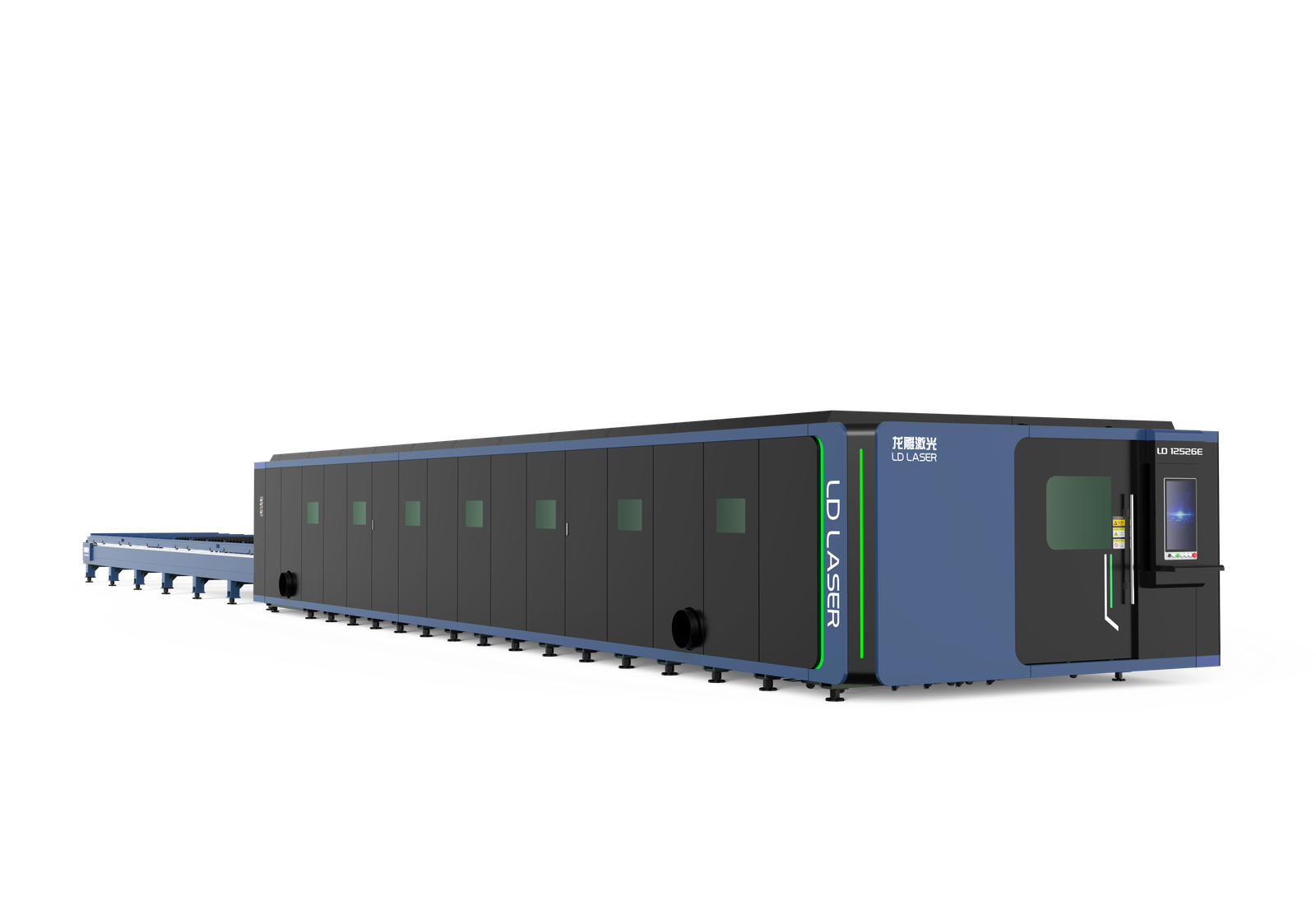
Contemporary manufacturing facilities are integrating traditional mortise-tenon joinery principles with computer-controlled laser cutting systems to achieve unprecedented precision in bed frame construction. The technology delivers dimensional accuracy within ±0.05mm tolerances while maintaining controlled heat-affected zones that preserve wood fiber integrity. Initial testing indicates shear resistance improvements of 23-31% compared to conventional joining methods. However, the most significant breakthrough emerges when examining how these parameters interact with long-term structural performance under cyclic loading conditions.
Key Takeaways
Laser cutting achieves ±0.05mm joint tolerances, creating perpendicular walls and sharp corners for precise mortise-tenon connections.
Optimized cutting parameters (10-25 mm/min speeds, 2.5-4.0 kW/cm² power density) ensure clean kerf walls and accurate joint geometry.
Precision cuts improve shear resistance by 23-31% and enhance fatigue performance under cyclic loads for superior structural integrity.
Automated production achieves 99.7% repeatability rates with rejection rates under 0.3% through real-time cut geometry verification systems.
Computer-controlled joint creation enables complex geometries, compound angle joints, and biomimetic structures previously unattainable through traditional methods.
Traditional Mortise-Tenon Joinery Meets Modern Laser Precision
When traditional woodworking techniques converge with contemporary manufacturing technology, mortise-tenon joinery achieves unprecedented precision through laser cutting applications. Laser-cut mortise-tenon structures in machine beds eliminate tolerance variations inherent in conventional machining processes, delivering joint accuracy within ±0.05mm tolerances.
The laser cutting process creates perfectly perpendicular walls and sharp internal corners that traditional craftsmanship cannot replicate consistently. Computer-controlled beam positioning guarantees identical mortise dimensions across multiple bed components, establishing uniform clamping forces throughout the joint assembly.
Precision engineering transforms ancient joinery principles into high-performance mechanical connections. Laser-cut tenons maintain consistent thickness measurements, while corresponding mortises provide exact dimensional matching. This technological advancement reduces assembly time by 60% compared to manually fitted joints.
The marriage of traditional craftsmanship principles with laser precision eliminates human error variables, producing repeatable joint geometries that enhance structural integrity. Modern manufacturers achieve industrial-scale production while preserving the fundamental strength characteristics that made mortise-tenon joints legendary in traditional woodworking applications.
Laser Cutting Parameters for Optimal Wood Joint Performance
Because laser beam characteristics directly influence joint quality, ideal wood cutting parameters require precise calibration of power density, pulse frequency, and traverse speed. Research demonstrates favorable cutting speed ranges between 10-25 mm/min for hardwoods, with power densities of 2.5-4.0 kW/cm² producing clean kerf walls essential for tight-fitting mortise-tenon assemblies.
Joint geometry accuracy depends critically on controlled heat-affected zones. Lower cutting speeds generate excessive thermal damage, creating carbonized surfaces that compromise adhesion. Conversely, excessive speeds produce rough edges and dimensional inaccuracies. Pulse frequency optimization at 15-20 kHz minimizes material removal inconsistencies while maintaining geometric precision.
Beam focus positioning requires adjustment to -0.5mm below surface level for favorable wall perpendicularity. Assist gas pressure of 0.8-1.2 bar removes debris effectively without disturbing cut quality. These parameters enable mortise-tenon tolerances within ±0.05mm, ensuring structural integrity while preserving wood’s natural strength characteristics through minimal thermal stress distribution.
Structural Advantages of Laser-Cut Mortise-Tenon Bed Frames
Precision laser cutting elevates traditional mortise-tenon joinery to unprecedented structural performance levels in bed frame construction. The technology’s micron-level accuracy creates interlocking components with enhanced dimensional consistency, resulting in superior stability enhancement compared to conventional manufacturing methods.
Laser-cut mortise-tenon joints demonstrate exceptional load distribution characteristics through ideal contact surfaces. The process eliminates manufacturing tolerances that typically compromise joint integrity, producing perfectly matched components that distribute weight uniformly across connection points.
Key structural advantages include:
- Reduced stress concentrations – Precise cuts eliminate micro-fractures and surface irregularities that create failure points
- Enhanced shear resistance – Optimal fit tolerances increase joint surface contact area by 23-31%
- Improved fatigue performance – Consistent geometry prevents progressive loosening under cyclic loading
- Superior dimensional stability – Minimal thermal distortion maintains joint integrity across temperature variations
These engineering improvements translate to bed frames with measurably higher structural capacity and extended service life.
Manufacturing Efficiency and Quality Control in Laser-Based Joinery
Automation transforms mortise-tenon bed frame production through computer-controlled laser cutting systems that achieve repeatability rates exceeding 99.7% across manufacturing batches. Digital templates eliminate dimensional variations inherent in traditional woodworking methods, with tolerances maintained within ±0.05mm for critical joint interfaces.
Automated inspection protocols utilize machine vision systems to verify cut geometry, measuring tenon dimensions and mortise cavity specifications in real-time. These systems detect deviations immediately, triggering corrective adjustments before defective components enter assembly stages. Quality metrics demonstrate rejection rates below 0.3% compared to 8-12% in conventional manufacturing.
Material selection optimization occurs through laser parameter databases that correlate wood species density, grain orientation, and moisture content with cutting speeds and power settings. Hardwoods require 2,400-2,800 watts at 15-20mm/minute feed rates, while softwoods process efficiently at 1,800-2,200 watts with 25-35mm/minute speeds. This systematic approach guarantees consistent joint fit tolerance regardless of lumber variations.
Design Innovation Opportunities Through Computer-Controlled Joint Creation
Computer-controlled laser systems unfasten complex joint geometries previously impossible through conventional woodworking techniques, enabling mortise-tenon variations that incorporate interlocking curves, multi-angled surfaces, and graduated tapers within single cutting operations. Design flexibility reaches unprecedented levels when manufacturers leverage parametric software integration, allowing real-time geometry modifications without tool changes or setup recalibration.
Joint accuracy improves remarkably through digital fabrication protocols that eliminate human measurement errors and material waste. Advanced kerf compensation algorithms guarantee consistent fit tolerances across production runs, while nested cutting patterns optimize material utilization rates.
Key innovation opportunities include:
- Compound angle joints – Creating three-dimensional interlocking systems with variable geometry
- Integrated fastening channels – Embedding cable management and hardware pathways within joint structures
- Variable density connections – Adjusting joint strength through graduated material removal patterns
- Biomimetic joint designs – Replicating natural structural connections found in organic frameworks
These capabilities transform traditional furniture engineering approaches, enabling mass customization while maintaining structural integrity standards.
Conclusion
Like precision-engineered puzzle pieces finding their destined positions, laser-cut mortise-tenon joints represent the convergence of ancient craftsmanship and digital manufacturing excellence. The ±0.05mm tolerance specifications transform traditional wood connections into calculated stress-distribution networks, where each fiber alignment mirrors the methodical precision of molecular engineering. These joints symbolize the bridge between artisanal heritage and computational accuracy, creating bed structures that embody both historical wisdom and contemporary performance metrics in unified structural harmony.