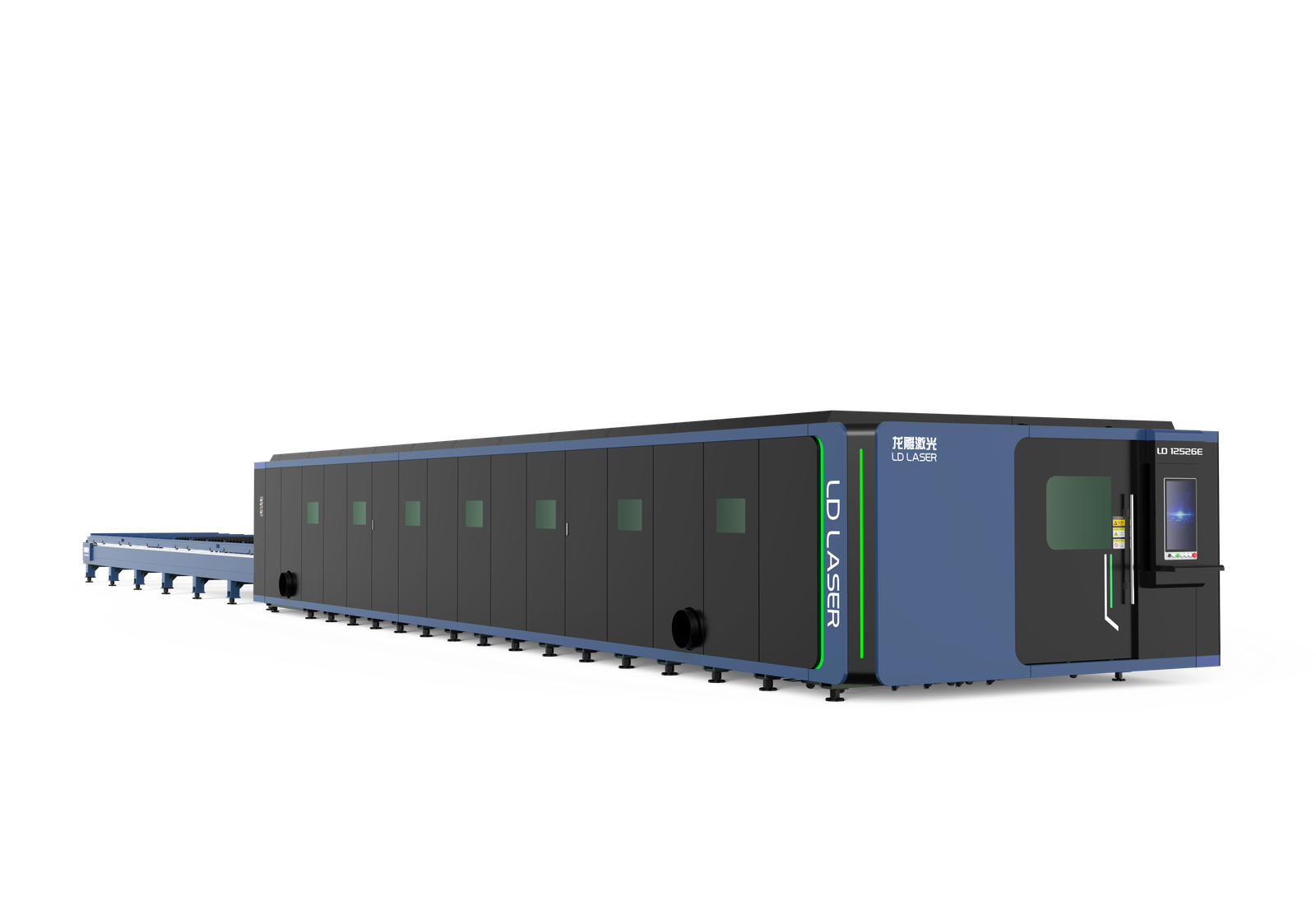
Fiber laser cutting machines represent a convergence of photonics engineering and precision manufacturing technology. The process begins with ytterbium-doped optical fibers generating coherent light through stimulated emission, achieving power densities exceeding 10^6 watts per square centimeter at the focal point. This concentrated energy beam, transmitted through fiber optic cables with minimal loss, interacts with target materials through controlled thermal processes. However, the transformation from raw light energy to precise cuts involves multiple interconnected systems operating in microsecond coordination.
주요 내용
Fiber laser generates coherent light through stimulated emission in rare-earth-doped optical fibers, producing focused beams up to 30kW power.
CNC control system converts digital designs into precise G-code instructions, coordinating multi-axis movements with micron-level accuracy for complex cuts.
Focused laser beam creates localized heating and melt pools, while assist gases remove molten material from the cutting path.
Beam delivery system uses fiber optic cables and focusing optics to concentrate laser energy into 0.1-0.3mm spot sizes.
Real-time sensors monitor cutting parameters and maintain consistent focal positions through closed-loop control systems for optimal cut quality.
The Core Components of a Fiber Laser Cutting System
A fiber laser cutting system operates through the coordinated function of several critical components that generate, control, and deliver high-intensity laser energy to the cutting surface. The laser source generates coherent light through stimulated emission within rare-earth-doped optical fibers, with different fiber laser types offering varying power outputs from 1kW to 30kW+. The 빔 전달 시스템 consists of fiber optic cables that transmit laser energy with minimal loss, maintaining consistent power density across extended distances.
The cutting head contains focusing optics that concentrate the beam to precise spot sizes, typically 0.1-0.3mm diameter. An assist gas delivery system provides oxygen, nitrogen, or compressed air to facilitate material removal and cooling. The CNC control system coordinates all movements with micron-level precision. Motion systems utilizing servo motors and linear guides position the cutting head along programmed paths. These integrated components achieve system efficiency rates exceeding 30%, substantially higher than CO2 laser alternatives.
Fiber Laser Generation and Amplification Process
When stimulated emission occurs within rare-earth-doped optical fibers, photons cascade through the gain medium to produce coherent laser light with exceptional beam quality and power density. The process begins with pump diodes injecting energy at specific wavelengths into ytterbium-doped silica fibers, creating population inversion between energy states.
Laser excitation mechanisms utilize semiconductor diodes operating at 915nm or 976nm wavelengths to efficiently transfer energy to ytterbium ions. These ions absorb pump photons and shift to excited states before releasing coherent photons at 1070nm through stimulated emission.
The fiber waveguides structure maintains optical confinement through total internal reflection. The core’s higher refractive index compared to the cladding guarantees photons propagate along the fiber length while maintaining beam integrity. Multiple pump diodes feed energy into the cladding, where it gradually transfers to the doped core. This configuration enables power scaling through longer active fiber lengths and increased pump power, achieving industrial-grade laser outputs exceeding several kilowatts.
Beam Delivery and Optical Path Management
Multiple optical components work in sequence to transport the high-power laser beam from the fiber output to the cutting head while maintaining beam quality and controlling power density. The delivery system consists of precisely engineered mirrors, lenses, and protective windows that direct the beam through the machine’s articulated arm or gantry system.
Critical beam alignment guarantees ideal power transmission and prevents thermal damage to optical elements. High-reflectivity dielectric optical coatings on mirrors achieve 99.5% or higher reflectance at the operating wavelength, minimizing power losses during beam transport. Collimating and focusing lenses shape the beam profile for specific cutting applications.
Fiber-to-free-space coupling optics convert the guided beam into a collimated free-space beam. Mirror assemblies redirect the beam path through multiple axes while maintaining polarization. Protective windows isolate optical components from contamination and process debris. Focusing optics concentrate beam energy to achieve power densities exceeding 10^6 W/cm².
Focusing Optics and Beam Shaping Technology
The focusing optics system transforms the collimated laser beam into a precisely controlled focal point through a series of specialized lens components that determine cut quality and processing capabilities. Beam quality control mechanisms maintain ideal power density distribution while compensating for thermal lensing effects and aberrations that occur during high-power operation. These optical elements work in conjunction to achieve focal spot diameters typically ranging from 0.1 to 0.3 millimeters, directly influencing kerf width, edge quality, and maximum cutting thickness.
Lens System Components
Precision optics within fiber laser cutting systems transform the raw laser beam into a controlled cutting tool through sophisticated focusing and beam shaping technologies. The lens system comprises multiple components that determine cutting quality and efficiency. Primary lens types include plano-convex, meniscus, and aspheric designs, each tailored for specific focal lengths and beam characteristics. Optical coatings enhance performance by minimizing reflection losses and protecting against thermal damage.
Key lens system components include:
Collimating lens – Converts divergent fiber output into parallel beam geometry
Focusing lens – Concentrates collimated beam to precise focal point diameter
Protective window – Shields focusing optics from debris and process contamination
Beam expander assembly – Adjusts beam diameter for ideal focal spot characteristics
These components work synergistically to achieve micron-level precision and consistent cutting performance across various material thicknesses.
Beam Quality Control
While lens systems provide the foundation for beam delivery, achieving ideal cutting performance requires sophisticated beam quality control mechanisms that govern focal characteristics and power distribution. These systems employ real-time monitoring sensors that continuously assess beam stability through measurements of mode structure, power fluctuations, and focal point consistency. Advanced feedback loops automatically adjust optical components to maintain optimal beam parameters within specified tolerances. Quality assurance protocols integrate beam profiling cameras and power meters to verify M² beam quality factors and guarantee uniform intensity distribution across the cutting zone. Adaptive optics compensate for thermal drift and mechanical vibrations that could degrade beam integrity. This thorough control architecture maintains consistent cutting performance by preserving precise focal diameter and stable energy delivery throughout extended operation cycles.
CNC Control System and Motion Mechanics
Computerized numerical control (CNC) systems serve as the operational brain of fiber laser cutting machines, translating digital design files into precise mechanical movements through coordinated servo motor assemblies. These sophisticated systems utilize advanced CNC programming techniques that convert CAD drawings into G-code instructions, enabling micrometer-level positioning accuracy across X, Y, and Z axes.
Motion control systems orchestrate synchronized movements between the laser head and workpiece through high-precision linear guides and ball screw mechanisms. Servo motors receive real-time feedback from optical encoders, maintaining cutting speeds ranging from 1-50 meters per minute while preserving dimensional tolerances within ±0.02mm.
Multi-axis interpolation enables simultaneous coordinate movements for complex geometric patterns and beveled cuts
Adaptive feed rate control automatically adjusts cutting velocity based on material thickness and corner geometry
Real-time position feedback guarantees continuous path accuracy through closed-loop servo control systems
Collision detection algorithms prevent mechanical damage during rapid traverse movements and tool changes
Assist Gas Functions and Material Interaction
하지만 laser energy provides the primary cutting mechanism, assist gas systems play an equally critical role in material removal, oxidation control및 cut quality refinement through precisely regulated gas flow dynamics.
Assist gas types include oxygen, nitrogen및 compressed air, each serving distinct metallurgical functions. Oxygen promotes exothermic reactions in carbon steel cutting, generating additional heat that accelerates the cutting process while creating oxide scale formation. Nitrogen provides inert atmosphere protection, preventing oxidation and producing clean, scale-free edges in stainless steel and aluminum applications. Compressed air offers cost-effective solutions for thin materials requiring moderate cut quality.
Assist gas pressure parameters directly influence cut quality and processing speed. Higher pressures enhance molten material ejection from the kerf but may cause edge roughness or blow-back effects. Lower pressures reduce material removal efficiency but improve edge finish. Ideal pressure settings correlate with material thickness, laser power density, and cutting velocity to achieve desired metallurgical and geometric outcomes.
Heat Transfer and Material Removal Mechanisms
The laser beam creates localized heating that propagates through the material via thermal conduction, establishing temperature gradients that determine cut quality and kerf characteristics. Material removal occurs through controlled melting processes where the focused energy creates a dynamic melt pool with specific flow patterns and ejection velocities. These thermal conduction processes and melt pool dynamics directly influence 절단 속도, edge finish, and dimensional accuracy across different material types and thicknesses.
Thermal Conduction Process
Photon absorption initiates the thermal conduction process when the focused laser beam contacts the material surface, converting electromagnetic energy into localized heat through molecular vibration and electronic excitation. Heat propagation occurs through direct atomic contact, establishing temperature gradients that determine cutting quality and kerf characteristics. The material’s energy absorption traits influence penetration depth, while thermal expansion effects create stress concentrations that facilitate material separation.
Temperature distribution patterns follow Gaussian profiles corresponding to laser beam intensity, creating peak temperatures at the focal point that decrease radially outward
Heat-affected zone dimensions depend on material thermal conductivity, processing speed, and laser power density parameters
Phase transformation sequences progress from solid to liquid to vapor states based on localized energy density thresholds
Thermal diffusion rates determine cutting speed limitations and edge quality through heat transfer coefficients
Melt Pool Dynamics
Molten material accumulates at the laser-material interaction zone as intense thermal energy exceeds the melting threshold, forming a dynamic melt pool that governs material removal efficiency and cut edge quality. The melt pool behavior depends on laser power density, traverse speed, and material thermal properties. Heat diffusion occurs radially from the focal point, creating temperature gradients that determine pool size and viscosity. High-velocity assist gas generates shear forces that eject molten material from the kerf, while surface tension and Marangoni convection influence flow patterns within the pool. Ideal cutting parameters maintain stable melt pool geometry, preventing excessive heat-affected zones and ensuring consistent material ejection rates for precise dimensional control.
Cutting Head Design and Nozzle Configuration
When laser light exits the fiber delivery system, it encounters the 커팅 헤드 어셈블리 where precise beam manipulation 그리고 gas delivery mechanisms determine cut quality and efficiency. The cutting head incorporates collimating and focusing lenses that maintain beam collimation and focus stability throughout operations. Design considerations include thermal management, vibration dampening, and precise optical alignment to guarantee consistent performance.
Nozzle types vary based on material and thickness requirements, with different orifice diameters and geometries optimizing airflow dynamics for specific applications. Conical, cylindrical, and specialized nozzles create distinct gas flow patterns that affect molten material evacuation and cut edge quality. The standoff distance between nozzle and workpiece, combined with gas pressure settings, influences cutting efficiency by controlling the interaction between assist gas flow and the laser-generated melt pool.
Capacitive height sensing maintains consistent focal position during cutting operations
Coaxial gas delivery guarantees uniform assist gas distribution around the laser beam
Quick-change nozzle systems enable rapid configuration adjustments for different materials
Integrated collision protection prevents damage during unexpected workpiece contact
Real-Time Monitoring and Feedback Systems
As cutting operations progress, sophisticated sensor arrays continuously monitor critical parameters including laser power output, beam position accuracy, cut quality indicators, and thermal conditions within the processing zone. These monitoring systems collect real-time data at frequencies exceeding several kilohertz, enabling instantaneous detection of process variations that could compromise cut quality or dimensional accuracy.
Advanced feedback mechanisms automatically adjust laser parameters based on sensor inputs. Capacitive height sensors maintain ideal standoff distances by continuously measuring gap variations between the cutting head and workpiece surface. Photodiode arrays monitor reflected laser energy to detect breakthrough events and material thickness changes. Temperature sensors track thermal accumulation that could affect heat-affected zone characteristics.
The control system processes this sensor data through algorithms that modify 절단 속도, laser power, and assist gas pressure in real time. This closed-loop approach guarantees consistent cut quality across varying material conditions and geometric complexities while preventing equipment damage from process anomalies.
Material Compatibility and Processing Parameters
Fiber laser cutting machines demonstrate varying performance characteristics across different material types, with processing parameters requiring precise calibration to achieve ideal results. The relationship between laser power settings, 절단 속도, and material thickness forms the foundation for determining appropriate operational parameters for each substrate. These interdependent variables directly influence cut quality, edge finish, and production efficiency across metals ranging from thin gauge stainless steel to thick carbon steel plates.
Compatible Material Types
Most industrial materials respond predictably to fiber laser cutting when operators understand the fundamental relationship between wavelength absorption 그리고 material properties. Fiber lasers excel at processing metals due to their 1.06-micron wavelength, which metals readily absorb. Material suitability depends on 열 전도성, melting point, and reflectivity characteristics. Thickness limits vary considerably across material types, with carbon steel achievable up to 30mm, stainless steel to 25mm, and aluminum to 15mm under ideal conditions.
Carbon steel: Excellent absorption rates enable 깨끗한 컷 with minimal heat-affected zones across varying thicknesses
Stainless steel: Requires nitrogen assist gas to prevent oxidation while maintaining edge quality standards
Aluminum: Higher reflectivity demands increased power density and specialized processing parameters for consistent results
Copper alloys: Challenging due to high thermal conductivity requiring precise focal positioning and cutting speeds
Cutting Speed Settings
Ideal cutting speeds depend on the precise interaction between laser power, material thickness, and thermal properties, with speeds ranging from 50mm/min for thick sections to 15,000mm/min for thin materials. Cutting speed refinement requires systematic adjustment based on material characteristics and desired edge quality. Operators calibrate feed rates through test cuts, measuring kerf width, dross formation, and heat-affected zones. Material thickness directly correlates with speed limitations—thicker substrates demand slower traverse rates to guarantee complete penetration and clean separation. Advanced controllers automatically adjust cutting parameters using pre-programmed material databases. Excessive speeds produce incomplete cuts and poor edge finish, while insufficient speeds create excessive heat input, warping, and oxidation. Ideal settings balance productivity with quality requirements.
Power and Thickness
Precise power-to-thickness ratios determine successful material processing across diverse substrates, with laser wattage requirements scaling exponentially with material depth and thermal conductivity. Power levels must correlate directly with material specifications to achieve ideal cut quality and processing efficiency. Thickness limits vary considerably based on material composition, with mild steel accommodating greater depths than stainless steel or aluminum at equivalent wattage settings.
Carbon steel processing: 1kW systems cut up to 10mm effectively, while 6kW units penetrate 25mm thickness
Stainless steel requirements: Higher power density needed due to reflective properties and thermal characteristics
Aluminum challenges: Reflectivity demands increased power levels with reduced maximum thickness capabilities compared to steel
Power scaling ratios: Doubling thickness typically requires tripling laser power output for maintained cut quality
Power Density Distribution and Beam Quality
When the fiber laser beam reaches the cutting head, its power density distribution determines the precision and efficiency of the material removal process. The beam’s Gaussian profile concentrates energy at the center, creating maximum power density at the focal point. This distribution typically ranges from 10^6 to 10^8 watts per square centimeter, sufficient to vaporize metal instantly.
Beam quality, measured by the M² factor, directly affects cutting performance. Fiber lasers achieve M² values between 1.05 and 1.2, indicating near-perfect beam quality. Lower M² values produce smaller focal diameters and higher power density concentration. The beam’s diffraction-limited properties enable precise kerf widths as narrow as 0.1mm.
Focal position critically affects power density distribution. Positioning the focus slightly below the material surface optimizes cutting through-thickness uniformity. Beam quality deterioration from contaminated optics or thermal lensing reduces cutting efficiency and edge quality, requiring regular maintenance protocols.
Kerf Formation and Edge Quality Control
The kerf formation process in fiber laser cutting directly correlates with beam power density distribution, material interaction time, and gas flow dynamics that collectively determine cut edge characteristics. Kerf width control requires precise management of focal position, 절단 속도, and laser power parameters to achieve dimensional accuracy while minimizing thermal influence on adjacent material zones. Surface finish optimization depends on systematic adjustment of pulse frequency, assist gas pressure, and feed rate variables to eliminate melt adherence and reduce surface roughness measurements.
Kerf Width Control Factors
Control of kerf width represents one of the most critical aspects of fiber laser cutting operations, directly influencing both 치수 정확도 그리고 edge quality of the finished part. Multiple variables interact to determine final kerf dimensions, requiring precise adjustment for each material thickness and cutting application.
Primary factors affecting kerf width include:
Laser power density – Higher power concentrations create wider kerfs through increased material vaporization zones
Cutting speed adjustment – Slower traverse rates allow greater heat diffusion, expanding kerf width beyond ideal parameters
Assist gas pressure regulation – Excessive pressure widens the kerf through enhanced molten material ejection forces
Focal point positioning – Defocused beams produce broader interaction zones, directly correlating with increased kerf dimensions
Systematic control of these parameters enables manufacturers to achieve consistent dimensional tolerances while maintaining superior edge quality across varying material thickness specifications.
Heat Affected Zone Minimization
Beyond kerf width considerations, minimizing the heat affected zone (HAZ) stands as a fundamental requirement for achieving superior metallurgical properties 그리고 dimensional precision in fiber laser cutting operations. HAZ reduction relies on precise control of thermal input through optimized cutting parameters and laser intensity modulation. Higher cutting speeds reduce material exposure time, while appropriate power settings prevent excessive heat buildup. Heat dissipation techniques include optimized assist gas flow patterns that actively cool the cutting zone and remove molten material efficiently. Pulse duration control enables precise energy delivery, preventing unnecessary thermal diffusion into surrounding material. Proper focal point positioning ensures maximum energy concentration at the cutting interface. These combined strategies maintain material microstructure integrity, prevent unwanted phase transformations, and preserve mechanical properties adjacent to the cut edge.
Surface Finish Optimization Techniques
동안 heat affected zone control establishes the foundation for quality cuts, surface finish enhancement requires systematic management of kerf formation dynamics 그리고 edge quality parameters to achieve the precise dimensional tolerances and surface characteristics demanded by industrial applications.
Operators manipulate laser power density, traverse speed및 gas pressure ratios to control melt pool behavior and material ejection patterns. The cutting technique directly influences kerf width consistency and edge perpendicularity through focal position adjustments and beam oscillation parameters. Surface treatments may be eliminated when suitable process variables generate desired roughness values below 12.5 micrometers Ra.
Focal position control: Maintaining precise beam waist location relative to material thickness
Gas flow enhancement: Balancing assist gas pressure for complete dross removal
Feed rate calibration: Synchronizing cutting speed with material thermal response
Power modulation: Adjusting laser intensity for consistent energy density distribution
Thermal Management and Cooling Systems
Heat generation poses a significant challenge in fiber laser cutting operations, as the high-power laser diode arrays and optical components produce substantial thermal energy that must be efficiently dissipated to maintain peak performance. Effective cooling system design prevents thermal drift, maintains beam quality, and extends component lifespan.
Modern fiber laser systems employ sophisticated thermal management strategies incorporating multiple cooling loops. Primary cooling circuits handle high-heat components like laser diodes, while secondary loops manage auxiliary electronics and optics.
| Component | Cooling Method | Temperature Range |
|---|---|---|
| Laser Diodes | Water-cooled heat exchangers | 18-25°C |
| Fiber Optics | Passive air circulation | 20-40°C |
| 전자 제품 | Forced air convection | 15-35°C |
Thermal performance analysis involves continuous monitoring of coolant flow rates, temperatures, and heat exchanger efficiency. Advanced systems integrate temperature sensors throughout the laser cavity, enabling real-time adjustments to maintain ideal operating conditions and prevent thermal-induced beam distortion.
Safety Features and Protective Enclosures
Fiber laser cutting systems incorporate multiple layers of safety protection to shield operators from hazardous laser radiation, which can cause permanent eye damage or severe burns upon direct exposure. Enclosed cutting chambers feature Class 1 laser-safe enclosures with interlocked doors that automatically halt laser operation when opened. Safety sensors continuously monitor enclosure integrity and ambient light levels to detect potential radiation leaks.
Machine control systems integrate emergency shutdown protocols that immediately terminate laser output when triggered. Warning indicators including strobe lights and audible alarms alert personnel to active laser conditions. Exhaust ventilation systems remove hazardous fumes and particulates generated during cutting operations.
Interlocked safety enclosures prevent laser exposure during operation and maintenance procedures. Emergency stop buttons provide immediate system shutdown capability accessible from multiple locations. Operator training programs guarantee proper safety protocol adherence and hazard recognition. Automated safety circuits monitor beam path integrity and enclosure seal effectiveness continuously.
Maintenance Requirements and Operational Optimization
Proper maintenance protocols directly impact fiber laser cutting machine performance, operational lifespan, and cutting quality consistency. Preventive maintenance schedules encompass daily cleaning of protective lenses, weekly inspection of beam delivery components, and monthly calibration of cutting head alignment. Operators must monitor laser power output degradation, typically occurring at 0.5-1% annually, requiring systematic power measurements and documentation.
Operational efficiency optimization involves regular examination of assist gas delivery systems, nozzle wear patterns, and cutting table condition. Fiber laser modules require minimal maintenance compared to CO2 systems, with service intervals extending 20,000-30,000 operating hours. Critical maintenance tasks include cleaning optical components using appropriate solvents, replacing consumable parts based on usage metrics, and verifying cutting parameter accuracy through test cuts.
Temperature regulation systems demand monthly filter replacements and coolant level monitoring. Predictive maintenance software analyzes cutting speed variations, power consumption patterns, and material waste percentages to optimize scheduling and prevent unexpected downtime.
결론
Fiber laser cutting systems orchestrate a symphony of precision-engineered components, where coherent photons dance through ytterbium-doped fibers before being sculpted into focused beams that slice through materials with surgical accuracy. The harmonious integration of CNC control systems, thermal management protocols, and beam delivery mechanisms transforms raw laser energy into a cutting instrument that operates at the intersection of physics and manufacturing excellence, delivering repeatable results with micron-level precision across diverse industrial applications.