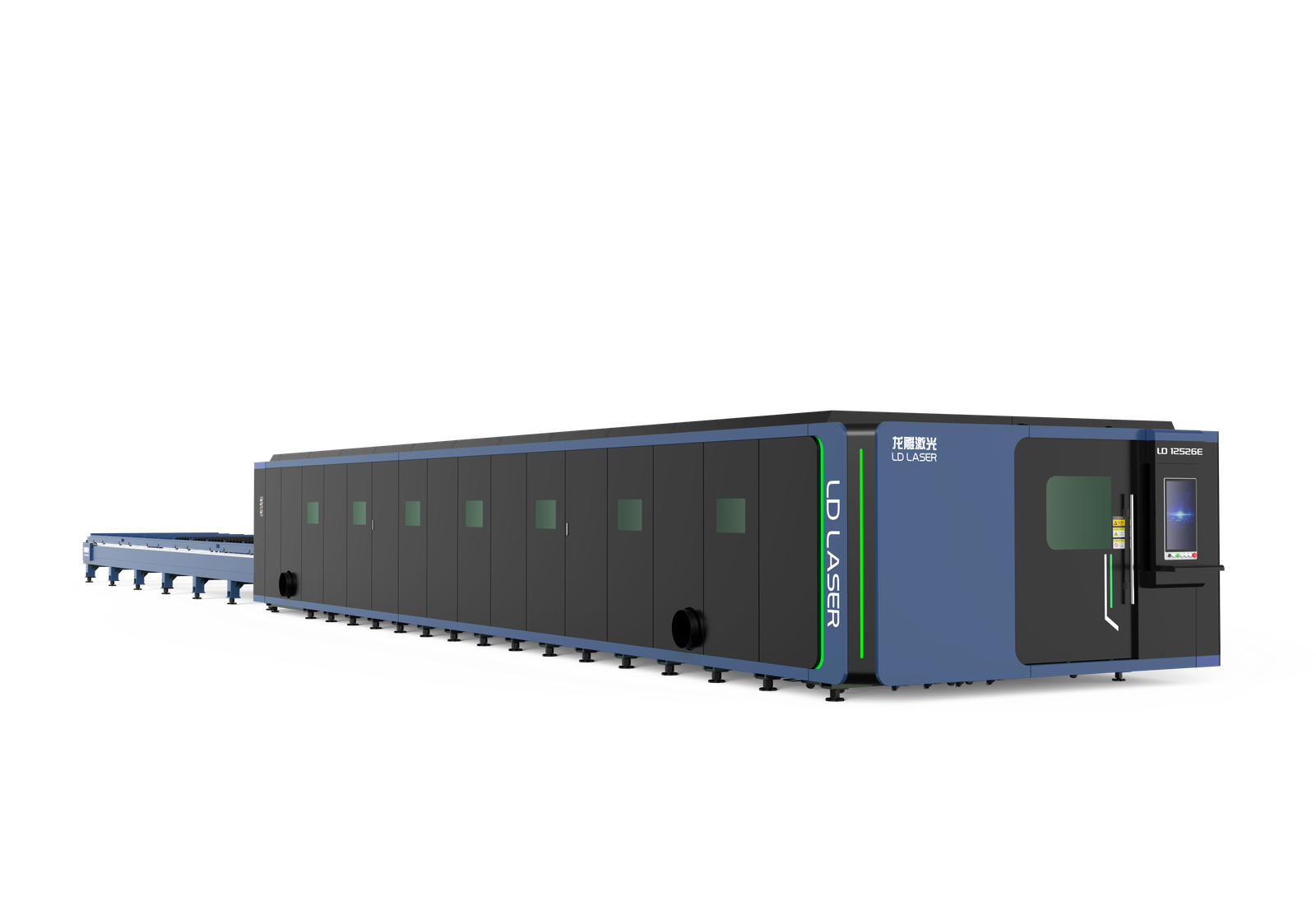
Independent push-pull operating platforms in laser manufacturing environments face significant electromagnetic interference challenges that compromise 위치 정확도 그리고 system reliability. High-power laser systems generate substantial electromagnetic fields while precision encoders and motor controllers require clean signal environments for peak performance. Traditional shielding approaches often prove inadequate when confronted with the complex interference patterns present in modern laser facilities. Advanced anti-interference design methodologies must address these competing demands through systematic engineering solutions that protect critical control signals without compromising mechanical performance or operational flexibility.
주요 내용
Faraday cage construction with grounded metal enclosures shields motor controllers from electromagnetic interference generated by high-power laser systems.
Twisted pair cables with triaxial shielding and ferrite core filters prevent signal degradation while maintaining sub-micron positioning accuracy.
Star grounding topology with optical isolators eliminates ground loops between control modules, power supplies, and motor drive systems.
Servo motors with closed-loop feedback and error-correcting algorithms ensure precise bidirectional control despite electromagnetic field exposure.
Segregated cable pathways maintain 6-inch separation between power and signal lines to minimize interference coupling and preserve data integrity.
Electromagnetic Interference Sources in Laser Manufacturing Environments
Multiple electromagnetic interference sources operate simultaneously within laser manufacturing environments, creating complex signal disruption patterns that can compromise precision control systems. High-power laser generators produce substantial electromagnetic emissions through switching power supplies and plasma formation during material processing. Variable frequency drives controlling motion systems generate harmonic disturbances across broad frequency spectrums. Industrial welding equipment, fluorescent lighting systems, and radio frequency identification devices contribute additional interference layers.
These interference sources directly impact laser system performance through signal degradation in feedback sensors, encoder miscounts, and communication protocol disruptions. Power line fluctuations from heavy machinery startup sequences create voltage transients affecting servo motor positioning accuracy. Wireless communication devices operating in unlicensed frequency bands introduce unpredictable signal contamination patterns.
Effective interference mitigation requires thorough source identification and frequency spectrum analysis. Manufacturing environments demand systematic electromagnetic compatibility assessments to establish baseline interference levels before implementing push-pull platform control systems.
Core Components and Architecture of Independent Push-Pull Platforms
The fundamental architecture of independent push-pull platforms centers on integrated motor drive systems that provide precise bidirectional movement control for laser machine operations. Control circuit architecture forms the operational backbone, utilizing real-time feedback mechanisms to coordinate motor positioning, velocity regulation, and synchronization protocols. These core subsystems must deliver microsecond-level response times while maintaining electromagnetic compatibility within high-interference laser manufacturing environments.
Motor Drive Systems
Precision actuators form the foundation of independent push-pull operating platforms, where servo motors and stepper motors provide the controlled mechanical force necessary for material handling operations. Servo motors deliver superior motor efficiency through closed-loop feedback systems, enabling real-time position correction and adaptive torque control. Their high-resolution encoders guarantee sub-micron positioning accuracy essential for laser processing applications. Stepper motors offer exceptional drive stability through open-loop control architectures, providing reliable incremental movement without positional drift. Motor selection depends on load requirements, acceleration profiles, and positioning tolerances. Drive amplifiers convert control signals into precise current waveforms, optimizing motor performance while minimizing electromagnetic interference. Integrated motion controllers synchronize multi-axis operations, guaranteeing coordinated push-pull sequences that maintain material tension and processing continuity throughout automated laser machining cycles.
Control Circuit Architecture
Control circuit architecture coordinates motor drive systems through layered processing hierarchies that manage real-time feedback loops and command execution pathways. The primary control unit employs microprocessor-based modules that interface with servo amplifiers, position encoders, and safety interlocks. Multi-channel signal conditioning circuits isolate sensor inputs while maintaining signal integrity across electromagnetic environments. Digital signal processors execute trajectory calculations and velocity profiling algorithms within millisecond response windows.
Circuit efficiency optimization incorporates power management modules that regulate voltage distribution and minimize thermal dissipation. Modular design frameworks enable rapid component replacement and system diagnostics. Design scalability allows configuration expansion through standardized communication protocols and expandable I/O interfaces. Emergency stop circuits provide instantaneous motor shutdown capabilities while preserving position data integrity for operational continuity.
Electromagnetic Shielding Strategies for Motor Control Systems
When electromagnetic interference threatens the operational integrity of motor control systems in laser machine platforms, engineers must implement detailed shielding strategies that protect sensitive control circuits from both external radiation and internally generated noise. Motor controller isolation becomes critical for maintaining precise 위치 정확도 during push-pull operations, while inclusive noise reduction techniques guarantee stable signal transmission between control modules and drive circuits.
Effective electromagnetic shielding requires systematic implementation of multiple protection layers:
- Faraday cage construction around motor controllers using continuous metal enclosures with proper grounding points
- Twisted pair cabling with dedicated shielding for all motor power and control signal pathways
- Ferrite core filters installed at cable entry points to suppress high-frequency electromagnetic emissions
- Ground plane isolation separating digital control circuits from high-current motor drive sections
These strategies collectively minimize interference coupling between adjacent systems, preventing signal degradation that could compromise platform positioning accuracy and laser processing quality during critical manufacturing operations.
Signal Filtering and Grounding Optimization Techniques
Signal integrity in push-pull laser platforms demands systematic implementation of advanced filter circuits that attenuate electromagnetic interference while preserving critical control signals. Ground loop elimination requires strategic isolation techniques and single-point grounding architectures that prevent current circulation between system components. Shielded cable configurations must incorporate proper termination methods and impedance matching to maintain signal fidelity across the motor control network.
Advanced Filter Circuit Design
Electromagnetic interference presents one of the most critical challenges in precision laser machine control systems, where microsecond-level timing accuracy directly impacts cut quality and dimensional tolerances. Advanced filter circuit implementations require sophisticated design considerations to maintain signal integrity throughout the push-pull operating platform.
Effective filter circuit architectures incorporate multiple stages:
- Active low-pass filtering – Eliminates high-frequency switching noise from power electronics
- Common-mode rejection circuits – Suppresses ground loop interference between control modules
- Differential signal conditioning – Maintains push-pull signal symmetry under varying load conditions
- Adaptive bandwidth control – Dynamically adjusts filtering characteristics based on operational modes
These filtering strategies guarantee consistent performance across varying environmental conditions while preserving critical timing relationships between laser firing commands and mechanical positioning systems, ultimately delivering precise material processing results.
Ground Loop Elimination Methods
Ground loops represent a persistent source of noise contamination that undermines the effectiveness of even the most sophisticated filter circuits in laser machine control systems. These electrical phenomena occur when multiple current paths exist between components, creating potential differences that manifest as unwanted interference signals.
Primary ground loop sources include differential ground potentials between control modules, power supply units, and motor drivers distributed across the push-pull platform. Effective elimination requires systematic implementation of star grounding topologies, where all components reference a single central ground point rather than daisy-chained configurations.
Advanced isolation techniques employ optical isolators 그리고 differential signaling protocols to break problematic current paths. Magnetic isolation transformers provide galvanic separation between sensitive control circuits and high-power actuator systems, preventing ground-borne noise propagation throughout the operational platform’s electrical infrastructure.
Shielding Cable Configuration Strategies
Proper cable shielding configurations form the cornerstone of electromagnetic interference suppression in independent push-pull laser platform architectures. Optimized shielding effectiveness requires systematic implementation of multi-layered protection strategies that address both radiated and conducted emissions.
Critical cable routing methodologies include:
- Triaxial shielding implementation – Employs inner signal conductor, intermediate shield, and outer protective barrier for maximum isolation
- Differential signal pair configuration – Utilizes twisted conductor arrangements with 360-degree shield termination at both endpoints
- Segregated pathway management – Maintains minimum 6-inch separation between power and signal cables with dedicated metallic conduits
- Shield drain wire optimization – Establishes low-impedance ground connections through dedicated termination points rather than chassis bonds
These configurations guarantee signal integrity preservation while minimizing crosstalk between control systems and high-power laser drive circuits in demanding industrial environments.
Robust Communication Protocols for Position Control
동안 mechanical precision forms the foundation of push-pull platform operation, the communication protocols governing position control determine the system’s ability to maintain accurate spatial coordination between laser head movement and material advancement. Robust protocols guarantee consistent data transmission between control systems, preventing positional drift that compromises cutting accuracy. Signal coherence across multiple communication channels maintains synchronized operation between drive motors, encoders, and feedback sensors.
Error-correcting algorithms detect and compensate for transmission anomalies in real-time, preserving positional integrity during high-speed operations. Redundant communication pathways provide failsafe mechanisms when primary channels experience interference or signal degradation. Time-stamped data packets guarantee sequential processing of position commands, preventing out-of-order execution that could destabilize platform movement.
Protocol handshaking verifies successful command reception before executing subsequent positioning instructions. Checksum validation confirms data integrity throughout the transmission chain, while adaptive transmission rates optimize communication speed based on environmental interference levels, maintaining reliable position control under varying operational conditions.
Performance Validation and Testing Methods for Anti-Interference Design
Three primary validation methodologies establish the effectiveness of anti-interference designs in push-pull platform systems: electromagnetic compatibility testing, signal integrity analysis및 operational stress evaluation.
Testing methodologies encompass thorough performance evaluation protocols that validate system resilience under adverse conditions. Electromagnetic compatibility testing measures susceptibility to external interference sources while evaluating radiated emissions compliance. Signal integrity analysis examines data transmission quality across communication channels, identifying potential degradation points in control pathways.
Operational stress evaluation subjects platforms to realistic manufacturing environments, incorporating:
- High-frequency vibration exposure simulating industrial machinery interference
- Temperature cycling tests validating component stability across operational ranges
- Power supply fluctuation analysis evaluating control system robustness during voltage variations
- Multi-axis positioning accuracy verification under electromagnetic field exposure
Performance assessment criteria include position repeatability within ±0.1mm tolerances, communication latency below 10ms thresholds, and zero data corruption incidents during 1000-hour continuous operation cycles. These validation frameworks guarantee reliable platform operation in demanding laser processing environments.
결론
The implementation of extensive anti-interference methodologies transforms potentially disruptive electromagnetic environments into harmoniously controlled operational spaces. Through meticulous integration of shielding architectures, refined signal conditioning pathways, and resilient communication frameworks, these platforms elegantly navigate the challenges of high-energy laser manufacturing. The systematic mitigation of unwanted electromagnetic influences guarantees that precision positioning systems maintain their intended performance characteristics, delivering consistent operational excellence while gracefully accommodating the demanding electromagnetic landscape of modern industrial laser applications.