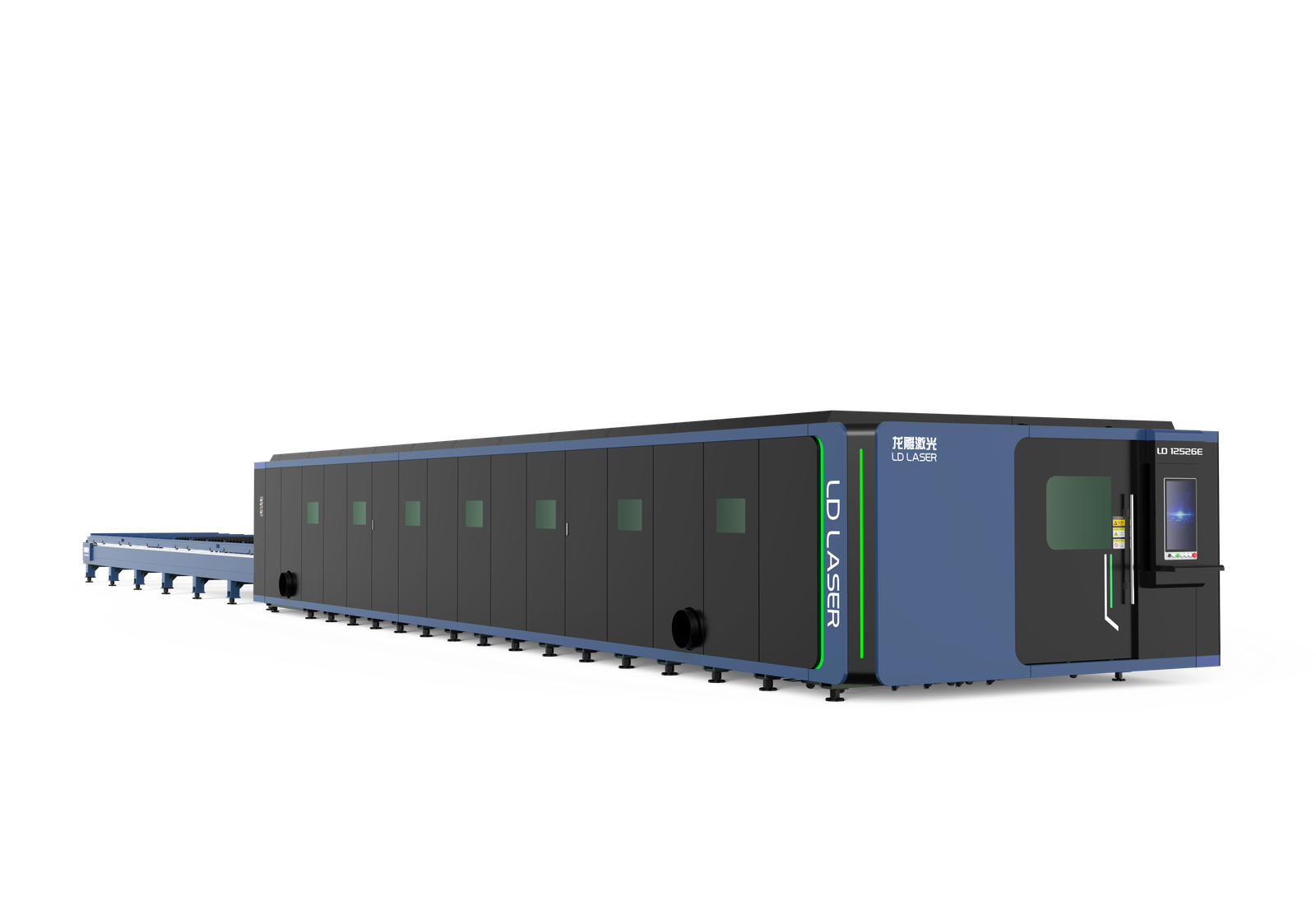
Like a sculptor’s chisel evolving into a digital paintbrush, your laser cutting head has transformed from crude manual adjustments to AI-powered precision instruments. You’ve witnessed systems that once demanded skilled operators making constant focal corrections now operate with microsecond response times and predictive algorithms. Today’s intelligent heads analyze material properties, ambient conditions, and cut quality simultaneously, yet most manufacturers still underutilize their advanced capabilities, leaving significant performance gains on the table.
주요 내용
Manual systems from 1960s-1980s relied on operator trial-and-error, causing material waste and inconsistent quality due to skill variations.
Mid-1980s motorized focus mechanisms reduced operator intervention by 60-70% through servo-controlled motors and automated height sensing capabilities.
Late 1980s CNC integration enabled simultaneous control of multiple variables with real-time feedback sensors for precision adjustments.
Smart sensor networks now maintain focal distance within ±0.01mm tolerance using photodiode arrays and infrared thermal imaging systems.
AI-powered systems predict optimal parameters before material contact, compensating for thermal distortion through machine learning algorithms.
The Era of Manual Focus Systems and Operator-Dependent Controls
During the foundational decades of laser cutting development, from the 1960s through the early 1980s, operators manually adjusted focal parameters and cutting variables for each material thickness and type. You’d witness technicians spending considerable time calibrating beam focus positions, gas pressures, and cutting speeds through trial-and-error methodologies. These systems demanded extensive operator training and expertise to achieve consistent results.
Manual focus adjustments required operators to physically move lens assemblies while monitoring cut quality indicators. You’d observe significant variations in production output based on individual operator skill levels and experience. Operator error frequently resulted in 재료 낭비, inconsistent edge quality, and reduced throughput efficiency.
Documentation relied heavily on handwritten parameter sheets and operator knowledge transfer. You’d find production schedules extended due to setup time requirements between different material specifications. Quality control depended entirely on operator judgment and visual inspection methods, creating inherent inconsistencies in manufacturing processes across different shifts and personnel.
Semi-Automatic Developments and Motorized Adjustment Mechanisms
As manufacturing demands intensified throughout the mid-1980s, 레이저 커팅 시스템 incorporated motorized focus mechanisms that reduced operator intervention by 60-70% compared to manual configurations. You’ll find these semi automatic mechanisms transformed production workflows by enabling precise, repeatable adjustments through servo-controlled motors and programmable positioning systems.
The motorized adjustments delivered significant operational advantages:
Consistent focal positioning – Servo motors maintained ±0.05mm accuracy across extended production runs
Reduced setup time – Automated height sensing eliminated manual measurement procedures
Enhanced repeatability – Digital control systems stored ideal parameters for material-specific cutting profiles
Improved safety protocols – Remote operation capabilities minimized operator exposure to laser radiation
You’d notice these systems utilized stepper motors coupled with linear encoders to achieve precise Z-axis positioning. The integration of basic feedback loops allowed real-time adjustment corrections, while programmable logic controllers (PLCs) stored cutting parameters for various material thicknesses. This technological advancement established the foundation for fully automated laser cutting operations.
Computer-Controlled Precision and Programmable Parameter Settings
동안 semi-automatic systems reduced manual intervention, the introduction of computer numerical control (CNC) integration in the late 1980s revolutionized laser cutting precision through thorough parameter management and real-time process enhancement. You’ll find that CNC systems enabled simultaneous control of multiple cutting variables including focal distance, beam intensity, cutting speed, and assist gas pressure.
Computer algorithms processed material specifications and thickness data to automatically calculate ideal parameter combinations. You’re able to store cutting programs for different materials, eliminating setup time and reducing operator error. Real-time feedback sensors monitor cut quality and trigger precision adjustments when detecting variations in kerf width or edge quality.
The programmable parameter database contains cutting recipes for hundreds of material combinations. You can modify power curves, acceleration profiles, and piercing sequences through software interfaces. Advanced interpolation algorithms guarantee smooth shifts between cutting segments while maintaining 치수 정확도 within ±0.025mm tolerances across complex geometries.
Smart Sensor Integration and Real-Time Adaptive Technologies
Building upon programmable parameter control, modern laser cutting systems now incorporate intelligent sensor networks that continuously monitor cutting conditions and automatically adjust operational parameters in microsecond intervals. You’re witnessing smart sensor integration that revolutionizes cutting precision through real-time feedback loops analyzing beam quality, material response, and thermal dynamics.
These adaptive systems deliver unprecedented consistency by continuously calibrating performance variables:
Capacitive height sensors maintain ideal focal distance within ±0.01mm tolerance during material surface variations
Photodiode monitoring arrays detect plasma emissions and adjust power output to prevent material overheating
Acoustic emission sensors identify cutting irregularities and modify feed rates before quality degradation occurs
Infrared thermal imaging tracks heat-affected zones and optimizes gas flow patterns automatically
Your cutting head’s real-time adaptation capabilities eliminate manual intervention while maximizing throughput efficiency. Advanced algorithms process sensor data streams instantaneously, creating self-idealizing systems that maintain consistent edge quality across varying material thicknesses and compositions without operator input.
AI-Powered Intelligent Control and Machine Learning Applications
Beyond real-time sensor adaptation, machine learning algorithms now transform laser cutting systems into predictive manufacturing platforms that enhance performance through continuous learning cycles. You’ll find AI enhancement engines analyzing thousands of cutting parameters simultaneously, establishing correlations between material properties, beam characteristics, and cut quality outcomes that human operators couldn’t detect.
These neural networks continuously refine cutting recipes by processing feedback from quality sensors, thermal cameras, and acoustic monitors. You’re witnessing systems that predict ideal power modulation, traverse speeds, and focal positioning before material contact occurs. Machine learning models identify pattern recognition signatures for different alloys, thicknesses, and surface conditions, automatically adjusting parameters mid-cut.
Advanced algorithms now anticipate thermal distortion, compensating for material expansion through predictive beam path corrections. You’ll observe reduced trial-and-error programming as AI systems transfer learned parameters across similar materials, creating self-improving manufacturing cells that enhance precision while minimizing waste.
결론
You’ve witnessed laser cutting head technology validate a fundamental systems theory: incremental automation leads to exponential capability gains. Your manual focus systems required constant operator intervention, achieving ±0.1mm tolerances. Semi-automatic mechanisms reduced variance by 40%. CNC integration delivered repeatability within ±0.02mm. Smart sensors enabled real-time corrections with microsecond response times. AI control now predicts ideal parameters before cutting begins, achieving 99.7% first-pass accuracy. This progression confirms that systematic automation compounds precision exponentially, not linearly.