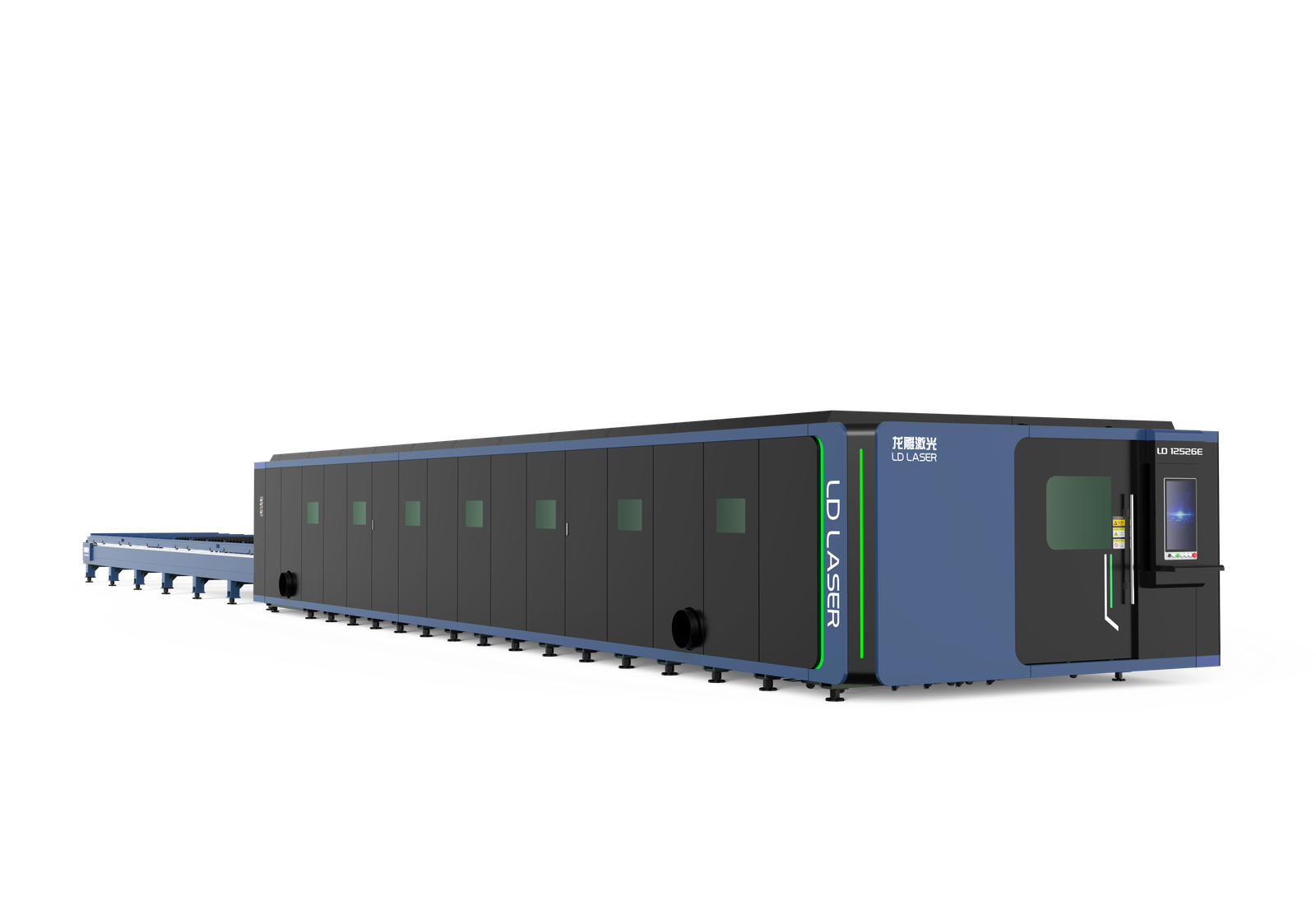
You’ve likely noticed how choosing the wrong laser power can transform a promising project into a costly mistake—coincidentally, this happens most often when manufacturers assume higher power always equals better results. Your material thickness, production volume, and quality requirements actually determine the ideal power range, not marketing specifications or competitor choices. The gap between 1kW precision work and 30kW heavy-duty processing involves critical decision points that’ll directly impact your bottom line and 운영 효율성.
주요 내용
Low power systems (1-6kW) excel at precision cutting materials under 3mm for medical devices and aerospace components.
Mid-range systems (6-15kW) provide optimal balance for 8-25mm materials with 85-92% efficiency in high-volume production.
High power systems (15-30kW) enable efficient cutting of thick materials over 20mm for structural steel fabrication.
Material type significantly impacts power requirements, with aluminum and copper needing 25-40% more power than steel.
Investment costs range from $80,000-$150,000 for low power to $400,000-$800,000 for high-power systems with 18-36 month payback.
Understanding Laser Power Requirements by Material Type and Thickness
When selecting laser power for your cutting or engraving application, you’ll need to match the laser’s output capabilities to your material’s specific absorption characteristics and thermal properties. Different materials require varying power densities to achieve ideal results without compromising edge quality or introducing heat-affected zones.
Steel demands higher power levels due to its 열 전도성, while aluminum’s reflective properties necessitate specialized wavelengths and increased wattage. Carbon steels typically require 1-3kW for materials up to 10mm, whereas stainless steel needs 4-6kW for equivalent thickness considerations.
Material properties greatly influence power selection. High-carbon content increases cutting resistance, while alloy compositions affect heat dissipation rates. Thickness directly correlates with required power output—doubling material thickness often requires 50-75% more laser power to maintain cutting speeds.
Copper and brass present unique challenges due to thermal conductivity, requiring 25-40% more power than comparable steel thicknesses. Understanding these material-specific requirements guarantees efficient processing while minimizing operational costs.
Low Power Systems (1kW-6kW): Precision Applications and Thin Materials
Low power laser systems operating between 1kW and 6kW excel in applications where precision takes priority over raw cutting capacity. You’ll find these systems ideal for thin materials requiring intricate detail work, where beam quality and positional accuracy matter more than speed.
Your precision cutting applications benefit from the superior beam characteristics these systems deliver. The lower power output provides better control over heat-affected zones, minimizing material distortion and achieving cleaner edge quality on delicate substrates.
Key applications for low power systems include:
- Thin film processing – Solar cells, electronic components, and flexible circuits requiring micron-level accuracy
- Medical device manufacturing – Stents, catheters, and surgical instruments where biocompatibility depends on cut quality
- Aerospace components – Thin-walled structures, sensors, and lightweight parts demanding tight tolerances
You’ll achieve excellent results when matching material thickness to power output, typically processing materials under 3mm effectively while maintaining the precision your applications demand.
Mid-Range Power Systems (6kW-15kW): Balanced Performance for General Manufacturing
Mid-range laser systems operating between 6kW and 15kW represent the sweet spot for most manufacturing environments, delivering ideal balance between cutting speed, material thickness capability, and operational efficiency. These systems excel at mid range applications spanning automotive components, HVAC fabrication, and general metalworking operations.
You’ll achieve peak throughput with materials ranging from 8-25mm thickness while maintaining excellent edge quality. The power density allows for faster traverse speeds compared to lower-powered systems without the excessive heat input that can compromise cut quality in thicker sections.
| Power Range | Peak Material Thickness |
|---|---|
| 6-8kW | 8-15mm steel, aluminum |
| 9-12kW | 12-20mm steel, stainless |
| 12-15kW | 15-25mm mild steel |
| 15kW | 20-30mm structural steel |
For efficiency optimization, these systems typically operate at 85-92% wall-plug efficiency, making them cost-effective for high-volume production environments where you need consistent performance across diverse material specifications.
High Power Systems (15kW-30kW): Heavy-Duty Processing and High-Volume Production
High-power laser systems in the 15kW-30kW range deliver unprecedented cutting capabilities for thick-section materials and high-volume manufacturing environments where productivity directly impacts profitability. These systems excel in heavy duty applications requiring maximum throughput and precision across demanding industrial processes.
You’ll achieve peak manufacturing efficiency when processing materials exceeding 20mm thickness, where lower-power systems become economically unviable. The enhanced beam intensity enables faster traverse speeds while maintaining cut quality, reducing cycle times by 40-60% compared to mid-range alternatives.
Critical applications include:
- Structural steel fabrication – Processing 25-50mm plates for construction, shipbuilding, and heavy machinery components
- Aerospace manufacturing – Cutting titanium and inconel alloys up to 30mm thickness with minimal heat-affected zones
- High-volume automotive production – Simultaneous multi-part cutting and thick-section chassis components
These systems justify their investment through reduced labor costs, accelerated production schedules, and enhanced material utilization rates exceeding 95% in optimized workflows.
Cost-Benefit Analysis and ROI Calculations for Different Power Ranges
Understanding the financial impact of laser power selection requires quantifying both upfront investments 그리고 operational returns across different power ranges. Your cost analysis should evaluate initial equipment costs, which typically scale from $80,000-$150,000 for 1-3kW systems to $400,000-$800,000 for 15-30kW units.
Calculate operational costs including electricity consumption, maintenance schedules, and consumable parts. Higher-power systems consume more energy but deliver proportionally greater throughput, often improving cost-per-part metrics. You’ll need to factor in productivity gains: a 15kW system can process 3-5 times faster than a 3kW unit for thick materials.
Your return metrics should include payback period, typically 18-36 months for production environments. Consider throughput improvements, labor reduction, and material waste minimization. High-power systems excel in high-volume operations where speed justifies the premium, while lower-power units optimize ROI for precision applications with moderate production requirements.
결론
You’re standing at the threshold of a critical decision that’ll define your manufacturing future. The data’s clear: matching laser power to your specific applications isn’t just recommended—it’s essential for survival in today’s competitive landscape. Will you choose the precision of 1-6kW systems, the versatility of mid-range 6-15kW units, or the raw power of 15-30kW giants? Your material thickness requirements and production volumes hold the answer. One wrong choice could cost you everything.