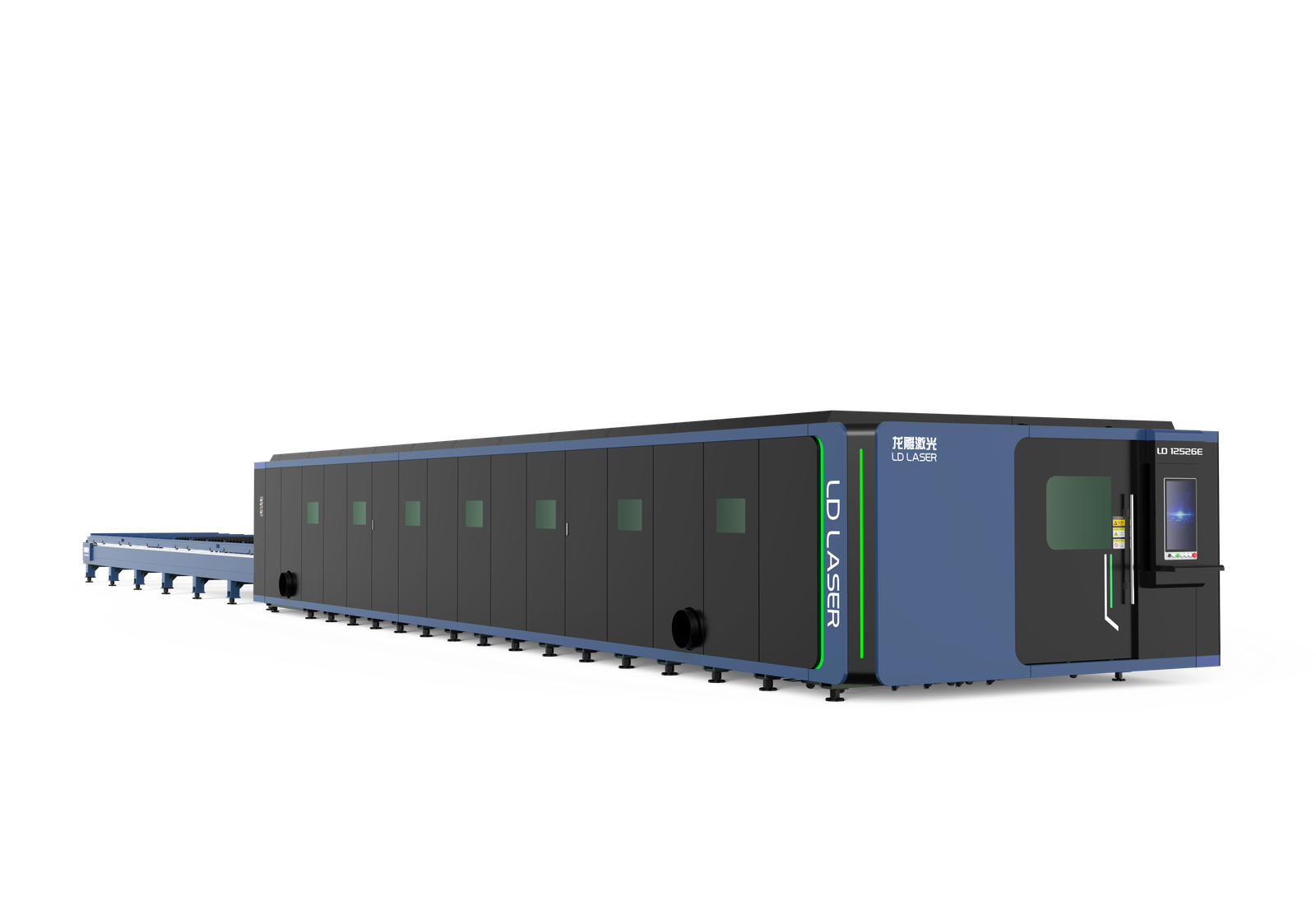
Traditional fixed laser welding stations impose significant operational constraints that limit manufacturing flexibility and accessibility. These stationary systems require extensive part manipulation, precise fixture alignment, and often prevent welding in ideal positions for complex assemblies. Handheld laser welding technology fundamentally transforms this paradigm by placing precision control directly in the operator’s hands. The implications for manufacturing efficiency and quality control extend far beyond simple mobility considerations.
പ്രധാന കാര്യങ്ങൾ
Handheld laser welding eliminates stationary limitations, enabling precision welding directly at workpiece locations without costly repositioning.
Compact design provides access to complex geometries, confined spaces, and recessed joints while maintaining consistent weld quality.
Portable systems facilitate on-site operations and field installations, reducing component transport and maintaining assembly integrity during welding.
Setup times reduce by 60-80% through optimized workflows that access multiple weld points without workpiece reconfiguration.
Lightweight, ergonomic design enables optimal torch angles and steady hand control, reducing operator fatigue during extended operations.
Breaking Free From Stationary Welding Constraints
Traditional welding operations have long confined fabricators to fixed workstations, limiting their ability to address complex geometries and field repairs efficiently. Handheld laser welding technology eliminates these stationary limitations by delivering precision welding capabilities directly to the workpiece location. This mobility advantage enables operators to access previously unreachable joint configurations, including internal assemblies, overhead positions, and confined spaces where traditional equipment cannot operate.
The enhanced welding flexibility transforms manufacturing workflows by reducing material handling requirements and eliminating costly workpiece repositioning. Operators can maintain ideal welding angles and heat input parameters while maneuvering around existing structures. This directional freedom greatly improves joint accessibility in automotive assemblies, aerospace components, and architectural metalwork where geometric constraints previously demanded alternative joining methods or extensive fixture modifications.
Enhanced Accessibility for Complex Geometries and Components
How can fabricators effectively address the intricate welding challenges presented by multi-dimensional assemblies and precision-engineered components? Handheld laser welding systems deliver unparalleled component adaptability through their compact, maneuverable design architecture. Operators can position the welding head at ideal angles to access recessed joints, curved surfaces, and confined spaces that traditional fixed welding stations cannot reach.
The technology’s geometry versatility enables successful welding of complex assemblies including tubular frameworks, irregular-shaped housings, and multi-axis components. Fabricators can maintain consistent weld quality across varying surface orientations without repositioning heavy workpieces. The handheld unit’s ergonomic configuration allows precise control in tight clearances while maintaining proper safety distances. This enhanced accessibility greatly reduces fixture requirements and eliminates the need for specialized positioning equipment, streamlining production workflows for complex geometrical applications.
Maintaining Optimal Weld Angles in Challenging Positions
When operators encounter overhead, vertical, or inverted welding positions, maintaining proper torch angles becomes critical for achieving penetration depth and preventing defects such as undercut or excessive spatter. Handheld laser systems enable precise angular control through ergonomic positioning that reduces operator fatigue during extended operations. The lightweight design facilitates tool stability even when working against gravity or in cramped spaces where conventional equipment cannot reach.
Operators must establish secure bracing points to counteract positional forces while maintaining steady hand movement. Proper stance and grip techniques become essential for consistent beam alignment. The compact torch head allows fine angular adjustments without compromising access to weld zones. Strategic body positioning minimizes tremor and drift, ensuring uniform heat input across the joint. These capabilities prove invaluable when welding structural assemblies or repair applications requiring non-standard orientations.
Direct Assembly and On-Site Welding Capabilities
Versatility in handheld laser welding extends beyond workshop environments to encompass field installations ഒപ്പം on-site assembly operations where portability becomes paramount. Direct assembly applications benefit from immediate welding capabilities without requiring component transportation to fixed stations. On site welding eliminates logistical constraints while maintaining precise control over critical joint parameters.
Key advantages of portable laser welding systems include:
Reduced handling requirements – Components remain in assembly position throughout the welding process
Enhanced contamination control – Minimized exposure during transport between fabrication and welding stations
Real-time quality assurance – Immediate inspection and correction capabilities at the point of assembly
Safety protocols must accommodate varying environmental conditions, ensuring proper ventilation, eye protection, and workspace isolation regardless of location constraints.
Precision Control in Confined and Hard-to-Reach Spaces
Handheld laser welding systems excel in confined environments where traditional welding equipment cannot operate effectively due to spatial constraints. The compact design and flexible positioning capabilities enable operators to achieve precise welds at acute angles and within restrictive geometries while maintaining consistent beam focus. These systems deliver reliable joint quality in hard-to-reach locations through enhanced maneuverability that preserves both operator safety and weld integrity.
Tight Space Maneuverability
Although traditional welding equipment often requires substantial clearance and positioning space, handheld laser welding systems excel in confined environments where access is severely limited. The compact design and flexible positioning capabilities enable operators to navigate complex geometries and restricted areas with exceptional welding agility.
Key advantages in tight space applications include:
Minimal heat-affected zones reduce thermal distortion in adjacent components
Precise beam delivery allows targeted welding without compromising surrounding structures
Ergonomic handpiece design facilitates operation in awkward positions and angles
This spatial efficiency proves invaluable in aerospace assemblies, automotive body panels, and intricate machinery repairs where conventional welding methods fail. The focused laser beam requires minimal working distance, enabling operators to perform high-quality welds in spaces previously considered inaccessible through traditional welding processes.
Angular Access Capabilities
The angular positioning flexibility of handheld laser welding systems enables operators to achieve precise joint access at virtually any orientation, from steep vertical angles to inverted overhead positions. This angular movement capability eliminates the geometric constraints that limit fixed welding stations, allowing seamless changes between horizontal, vertical, and compound angle welds without workpiece repositioning.
Adjustable positioning features accommodate complex geometries where conventional equipment cannot reach, including internal corners, recessed areas, and multi-directional joints. The lightweight design maintains operator control while executing challenging angular approaches, reducing physical strain during extended welding sequences. Safety protocols must address varying gravitational effects on molten material flow and spatter patterns when working at different orientations, ensuring consistent weld quality regardless of access angle.
Confined Area Accuracy
Precision welding in confined spaces demands exceptional spatial awareness and steady control techniques that distinguish handheld laser systems from conventional welding equipment. Operators must master confined space techniques while maintaining consistent beam positioning in restrictive environments where traditional torches cannot function effectively.
Laser precision applications enable accurate heat control and minimal thermal distortion in tight quarters. The compact laser head design facilitates access to internal structures, corners, and recessed areas requiring millimeter-level accuracy.
Critical confined space welding factors include:
Ergonomic positioning to maintain steady hand control despite awkward angles
Real-time beam focus adjustment for varying working distances
Enhanced visibility systems compensating for limited lighting conditions
Safety protocols become paramount when operators work in restricted spaces, requiring proper ventilation management and emergency egress planning while maintaining welding quality standards.
Eliminating Part Repositioning and Setup Time
When manufacturers implement handheld laser welding systems, they considerably reduce the time and labor costs associated with moving heavy workpieces between welding stations. Traditional fixed welding setups require extensive part repositioning, crane operations, and complex fixturing adjustments that consume valuable production time. Handheld laser welders eliminate these bottlenecks by bringing the welding process directly to the workpiece location.
Setup optimization becomes achievable as operators can access multiple weld points without reconfiguring equipment or relocating components. This mobility translates to measurable time efficiency gains, particularly for large assemblies or complex geometries. Safety protocols are simplified since workers avoid repetitive heavy lifting and hazardous part manipulation. The resulting workflow reduction can decrease setup times by 60-80% compared to conventional welding stations, enabling faster project completion and improved manufacturing throughput.
Expanding Application Possibilities Across Manufacturing Environments
Beyond time savings and operational efficiency, handheld laser welding technology opens new manufacturing possibilities across diverse industrial sectors that were previously constrained by traditional welding limitations. Mobile welding applications enable manufacturers to address complex geometries and confined spaces where fixed equipment cannot operate effectively.
The technology delivers innovative industry solutions through enhanced accessibility:
Field repair operations – Direct maintenance on installed equipment without disassembly or transportation to fabrication facilities
Custom fabrication projects – Precision welding of unique configurations requiring multiple approach angles and positioning flexibility
Multi-location production environments – Single equipment investment serving multiple workstations or facilities through portable deployment
This operational flexibility transforms manufacturing strategies by eliminating workspace constraints while maintaining strict quality standards. Industries ranging from aerospace to heavy machinery benefit from reduced equipment investment requirements and expanded service capabilities.
തീരുമാനം
Handheld laser welding technology revolutionizes manufacturing operations by completely eliminating workspace constraints that have plagued traditional fixed-station configurations for decades. This breakthrough methodology delivers unprecedented precision control in previously impossible welding scenarios, dramatically reducing setup protocols while maintaining absolute safety standards. Operators achieve flawless weld quality in the most demanding geometric configurations, transforming complex multi-step processes into streamlined single-pass operations that redefine manufacturing efficiency across all industrial applications.