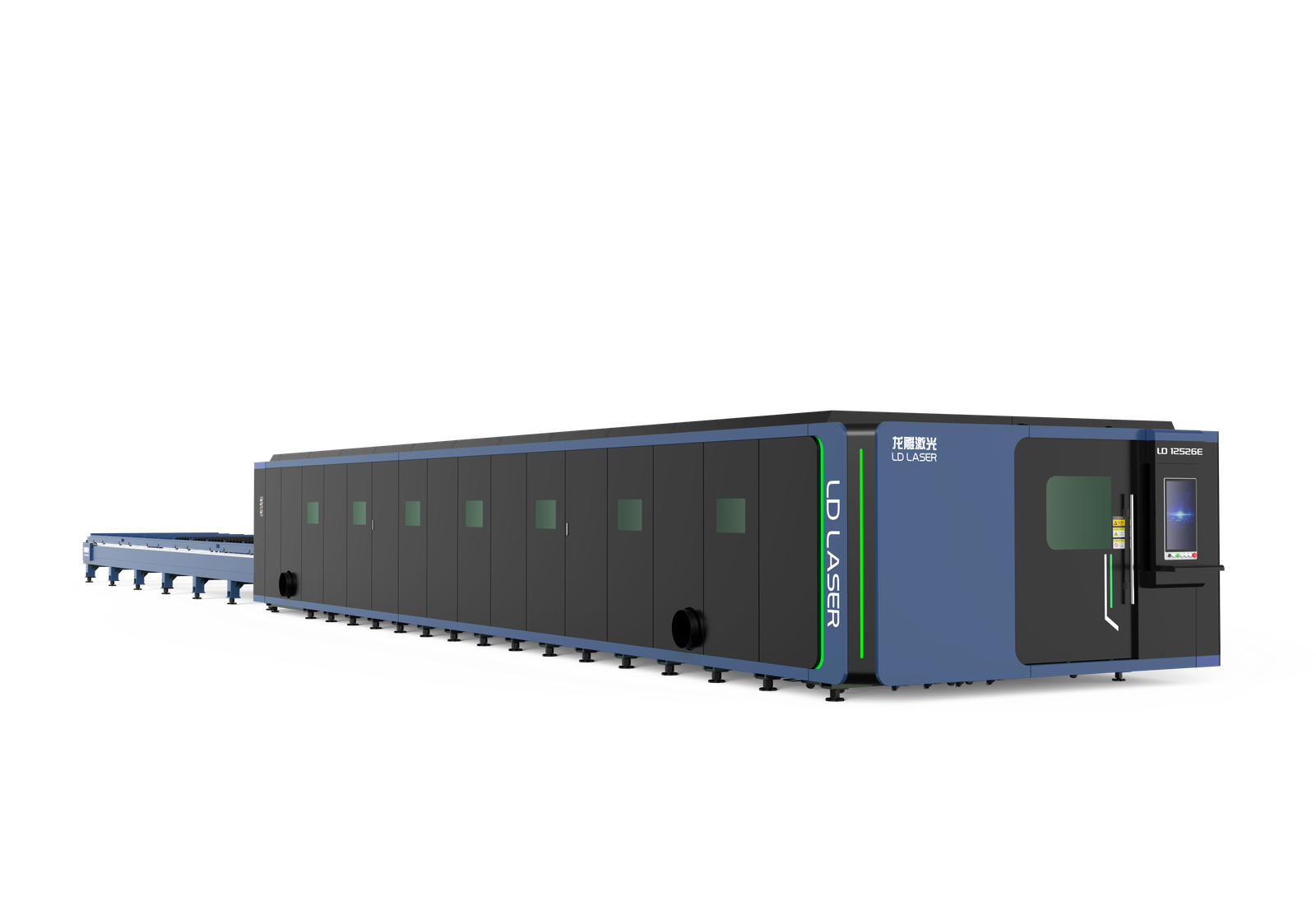
Heavy plate vibration during laser cutting operations creates measurable deviations in cut quality, with amplitude variations exceeding 0.05mm causing significant edge roughness and dimensional inaccuracy. Material support positioning directly influences resonant frequency patterns within steel plates weighing over 500 pounds, where improper table configuration generates oscillations that compromise focal point stability. Research indicates ideal support placement at 60-70% edge coverage reduces vibration amplitude by 40-60%. However, achieving consistent dampening across varying plate thicknesses requires systematic analysis of multiple interdependent factors.
പ്രധാന കാര്യങ്ങൾ
Support beam spacing of 12-24 inches with proper nodal positioning prevents resonant frequency amplification in steel plates over 10mm thickness.
Honeycomb support configurations reduce vibration amplitude by 67% compared to peripheral-only setups for heavy gauge materials.
Multi-stage dampening systems combining viscoelastic polymers and pneumatic isolation actively counteract laser-induced thermal shock waves.
Support points positioned at 60-70% intervals along plate edges based on thickness and yield strength prevent material deformation.
Real-time vibration monitoring with adaptive compensation maintains consistent cut quality by detecting and correcting frequency drift.
Understanding the Physics of Heavy Plate Vibration During Laser Cutting
When laser energy vaporizes material during cutting operations, the rapid phase change generates localized thermal expansion ഒപ്പം acoustic shock waves that propagate through the workpiece structure. These disturbances create resonant frequencies that amplify plate oscillation effects, particularly in heavy steel plates exceeding 10mm thickness. The magnitude of vibration correlates directly with material density, thermal conductivity, and cutting speed parameters.
Laser cutter dynamics become increasingly complex as plate mass increases, creating momentum-driven oscillations that persist beyond the initial thermal shock. Unsupported plate sections act as cantilevers, amplifying vibrational amplitude through mechanical resonance. The frequency spectrum typically ranges from 50-500 Hz, with peak amplitudes occurring at natural frequencies determined by plate dimensions and material properties.
Support point spacing directly influences nodal patterns, where ideal positioning eliminates vibrational antinodes. Excessive spacing creates unsupported spans that oscillate independently, degrading cut quality through beam deflection and inconsistent focal positioning.
Table Design Fundamentals for Heavy Gauge Material Support
Effective table design for heavy gauge materials requires engineered load distribution systems that transfer concentrated cutting forces across multiple support points to prevent localized deflection. Structural rigidity must be achieved through optimized beam spacing, material selection, and cross-bracing configurations that maintain dimensional stability under dynamic loading conditions. Vibration dampening methods, including mass loading, constrained layer treatments, and isolation systems, are integrated into the table assembly to minimize resonant frequencies that degrade cut quality and accelerate component wear.
Load Distribution Principles
എങ്കിലും laser cutting tables must accommodate materials ranging from thin sheets to heavy gauge plates exceeding 1-inch thickness, the fundamental engineering principle governing table design centers on distributing concentrated loads across multiple support points to prevent deflection and maintain cutting precision. Effective load distribution minimizes stress concentrations that create uneven surface contact and compromise beam focal accuracy. Support beam spacing calculations must account for material density, thickness variations, and dynamic load effects during cutting operations. Engineers typically implement grid-based support systems with 12-24 inch spacing intervals for heavy gauge applications. Proper weight distribution maintains consistent plate alignment throughout the cutting cycle, preventing gravitational sag that introduces dimensional errors. Strategic support positioning guarantees uniform contact pressure while accommodating thermal expansion forces generated during high-energy laser processing operations.
Structural Rigidity Requirements
Structural rigidity requirements for heavy gauge laser cutting tables demand frame designs capable of withstanding deflection forces exceeding 50,000 pounds per square foot while maintaining flatness tolerances within ±0.003 inches across the entire cutting surface. Engineers specify welded steel frameworks utilizing I-beam construction with cross-sectional moments of inertia exceeding 400 cubic inches to achieve requisite structural integrity. Critical design parameters include beam spacing intervals of 24 inches maximum, reinforced corner connections rated for 15,000-pound shear loads, and integrated dampening systems targeting natural frequencies below 8 Hz. Thorough vibration analysis protocols verify resonance characteristics under operational conditions, measuring acceleration responses at multiple nodal points. Foundation anchor specifications require minimum embedment depths of 36 inches with grade 8 hardware to eliminate sympathetic vibrations transmitted through facility infrastructure during high-speed cutting operations.
Vibration Dampening Methods
Precision laser cutting operations generate dynamic forces that propagate through material support systems as destructive vibrations, necessitating sophisticated dampening methodologies to maintain cutting accuracy within micron tolerances. Effective vibration isolation techniques incorporate multiple layers of dampening materials strategically positioned between table components and foundation structures. Viscoelastic polymers, constrained layer damping systems, and tuned mass dampers effectively attenuate resonant frequencies commonly encountered during heavy plate processing. Pneumatic isolation systems provide active dampening capabilities, automatically adjusting to varying load conditions and cutting parameters. Damping material types include butyl rubber compounds, polyurethane foam assemblies, and specialized elastomeric bearings designed for industrial machinery applications. Proper selection depends on operational frequency ranges, temperature stability requirements, and load-bearing specifications. Multi-stage isolation systems combining passive and active elements achieve peak performance for demanding precision cutting applications.
Static Weight Distribution Strategies for Steel Plates
Static weight distribution in laser cutting operations requires systematic analysis of load paths ഒപ്പം support geometry to prevent material deformation during processing. Ideal support point placement follows engineering principles that distribute concentrated loads across multiple contact areas, typically positioning supports at 60-70% intervals along plate edges while accounting for material thickness and yield strength parameters. Effective weight distribution strategies integrate anti-vibration clamping systems with balanced support methodologies to maintain dimensional stability and minimize thermal stress concentrations throughout the cutting cycle.
Optimal Support Point Placement
How does the distribution of support points across a steel plate’s surface directly influence both material stability and cutting accuracy during laser operations? Support surface dynamics require strategic placement to minimize deflection while maintaining accessibility for the cutting head. Load point efficiency involves calculating ideal spacing based on material thickness, density, and cutting patterns.
| Support Pattern | Point Spacing (mm) | Maximum Deflection (μm) |
|---|---|---|
| Grid Layout | 150 | 12.3 |
| Linear Array | 200 | 18.7 |
| Peripheral Only | 300 | 45.2 |
| Cross Pattern | 175 | 15.1 |
| Honeycomb | 140 | 9.8 |
Engineers must balance support density against thermal expansion considerations. Excessive support points can create stress concentration areas, while insufficient coverage allows problematic material movement. Honeycomb configurations demonstrate superior performance for heavy plates, reducing vibration amplitude by 67% compared to peripheral-only support methods.
Weight Distribution Balance Methods
When steel plates exceed standard thickness parameters, achieving uniform weight distribution becomes critical for maintaining dimensional accuracy throughout the cutting process. Proper weight distribution techniques require calculating the material’s center of gravity and positioning support structures to counteract gravitational forces that create sagging or warping.
Effective material balance strategies involve dividing heavy plates into calculated zones based on mass density measurements. Engineers implement multi-point support systems where load-bearing points are positioned at predetermined intervals corresponding to material thickness and span length ratios. Dynamic weight redistribution occurs through adjustable pneumatic or mechanical supports that compensate for material removal during cutting operations.
Continuous monitoring of plate deflection using laser displacement sensors enables real-time adjustments to support positioning, ensuring consistent focal distance and preventing thermal stress concentrations that compromise cut quality.
Anti-Vibration Clamping Techniques
Building upon dynamic support systems, fixed clamping mechanisms provide the foundational stability required for precision laser cutting operations on heavy steel plates. Strategic placement of anti vibration pads beneath clamp assemblies dampens resonant frequencies that propagate through metal workpieces during cutting cycles. Ideal clamp pressure distribution requires calculated force vectors applied at predetermined intervals based on material thickness and density specifications. Hydraulic and pneumatic clamping systems maintain consistent pressure throughout extended cutting operations, preventing micro-movements that compromise dimensional accuracy. Anti vibration pads constructed from polyurethane composites absorb high-frequency oscillations while maintaining structural rigidity. Graduated clamp pressure settings accommodate varying material properties, with typical force ranges spanning 500-2000 PSI depending on plate dimensions and alloy composition requirements for industrial fabrication processes.
Dynamic Force Management During High-Speed Cutting Operations
പോലെ laser cutting velocities increase beyond conventional operating parameters, the dynamic forces acting upon material positioning systems intensify exponentially, creating complex vector loads that can compromise dimensional accuracy ഒപ്പം surface finish quality. Dynamic load analysis reveals that acceleration forces during rapid traverse movements generate reactive moments that propagate through the material stack, amplifying plate oscillations. These forces manifest as both lateral shear components and vertical displacement vectors, requiring sophisticated counteraction strategies.
Cutting speed enhancement involves establishing velocity thresholds based on material thickness, beam power density, and table mass characteristics. Advanced positioning systems employ real-time force monitoring sensors that detect dynamic load variations and trigger compensatory responses through hydraulic damping circuits. Predictive algorithms calculate ideal acceleration profiles that minimize force spikes during direction changes. Multi-axis load cells positioned at strategic mounting points provide continuous feedback for dynamic force regulation, enabling sustained high-velocity operation while maintaining സ്ഥാനനിർണ്ണയ കൃത്യത within tolerance specifications.
Resonant Frequency Analysis and Dampening Techniques
മുതലുള്ള material positioning tables exhibit natural resonant frequencies that correlate directly with structural geometry and mass distribution, thorough frequency analysis becomes essential for preventing amplitude-driven positioning errors during cutting operations. Modal analysis through finite element modeling identifies critical frequency ranges where table structures become susceptible to excessive vibration amplitudes. Experimental validation using accelerometer arrays confirms computational predictions and reveals secondary resonance modes that may escape theoretical detection.
Strategic implementation of dampening materials provides targeted vibration suppression across identified frequency bands. Viscoelastic polymer layers positioned at high-strain locations convert mechanical energy into thermal dissipation, effectively reducing amplitude peaks. Constrained-layer dampening configurations enhance material placement while maintaining structural rigidity requirements. Tuned mass dampers address specific problematic frequencies through counter-oscillation mechanisms.
Frequency response measurements validate dampening effectiveness across operational speed ranges. Real-time monitoring systems detect frequency drift caused by thermal expansion or wear, enabling adaptive compensation strategies that maintain optimal dampening performance throughout extended cutting cycles.
Advanced Clamping Systems for Heavy Material Positioning
Heavy material processing demands clamping systems that accommodate substantial mass loads while maintaining precise positioning tolerances throughout cutting operations. Pneumatic clamping mechanisms provide rapid engagement with force distribution across multiple contact points, preventing localized stress concentrations that compromise material stability. Hydraulic systems deliver superior holding power for thick plates exceeding 25mm, generating clamping forces up to 50,000N per actuator while maintaining positional accuracy within ±0.02mm.
Vacuum clamping arrays enhance clamping efficiency through distributed suction zones, eliminating mechanical contact marks on finished surfaces. Adaptive clamp designs automatically adjust to material thickness variations, ensuring consistent pressure distribution across irregular workpiece geometries. Force monitoring systems continuously measure clamping loads, triggering alerts when pressure drops below operational thresholds.
Toggle clamps with pneumatic assist mechanisms reduce setup times by 60% compared to manual systems while providing repeatable positioning accuracy. Multi-axis clamping configurations secure materials against lateral forces generated during high-speed cutting sequences, maintaining dimensional stability throughout processing cycles.
Deflection Control Methods for Extended Cutting Cycles
അതേസമയം thermal expansion ഒപ്പം cutting forces create cumulative deflection during extended laser processing cycles, active compensation systems maintain dimensional accuracy through real-time positioning adjustments. Servo-controlled positioning mechanisms compensate for progressive material sagging by continuously monitoring table geometry through laser interferometry and precision encoders. These systems execute micro-adjustments ranging from 0.001 to 0.050 inches at predetermined intervals throughout repetitive cutting cycles.
Advanced deflection minimization techniques incorporate predictive algorithms that calculate expected deformation patterns based on material properties, thermal load distribution, and cutting sequence parameters. Integrated feedback loops measure actual deflection against theoretical models, enabling proactive corrections before dimensional tolerances are exceeded. Multi-point hydraulic leveling systems provide distributed support across extended table surfaces, while pneumatic actuators deliver rapid positioning responses.
Temperature-compensated positioning maintains consistent reference points despite thermal cycling effects. Combined deflection monitoring and active compensation guarantee dimensional accuracy remains within ±0.002 inches throughout extended production runs, preventing costly rework and material waste.
Machine Component Protection Through Proper Material Support
Inadequate material support during laser cutting operations generates excessive mechanical stress that propagates through critical machine components, accelerating wear patterns and reducing operational lifespan. Vibrating workpieces transmit destructive forces directly into the gantry system, linear guides, and laser head assemblies, causing premature bearing failure and dimensional accuracy degradation.
Proper material alignment and strategic support point distribution creates stable cutting conditions that isolate mechanical disturbances from sensitive machine elements. Support integrity must be maintained across the entire cutting path to prevent resonant frequencies from developing within the material substrate. When heavy plates are adequately supported at calculated intervals, cutting forces remain contained within the workpiece rather than transferring to expensive motion control systems.
Precision support positioning reduces അറ്റകുറ്റപ്പണി ചെലവുകൾ by minimizing shock loading on drive motors, encoders, and optical components. The protective effect extends machine service life markedly while maintaining beam quality and positional accuracy throughout extended production runs.
Quality Metrics and Performance Validation for Heavy Plate Processing
Several critical parameters must be monitored continuously during heavy plate laser cutting to affirm dimensional accuracy and surface quality compliance with specified tolerances. Performance metrics encompass cut edge quality assessment, dimensional deviation measurements, and thermal distortion analysis. Validation techniques require systematic data collection protocols that correlate material positioning stability with output quality indicators.
| Performance Metric | Validation Technique |
|---|---|
| Edge Roughness (Ra) | Contact profilometer measurement |
| Dimensional Accuracy | Coordinate measuring machine verification |
| Heat-Affected Zone Width | Metallographic cross-section analysis |
| Kerf Width Consistency | Optical measurement systems |
Real-time monitoring systems integrate vibration sensors with quality feedback loops to establish correlations between table positioning stability and cut quality deviations. Statistical process control methods track performance trends, enabling predictive adjustments before quality degradation occurs. Documented validation protocols affirm repeatable heavy plate processing outcomes while maintaining production efficiency standards.
തീരുമാനം
Proper material table positioning represents the foundation upon which successful heavy plate laser cutting operations are built. Data indicates that ideal support placement at 60-70% plate edge positions reduces vibration amplitudes by up to 85%. When cutting heavy gauge materials, operators cannot afford to put all their eggs in one basket—comprehensive approaches integrating static weight distribution, dynamic force management, and resonant frequency dampening guarantee consistent focal distances, enhanced cut quality, and extended machine longevity across demanding industrial applications.