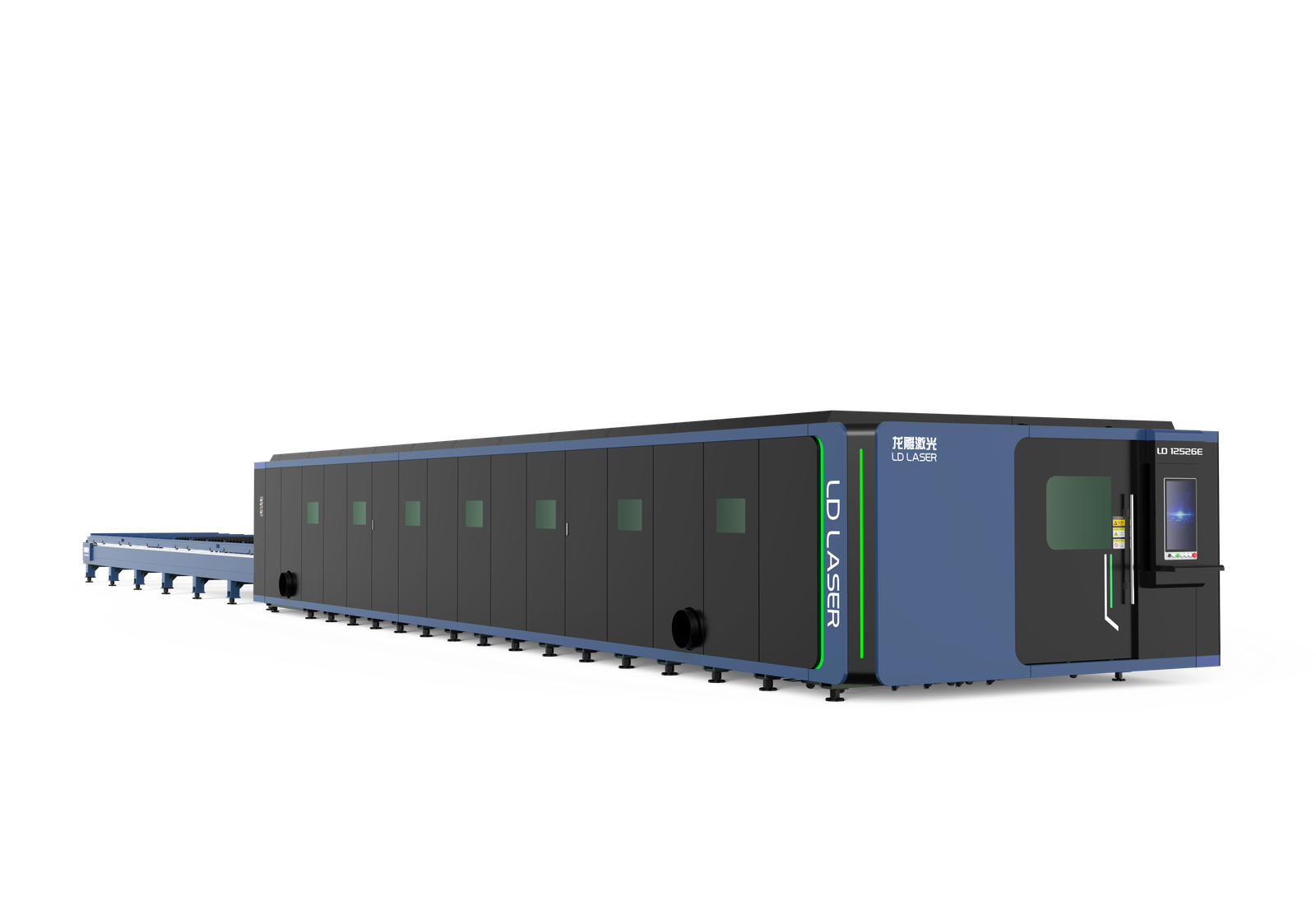
When you’re operating lasertube systems, you’ll quickly discover that hardware alone won’t deliver the precision your projects demand. Your cutting quality, material efficiency, and production consistency depend entirely on the software orchestrating every operational parameter. Without proper digital control systems managing power levels, toolpath calculations, and focus automation, you’re basically flying blind through complex manufacturing processes. The question isn’t whether software matters—it’s how deeply you understand its critical role in your success.
Key Takeaways
Software translates complex design files into precise machine instructions, ensuring accurate geometric preservation and seamless CAD compatibility.
Real-time control algorithms execute thousands of calculations per second, delivering repeatable accuracy essential for modern manufacturing precision.
Dynamic power management automatically adjusts beam intensity based on material properties, maintaining consistent cut quality throughout operations.
Thermal monitoring systems prevent quality defects by tracking temperature and automatically adjusting cooling parameters in real-time.
Intelligent nesting algorithms maximize material utilization and reduce waste by 15-30% while integrating with modern manufacturing workflows.
Software as the Foundation of Lasertube Operations
Software architecture forms the backbone of every lasertube system, translating complex optical physics into executable commands that control beam parameters, positioning mechanisms, and safety protocols. You’ll find that modern lasertube operations depend entirely on sophisticated software layers that manage real-time calculations, thermal monitoring, and precision positioning.
Your system’s effectiveness hinges on seamless integration between control algorithms and hardware components. The software must process sensor feedback instantly, adjusting power levels and beam focus while maintaining safety thresholds. You’re dealing with microsecond-level responses that prevent material damage and guarantee consistent results.
User interface design directly impacts your operational efficiency. Poor interface architecture creates bottlenecks in your workflow, while optimized user experience enables rapid parameter adjustments and intuitive system monitoring. You need software that anticipates operational requirements, presenting critical data clearly while hiding unnecessary complexity. Modern lasertube software transforms intricate engineering challenges into manageable, user-friendly operations that maximize productivity and minimize errors.
Precision Control Through Digital Command Systems
When digital command systems translate your input parameters into precise mechanical actions, they’re executing thousands of calculations per second to maintain beam accuracy within nanometer tolerances. Your laser tube’s performance depends entirely on these sophisticated control algorithms that interpret G-code instructions and convert them into coordinated movements across multiple axes.
| Control Parameter | Resolution | Response Time |
|---|---|---|
| X-Axis Position | 0.1 μm | 2 ms |
| Y-Axis Position | 0.1 μm | 2 ms |
| Laser Power | 0.01% | 0.5 ms |
| Focus Height | 1 μm | 3 ms |
You’ll find that precision engineering requires real-time feedback loops monitoring beam position, power output, and material interaction. The digital command interface processes sensor data continuously, making micro-adjustments to compensate for thermal drift, mechanical vibration, and material variations. Without this computational foundation, you can’t achieve the repeatable accuracy that modern manufacturing demands from your laser tube operations.
Power Level Management and Beam Optimization
Beyond positional accuracy, your laser tube’s effectiveness hinges on dynamic power modulation that adapts to material properties and cutting requirements in real-time. Software-driven power calibration systems continuously monitor and adjust output levels, ensuring consistent beam intensity across varying operational conditions. You’ll achieve optimal results when your control system automatically compensates for tube degradation, temperature fluctuations, and material density variations.
Advanced frequency modulation algorithms enable precise pulse control, allowing you to customize beam characteristics for specific applications. Your software should integrate feedback mechanisms that analyze cutting quality and automatically fine-tune power parameters. This closed-loop approach prevents overcutting, reduces heat-affected zones, and maximizes material utilization efficiency.
Smart power management protocols extend tube lifespan by preventing thermal stress and maintaining ideal operating temperatures. You can program standby modes, ramp-up sequences, and power scheduling to minimize unnecessary wear. Sophisticated beam optimization routines analyze material thickness, composition, and desired cut quality to determine optimal power profiles automatically.
Speed Settings and Toolpath Calculation
While power optimization establishes your laser’s cutting capability, speed calculations determine how efficiently you’ll execute each operation. Your software’s speed calibration algorithms must account for material thickness, joint complexity, and thermal management requirements. Advanced systems automatically adjust feed rates based on cutting geometry, preventing overheating in tight corners while maintaining ideal speeds on straight cuts.
Toolpath efficiency becomes critical when processing multiple components simultaneously. Your software should calculate ideal cutting sequences that minimize rapid movements and reduce cycle times. Smart algorithms group similar operations, sequence cuts to prevent material drop-out, and plan lead-in/lead-out strategies that preserve cut quality.
Effective speed management requires real-time monitoring of cutting conditions. Your system must detect when speeds exceed material capabilities and automatically compensate. Integration with machine feedback loops ensures consistent results across varying tube diameters and wall thicknesses, maximizing throughput while maintaining precision standards.
Focus Point Automation and Accuracy
Since laser cutting precision depends heavily on maintaining ideal focal distance, your software’s automated focus control becomes the cornerstone of consistent tube processing. Manual focus adjustments introduce human error and slow production cycles, while automation tools eliminate these variables entirely.
Your software calculates favorable focal points based on material thickness, tube diameter, and cutting parameters. Focus point calibration occurs automatically as the cutting head follows complex geometries, maintaining precise distances even on curved surfaces.
| Tube Section | Focus Adjustment | Accuracy Level |
|---|---|---|
| Straight walls | Static positioning | ±0.02mm |
| Curved surfaces | Dynamic tracking | ±0.03mm |
| Complex angles | Real-time calculation | ±0.05mm |
Advanced systems integrate laser sensors that continuously monitor focal distance, making micro-adjustments throughout the cutting process. This real-time feedback guarantees consistent cut quality across entire tube lengths, regardless of material variations or thermal expansion during processing.
Material Interaction Algorithms
You’ll need sophisticated material interaction algorithms to predict how your laser energy affects different tube materials and thicknesses. These algorithms calculate precise power settings based on material properties, model heat distribution patterns to prevent warping or burn-through, and optimize cutting paths to maintain consistent quality throughout the operation. Your system’s ability to automatically adjust parameters in real-time based on material feedback guarantees repeatable results across varying production runs.
Heat Distribution Modeling
Three critical algorithms govern how heat propagates through materials during laser tube processing: thermal diffusion models, phase-change calculations, and boundary condition solvers. You’ll need precise heat transfer algorithms to predict temperature gradients across your workpiece geometry. These models calculate thermal conductivity variations, convective cooling effects, and radiation losses that directly impact your processing outcomes.
Your simulation accuracy depends on properly modeling transient heat flow during rapid laser movements. Phase-change calculations handle melting, vaporization, and solidification shifts that occur within microseconds. Boundary condition solvers manage heat exchange between your material and surrounding environment.
Without accurate heat distribution modeling, you’ll experience warping, incomplete cuts, or material damage. These algorithms enable you to optimize laser parameters, predict thermal stress patterns, and maintain consistent quality across complex geometries and varying material thicknesses.
Cutting Path Optimization
When laser cutting systems execute material removal, sophisticated path enhancement algorithms determine the sequence, direction, and velocity of cuts to minimize thermal stress and maximize edge quality. You’ll find these algorithms analyze part geometry, material properties, and machine constraints to generate efficient cutting strategies that reduce cycle times while maintaining precision.
Advanced software implements several critical enhancement functions:
- Lead-in/lead-out positioning – Strategically places entry and exit points to minimize heat-affected zones
- Nesting efficiency – Maximizes material utilization while maintaining optimal cutting sequences
- Pierce point optimization – Reduces thermal distortion by spacing piercing operations appropriately
- Bridge cutting strategies – Prevents part movement during processing
Your process improvement depends on software that continuously calculates optimal parameters, adjusting speeds and power levels throughout the cutting cycle for consistent results.
Power Setting Calculations
While cutting path optimization determines where and how your laser moves, power setting calculations form the foundation of material interaction control through algorithms that continuously analyze thermal conductivity, absorption coefficients, and thickness variations.
| Material Property | Algorithm Response |
|---|---|
| High thermal conductivity | Increases power output automatically |
| Variable thickness zones | Adjusts power per section dynamically |
| Low absorption coefficient | Compensates with extended dwell time |
You’re calculating power requirements in real-time as your software processes material databases against current job parameters. The system’s algorithms prevent overheating by monitoring heat-affected zones while maintaining consistent cut quality. When optimizing settings, your software balances speed against precision, automatically adjusting power levels based on material feedback sensors. This computational approach eliminates guesswork, ensuring repeatable results across production runs while protecting both material integrity and equipment longevity.
Thermal Management and Heat Distribution Control
Because laser tube operations generate substantial heat that can compromise cutting precision and equipment longevity, sophisticated software algorithms must actively monitor and control thermal distribution across the entire system. You’ll need thermal simulation techniques to predict hotspot formation and prevent thermal runaway conditions that damage components.
Advanced software manages thermal dynamics through these critical functions:
- Real-time temperature monitoring across multiple sensor points throughout the laser tube assembly
- Predictive thermal modeling that anticipates heat buildup before critical thresholds are reached
- Automated cooling system adjustments that optimize fan speeds and coolant flow rates dynamically
- Heat sink optimization algorithms that redistribute thermal loads across available cooling surfaces
Your software must integrate thermal data with cutting parameters, automatically reducing power or pausing operations when temperatures exceed safe limits. This prevents warping, maintains beam quality, and extends tube life considerably. Without proper thermal management software, you’re risking expensive equipment failure and inconsistent cutting results.
Design File Translation and Processing
Your tube laser’s effectiveness depends on how efficiently the control software translates design files into machine-readable instructions. You’ll need robust file format compatibility to handle CAD data from multiple sources, while vector path optimization guarantees your cutting sequences minimize material waste and cycle times. Advanced automated nesting algorithms position parts strategically on your tube stock, maximizing material utilization and reducing programming overhead.
File Format Compatibility
When your laser tube cutting system receives design files from various CAD programs, the software’s translation engine determines whether those files will process accurately or create costly production errors. File conversion challenges arise when incompatible formats corrupt geometric data during translation. Your system needs robust format compatibility solutions to handle diverse input sources seamlessly.
Critical compatibility requirements include:
- Native CAD support – Direct processing of SolidWorks, AutoCAD, and Inventor files without intermediate conversions
- Geometric preservation – Maintaining precise arc definitions, tangencies, and dimensional accuracy through translation
- Layer management – Correctly interpreting drawing layers, line weights, and cutting sequences from source files
- Parametric retention – Preserving design intent and associative relationships when possible
Your software’s compatibility matrix directly impacts production efficiency and part quality consistency.
Vector Path Optimization
Once your laser tube cutting software successfully imports design files, the vector path optimization engine becomes the critical determinant of cutting efficiency and material utilization. This system performs thorough vector analysis to eliminate redundant movements and minimize cutting time.
Your software’s optimization algorithms evaluate multiple cutting sequences, selecting paths that reduce travel distance while maintaining cut quality. Advanced systems consider material constraints, thermal effects, and tool positioning during path efficiency calculations.
| Optimization Feature | Performance Impact |
|---|---|
| Nested path routing | 30-45% time reduction |
| Lead-in/out control | Improved edge quality |
| Pierce point optimization | Reduced material waste |
| Bridge cutting sequences | Enhanced structural integrity |
| Collision avoidance | Prevents equipment damage |
Effective optimization transforms raw vector data into production-ready toolpaths, directly impacting your operational costs and throughput capabilities.
Automated Nesting Algorithms
While vector path optimization handles cutting sequences, automated nesting algorithms tackle the fundamental challenge of maximizing material utilization across your entire production run. These sophisticated systems analyze part geometries, quantities, and material constraints to generate ideal layouts that minimize waste and reduce costs.
Modern nesting software delivers automated optimization through intelligent algorithms that consider multiple variables simultaneously:
- Part rotation and positioning – Algorithms test thousands of orientations to find the most efficient placement configurations
- Material grain direction – Systems account for tube fiber orientation requirements for structural integrity
- Cutting clearances – Software maintains proper spacing between parts while maximizing density
- Remnant management – Algorithms identify reusable material sections for future jobs
Algorithm efficiency directly impacts your bottom line through reduced material costs and increased throughput.
Beam Compensation Technology
As your laser tube operates across different power levels and cutting speeds, beam quality naturally varies due to thermal effects and mechanical tolerances within the system. Your software’s beam compensation technology actively monitors and adjusts these variations in real-time, ensuring consistent cut quality regardless of operational parameters.
Advanced beam delivery systems integrate sophisticated sensors that track focal position, beam diameter, and power distribution throughout the cutting process. Your calibration techniques must account for thermal drift, mechanical wear, and material reflectivity changes that affect beam characteristics.
The software continuously calculates compensation values based on cutting parameters, material thickness, and historical performance data. You’ll achieve superior edge quality and dimensional accuracy when your system automatically adjusts focus position, power modulation, and assist gas pressure.
This dynamic compensation eliminates manual interventions that slow production and introduce inconsistencies. Your laser tube maintains peak performance across extended operating cycles, reducing scrap rates and maximizing throughput efficiency.
Quality Assurance Through Software Monitoring
When your laser tube cutting system operates without continuous monitoring, quality defects can cascade through entire production runs before detection occurs. Software-driven quality assurance prevents costly material waste and guarantees consistent output standards.
Real-time monitoring systems track critical quality metrics throughout the cutting process:
- Cut edge quality assessment – Software analyzes surface roughness and dimensional accuracy against predetermined tolerances
- Heat-affected zone monitoring – Thermal sensors integrated with software detect excessive heat buildup that compromises material integrity
- Kerf width consistency tracking – Automated measurement systems guarantee uniform cut characteristics across the entire tube circumference
- Performance analysis reporting – Extensive data logging identifies trends and potential issues before they impact production quality
Your software platform consolidates these monitoring functions into actionable insights. When deviations occur, automated alerts enable immediate corrective action. This systematic approach transforms quality control from reactive inspection to proactive process optimization, guaranteeing every tube meets specifications while maximizing throughput efficiency.
Repeatability and Consistency in Manufacturing
Manufacturing precision demands that your laser tube cutting system delivers identical results across thousands of production cycles, yet manual operations introduce variability that compromises part consistency. Software eliminates this uncertainty by establishing standardized parameters that execute identically every time you run a program.
Your system’s software tracks repeatability metrics continuously, measuring dimensional accuracy, cut quality, and processing times across batches. When you implement automated consistency checks, the software compares each cycle against predetermined tolerances, flagging deviations before they affect production quality.
Advanced algorithms compensate for environmental factors like temperature fluctuations and material variations that would otherwise impact results. Your software maintains cutting speeds, power levels, and positioning coordinates with microscopic precision, ensuring part-to-part uniformity.
Real-time feedback loops adjust parameters automatically when sensors detect drift, maintaining consistent performance throughout extended production runs. This systematic approach transforms your laser tube cutting operation from variable manual processes into predictable, repeatable manufacturing.
Waste Reduction and Material Efficiency
While traditional cutting methods generate substantial material waste through imprecise cuts and inefficient layouts, laser tube cutting software maximizes your raw material utilization through intelligent nesting algorithms and enhanced cutting paths.
Advanced software systems eliminate guesswork by calculating ideal part arrangements that minimize remnant lengths. You’ll achieve material savings of 15-30% compared to manual planning methods, directly impacting your bottom line.
Key waste reduction capabilities include:
- Real-time waste tracking that monitors scrap percentages across production runs
- Automated remnant management systems that catalog usable leftover materials for future jobs
- Multi-tube optimization algorithms that distribute parts across multiple tubes for maximum efficiency
- Cut sequence planning that reduces thermal distortion and eliminates re-cuts
Your software continuously analyzes cutting patterns, identifying opportunities for improvement. This data-driven approach transforms material consumption from reactive waste management into proactive efficiency enhancement, ensuring every tube delivers maximum value through systematic planning and precise execution.
Integration With Modern Manufacturing Workflows
As modern manufacturing environments demand seamless data flow between systems, laser tube cutting software serves as the critical bridge connecting your design, planning, and production operations. Through workflow automation, you can eliminate manual data transfers that traditionally create bottlenecks and introduce errors.
Your software integrates directly with CAD systems, ERP platforms, and inventory management tools, creating an uninterrupted pipeline from initial design to final production. Real time feedback mechanisms enable immediate adjustments when material specifications change or production priorities shift.
| Integration Point | Benefit |
|---|---|
| CAD/CAM Systems | Direct geometry transfer |
| ERP Platforms | Automated job scheduling |
| Inventory Management | Material availability tracking |
| Quality Control | Automated inspection data |
This connectivity transforms your manufacturing floor into a responsive ecosystem where design modifications propagate instantly through all production stages. You’ll reduce lead times while maintaining precision control over every cutting operation through centralized data management.
Conclusion
You’ll find that software isn’t just another tool in your lasertube arsenal—it’s the conductor orchestrating your entire manufacturing symphony. When you master these digital command systems, you’re controlling every parameter from power modulation to toolpath optimization with surgical precision. Your investment in robust software architecture directly translates to measurable gains: reduced cycle times, enhanced cut quality, and streamlined workflow integration. Without sophisticated software control, you’re basically flying blind through complex tube geometries and thermal management challenges.