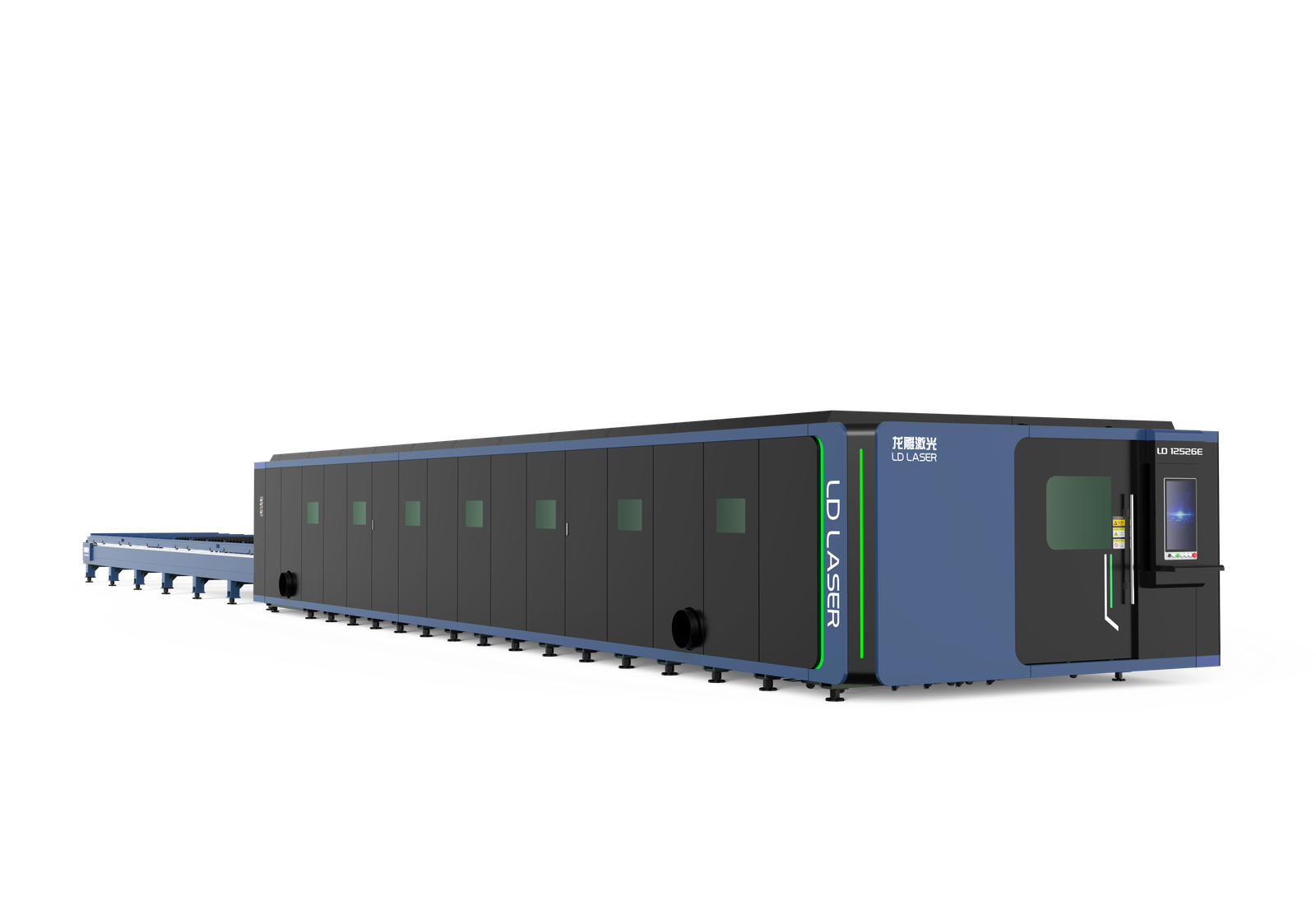
Modern gear-rack transmission systems represent a critical advancement in dual-platform laser cutting technology. These mechanisms achieve superior positional accuracy through precise tooth engagement and minimal backlash characteristics. The integration of hardened steel components and optimized tooth profiles enables consistent performance under varying load conditions. While traditional belt-drive systems suffer from elasticity issues, gear-rack implementations maintain rigid control parameters that warrant deeper technical examination.
Key Takeaways
Gear-rack systems achieve superior positioning control through precise tooth engagement, maintaining accuracy despite varying cutting loads in dual-platform operations.
Tooth profile accuracy within ±0.02mm and surface hardness above 58 HRC ensure consistent performance and minimal wear.
Linear guides combined with servo motors enable controlled acceleration and independent platform operation for enhanced stability.
Rigid gear-rack engagement eliminates elasticity issues common in belt systems, improving repeatability and positional accuracy.
Real-time monitoring systems maintain precision within ±0.01mm through high-resolution encoders and advanced diagnostic algorithms.
Understanding Gear-Rack Mechanical Principles
The gear-rack transmission system operates on fundamental mechanical principles of linear-to-rotary motion conversion. This mechanism employs a straight-toothed rack engaging with a rotating pinion gear, translating rotational force into linear movement through precise tooth meshing. The system’s mechanical efficiency depends on ideal tooth geometry, surface finish, and proper alignment between components.
Key gear principles governing this transmission include the pitch diameter ratio, pressure angle, and tooth profile modifications. These factors directly influence the system’s load capacity, backlash control, and overall performance. In laser cutter applications, the gear-rack assembly must maintain consistent tooth engagement while minimizing friction losses. The mechanical advantage achieved through this arrangement allows for precise positioning control while maintaining system rigidity under varying cutting loads.
Components of Modern Dual-Platform Systems
Modern dual-platform laser cutting systems build upon basic gear-rack principles by incorporating advanced component configurations for enhanced precision and stability. Through dual platform innovation, these systems utilize synchronized motion control elements and precision-engineered subsystems for peak performance.
| Component | Function |
|---|---|
| Linear Guides | Precise rail movement |
| Servo Motors | Controlled acceleration |
| Rack Mounts | Load distribution |
| Gear Arrays | Power transmission |
| Platform Base | Structural support |
System integration combines these elements through computerized coordination, enabling micron-level positioning accuracy. The dual-platform architecture incorporates parallel gear-rack assemblies, with each platform operating independently while maintaining synchronized motion through digital feedback loops. This configuration allows for continuous material processing while minimizing mechanical stress and maintaining peak alignment between cutting heads and workpiece surfaces.
Comparing Belt-Drive and Gear-Rack Performance
When evaluating laser cutter drive mechanisms, belt-drive and gear-rack systems exhibit distinct performance characteristics that influence their application suitability. Belt performance typically offers smoother operation and lower noise levels but may experience elongation under sustained loads and high-speed conditions. Additionally, belts require periodic tension adjustments to maintain positioning accuracy.
In contrast, gear-rack systems demonstrate superior gear strength and mechanical advantage, providing consistent precision across the working envelope. Their rigid engagement eliminates the elasticity issues inherent in belt systems, resulting in better repeatability and positional accuracy. While gear-rack arrangements may exhibit higher initial costs and maintenance requirements, their robust construction and resistance to environmental factors make them preferred for industrial applications where precision cutting and extended durability are paramount.
Precision Engineering in Manufacturing Applications
The precision engineering of gear-rack transmissions in laser cutting systems requires adherence to strict design specifications, including tooth profile accuracy within ±0.02mm and surface roughness below Ra 0.8. Motion control analysis reveals that backlash reduction to less than 0.05mm is achievable through optimized gear geometry and precise rack mounting procedures. Manufacturing tolerance standards dictate rigorous quality control protocols, encompassing gear pitch accuracy of AGMA Class 12 and perpendicularity alignment within 0.01mm per 100mm of travel.
Key Design Specifications
Several critical design specifications govern the manufacturing of gear-rack transmission systems in laser cutting equipment. The dimensional tolerances must maintain precision within ±0.02mm to guarantee accurate motion control and positioning. Design refinement focuses on rack tooth geometry, typically incorporating a 20° pressure angle and module sizes ranging from 1.5 to 2.5 for ideal load distribution.
Key performance metrics include backlash limitations of less than 0.05mm, positioning accuracy of ±0.01mm/meter, and repeatability within ±0.008mm. The gear material specifications require hardened alloy steel with surface hardness exceeding 58 HRC for wear resistance. Rack mounting surfaces must maintain flatness within 0.02mm per 300mm length, while gear shaft concentricity tolerances are specified at 0.01mm TIR maximum to guarantee smooth operation and extended service life.
Motion Control Analysis
Precise motion control engineering in gear-rack transmission systems requires sophisticated analysis of multiple dynamic parameters. The integration of high-resolution motion sensors enables real-time monitoring of rack positioning, velocity profiles, and acceleration curves. These sensors transmit positional data to the control system, which processes feedback through refined algorithms for trajectory correction.
Algorithm refinement focuses on minimizing backlash effects and compensating for mechanical tolerances inherent in gear-rack interfaces. The control system analyzes encoder signals to maintain precise coordination between dual platforms, implementing predictive calculations for position verification. Advanced motion control parameters incorporate gain scheduling and feed-forward compensation to enhance dynamic response characteristics. This systematic approach guarantees consistent accuracy across the entire working envelope while maintaining ideal cutting head positioning throughout operational cycles.
Manufacturing Tolerance Standards
Manufacturing tolerances in gear-rack transmission systems adhere to stringent dimensional standards that directly impact motion control performance. The critical tolerance limits for gear-rack assemblies typically range from ±0.02mm to ±0.05mm, ensuring peak mesh engagement and minimal backlash during operation.
Industry specifications require precise manufacturing precision across multiple parameters, including tooth profile accuracy, pitch deviation, and surface roughness. The gear tooth flanks must maintain parallelism within 0.01mm per 100mm length, while rack straightness tolerances cannot exceed 0.025mm per meter. These exacting standards necessitate advanced manufacturing processes, including precision grinding and heat treatment protocols. Quality control measures incorporate coordinate measuring machine (CMM) verification and specialized gear metrology equipment to validate conformance to prescribed geometric dimensioning and tolerancing (GD&T) requirements.
Maintenance Requirements for Optimal Operation
The maintenance protocol for gear-rack transmission systems in laser cutters encompasses three critical components that guarantee sustained operational efficiency. Systematic cleaning procedures remove debris accumulation and prevent wear patterns that could compromise positioning accuracy, while precision alignment adjustments maintain the parallel relationship between the gear and rack components. Regular application of appropriate lubricants to contact surfaces reduces friction coefficients and extends the service life of the transmission system.
Regular Cleaning Schedule
Maintaining a consistent cleaning schedule for gear-rack transmission systems in laser cutters is essential for peak performance and longevity. A structured preventive maintenance program should include weekly inspection and cleaning of gear teeth, rack surfaces, and mounting components to remove debris accumulation and contamination.
The recommended cleaning techniques involve using compressed air to remove loose particles, followed by application of appropriate solvents to dissolve stubborn residue. Technicians must pay particular attention to the gear-tooth interfaces and rack engagement surfaces, where material buildup can affect positioning accuracy. The cleaning process should conclude with the application of manufacturer-specified lubricants to guarantee smooth operation. Documentation of cleaning activities, including dates and observations, enables tracking of wear patterns and helps optimize the maintenance schedule based on operational conditions.
Alignment System Adjustments
Proper alignment of gear-rack transmission systems builds upon regular cleaning protocols to guarantee precise laser cutting operations. The alignment calibration process requires systematic verification of gear mesh depth, rack parallelism, and backlash tolerances across both platforms.
Critical adjustment techniques include measuring gear tooth engagement using feeler gauges, validating rack mounting bracket perpendicularity, and fine-tuning the preload settings on support bearings. Technicians must verify the synchronization between dual racks through digital comparator measurements at multiple points along the travel path. When implementing adjustments, incremental modifications of no more than 0.02mm per iteration prevent overcorrection while maintaining system stability. Regular documentation of alignment parameters enables tracking of wear patterns and prediction of future calibration needs.
Lubrication Best Practices
Because gear-rack transmission systems operate under high mechanical stress, systematic lubrication protocols are vital for preventing premature wear and maintaining peak performance. The selection of appropriate grease types and adherence to specified lubrication intervals greatly impacts system longevity and precision.
Critical maintenance requirements include:
- Application of lithium-based synthetic grease with NLGI grade 2 consistency, guaranteeing prime adhesion and wear protection across the gear-rack interface
- Implementation of scheduled lubrication intervals every 500 operating hours or bi-monthly, whichever occurs first
- Inspection of grease distribution patterns during maintenance to identify potential mechanical irregularities and verify uniform coverage across gear teeth and rack surfaces
These protocols maintain proper gear mesh engagement while minimizing friction-induced wear, ultimately preserving the transmission system’s dimensional accuracy and operational efficiency.
Industrial Benefits of Gear-Rack Implementation
Several key industrial advantages emerge from implementing gear-rack transmission systems in laser cutting machinery. The enhanced gear efficiency enables consistent power transfer across extended production runs, while superior load capacity supports heavier workpieces without compromising accuracy.
| Benefit Category | Implementation Impact |
|---|---|
| Production Speed | 30% faster processing |
| Maintenance Cost | 45% reduction annually |
| Positioning Error | <0.02mm deviation |
| System Longevity | 5+ years MTBF |
The robust design architecture minimizes backlash and guarantees precise motion control, critical for intricate cutting patterns. Manufacturing facilities benefit from reduced downtime through simplified maintenance procedures and extended service intervals. The system’s inherent mechanical advantage allows for peak force distribution, resulting in smoother acceleration and deceleration cycles during high-speed operations.
Impact on Production Speed and Efficiency
The integration of gear-rack transmission systems in laser cutters enables significant improvements in material processing speed through precise linear motion control and optimized acceleration rates. Modern gear-rack configurations allow operators to process multiple projects simultaneously by maintaining consistent cutting speeds across expanded work surfaces. The system’s mechanical efficiency translates directly to higher throughput rates, with documented increases in production capacity ranging from 25% to 40% compared to traditional drive mechanisms.
Faster Material Processing Time
Modern gear-rack transmissions greatly reduce material processing time in laser cutting operations through optimized mechanical movement and precise positional control. The system’s advanced mechanics facilitate laser speed optimization while maintaining positional accuracy within microns during high-velocity cutting paths.
Key factors contributing to material throughput enhancement include:
- Synchronized dual-axis movement allowing simultaneous X-Y positioning at acceleration rates up to 2.5G
- Reduced mechanical backlash through precision-ground gear teeth profiles, enabling faster directional changes
- Advanced motion control algorithms that optimize cutting head trajectories while maintaining consistent beam focus
This mechanical efficiency translates to reduced cycle times, enabling operators to process more materials per shift while maintaining strict quality standards. The system’s inherent rigidity prevents vibration-induced errors even at maximum cutting speeds.
Multiple Project Load Optimization
Strategic implementation of multiple project loading capabilities in gear-rack laser cutting systems dramatically enhances overall production efficiency. The dual-platform configuration enables simultaneous material preparation and processing, utilizing advanced project prioritization strategies to optimize workflow sequences. Load balancing techniques distribute tasks between platforms based on material specifications and cutting requirements.
The system’s mechanical architecture facilitates concurrent loading of diverse materials while maintaining precise positional control through the gear-rack drive mechanism. This configuration reduces machine idle time by 40-60% compared to single-platform systems. Automated material handling sequences, synchronized with the gear-rack transmission timing, guarantee continuous operation across multiple projects. The integration of smart queuing algorithms further optimizes material placement and cutting sequences, maximizing throughput while maintaining consistent quality standards.
Design Considerations for System Integration
Integrating gear-rack transmission systems into laser cutters requires careful consideration of multiple mechanical and spatial parameters. The system compatibility must account for precise alignment tolerances while maintaining design flexibility across varying operational conditions.
Key integration factors include:
- Mounting interface specifications between the gear-rack assembly and existing frame structures, ensuring proper load distribution and minimal deflection
- Thermal expansion compensation mechanisms to maintain accuracy across different material processing temperatures
- Modular component architecture allowing for maintenance access and future upgrades without compromising system rigidity
Engineers must evaluate the transmission system’s impact on overall machine stiffness, considering both static and dynamic loading scenarios. The integration process demands strict adherence to geometric tolerances while incorporating sufficient adjustment capabilities for long-term mechanical stability.
Quality Control and Position Accuracy
Building upon the established system integration parameters, quality control measures for gear-rack transmissions in laser cutters focus on maintaining precise positional accuracy throughout the machine’s operational lifecycle. Rigorous calibration techniques employ dual-axis position verification systems to monitor gear mesh engagement and rack alignment tolerances within ±0.01mm.
Sensor integration plays a vital role in real-time position feedback, utilizing high-resolution encoders and proximity sensors to detect mechanical deviations. These systems continuously monitor backlash compensation, tooth wear patterns, and linear displacement accuracy. Quality control protocols mandate regular measurement of gear pitch consistency, tooth profile accuracy, and surface finish parameters. Advanced diagnostic algorithms analyze collected data to predict maintenance intervals and identify potential precision degradation before it impacts cutting performance.
Material Selection for Long-Term Durability
The selection of materials for gear-rack systems in laser cutters requires careful consideration of wear resistance, dimensional stability, and operational longevity. Steel racks offer superior mechanical strength and thermal stability compared to polymer alternatives, though advanced engineering polymers can provide adequate performance with reduced noise and maintenance requirements. Surface treatments such as carburizing, nitriding, or precision grinding enhance the durability of steel components while maintaining tight geometric tolerances essential for precise laser positioning.
Steel vs. Polymer Racks
Material selection for gear-rack systems in laser cutters presents a critical engineering decision between steel and polymer options, each offering distinct advantages for long-term durability. The comparative analysis reveals significant differences in performance characteristics and operational requirements.
- Steel advantages include superior thermal stability, higher load capacity, and minimal wear rates, though these benefits come with increased weight considerations and higher noise levels during operation
- Polymer racks offer cost implications favoring initial investment, reduced maintenance differences through self-lubrication properties, and lower acoustic emissions, but demonstrate reduced durability comparison metrics
- Environmental impact assessment shows steel’s longer service life offsetting its energy-intensive production, while polymer flexibility options provide design versatility but require more frequent replacement cycles
The selection ultimately depends on specific application requirements, operational conditions, and precision demands of the laser cutting system.
Hardened Surface Treatment Options
Surface treatment technologies for gear-rack systems encompass multiple hardening methodologies that greatly enhance wear resistance and operational longevity. Common approaches include nitriding, carburizing, and the application of hardened coatings through physical vapor deposition (PVD) processes. These treatments create protective layers with enhanced surface durability characteristics.
Advanced surface engineering techniques, such as plasma nitriding and diamond-like carbon (DLC) coatings, provide exceptional hardness values exceeding 70 HRC while maintaining dimensional stability. The selection of appropriate treatment methods depends on the base material composition and specific operational requirements. Modern laser cutter applications frequently utilize chrome nitride (CrN) or titanium nitride (TiN) coatings, which offer superior wear resistance and reduced friction coefficients. These treatments effectively minimize gear tooth deformation and maintain precise positioning accuracy throughout extended service periods.
Cost Analysis and Return on Investment
Financial considerations of implementing gear-rack transmission systems in laser cutters require detailed cost-benefit analysis across multiple parameters. The initial capital investment encompasses both hardware components and installation costs, while operational expenditure factors include maintenance schedules and replacement intervals.
- Equipment lifecycle cost analysis reveals 15-20% higher upfront costs compared to belt systems, offset by 40% longer service intervals
- Maintenance cost reduction of approximately 30% annually due to superior wear characteristics and reduced downtime
- Production efficiency gains of 22-25% through enhanced positioning accuracy and higher acceleration rates
The cost efficiency metrics demonstrate favorable investment returns within 18-24 months for high-volume operations, factoring in reduced maintenance requirements and improved production throughput. Long-term durability and precision stability further validate the economic advantages of gear-rack implementations.
Thermal Compensation and Environmental Factors
Although gear-rack transmission systems offer superior mechanical advantages, their performance characteristics are greatly influenced by thermal variations and environmental conditions. The thermal stability of gear-rack components directly affects positioning accuracy, with linear thermal expansion coefficients requiring precise compensation algorithms. Environmental factors such as humidity, dust particles, and ambient temperature fluctuations can impact the system’s operational efficiency.
To maintain ideal performance, modern laser cutters incorporate thermal sensors and automated compensation mechanisms. These systems continuously monitor temperature variations across critical components and adjust gear mesh tolerances accordingly. Advanced thermal management solutions, including strategic component placement and specialized cooling systems, help mitigate environmental impact on transmission accuracy. The integration of temperature-resistant materials and protective enclosures further enhances system reliability under varying operational conditions.
Advanced Control Systems and Feedback Mechanisms
Modern gear-rack transmission systems rely on sophisticated control architectures to maintain precise positioning and motion accuracy. The integration of advanced feedback loops and control algorithms enables real-time adjustment of gear-rack dynamics, compensating for mechanical variances and external disturbances.
Key control system components include:
- Multi-axis encoders that monitor positional data with sub-micron resolution, providing continuous feedback to the motion controller
- Adaptive PID control algorithms that optimize acceleration profiles and minimize following errors during high-speed operations
- Digital servo drives with integrated torque monitoring systems that regulate motor performance and detect potential mechanical anomalies
These interconnected systems form a thorough control framework that maintains gear-rack synchronization while preserving mechanical tolerances. The control architecture’s ability to process multiple feedback signals simultaneously guarantees consistent cutting accuracy across the entire work envelope.
Troubleshooting Common Technical Issues
Despite the sophistication of gear-rack control systems, technical issues can arise that affect laser cutter performance and accuracy. Regular gear wear assessment becomes critical in identifying potential transmission failures before they impact cutting precision. Operators must monitor backlash development, tooth surface deterioration, and alignment deviations.
Error detection protocols should focus on three primary areas: mechanical synchronization, positioning accuracy, and drive system response. When misalignment occurs, diagnostic procedures must evaluate both the gear-rack interface and the supporting mechanical components. Common indicators include irregular motion patterns, positioning inconsistencies, and abnormal vibration signatures. Systematic troubleshooting requires measurement of gear pitch accuracy, rack straightness, and engagement depth. Implementation of predictive maintenance schedules, based on operational hours and wear patterns, helps prevent catastrophic system failures.
Future Developments in Transmission Technology
While traditional gear-rack systems have served laser cutting applications reliably, emerging technologies are poised to revolutionize transmission mechanics in future systems. Advanced smart materials innovations are driving significant improvements in gear-rack performance and longevity.
- Self-healing polymer composites integrated into gear teeth structures enable micro-damage repair during operation, reducing wear and extending service intervals
- Autonomous maintenance technologies featuring AI-driven sensors monitor transmission parameters in real-time, predicting potential failures before they occur
- Shape-memory alloys incorporated into rack components automatically adjust positioning and compensate for thermal expansion, maintaining precise calibration
These developments represent a fundamental shift toward intelligent transmission systems that adapt to operating conditions while maximizing accuracy and minimizing downtime in dual-platform laser cutting applications.
Conclusion
The gear-rack transmission‘s superiority in dual-platform laser cutters ironically manifests through its unyielding refusal to exhibit the charming personality flaws of belt drives. While maintenance technicians yearn for the familiar whims of belt systems, these mechanical overachievers stubbornly deliver ±0.02mm precision with ruthless consistency. Perhaps their only fault lies in making other transmission systems look hopelessly antiquated, much to the chagrin of traditional manufacturing purists.