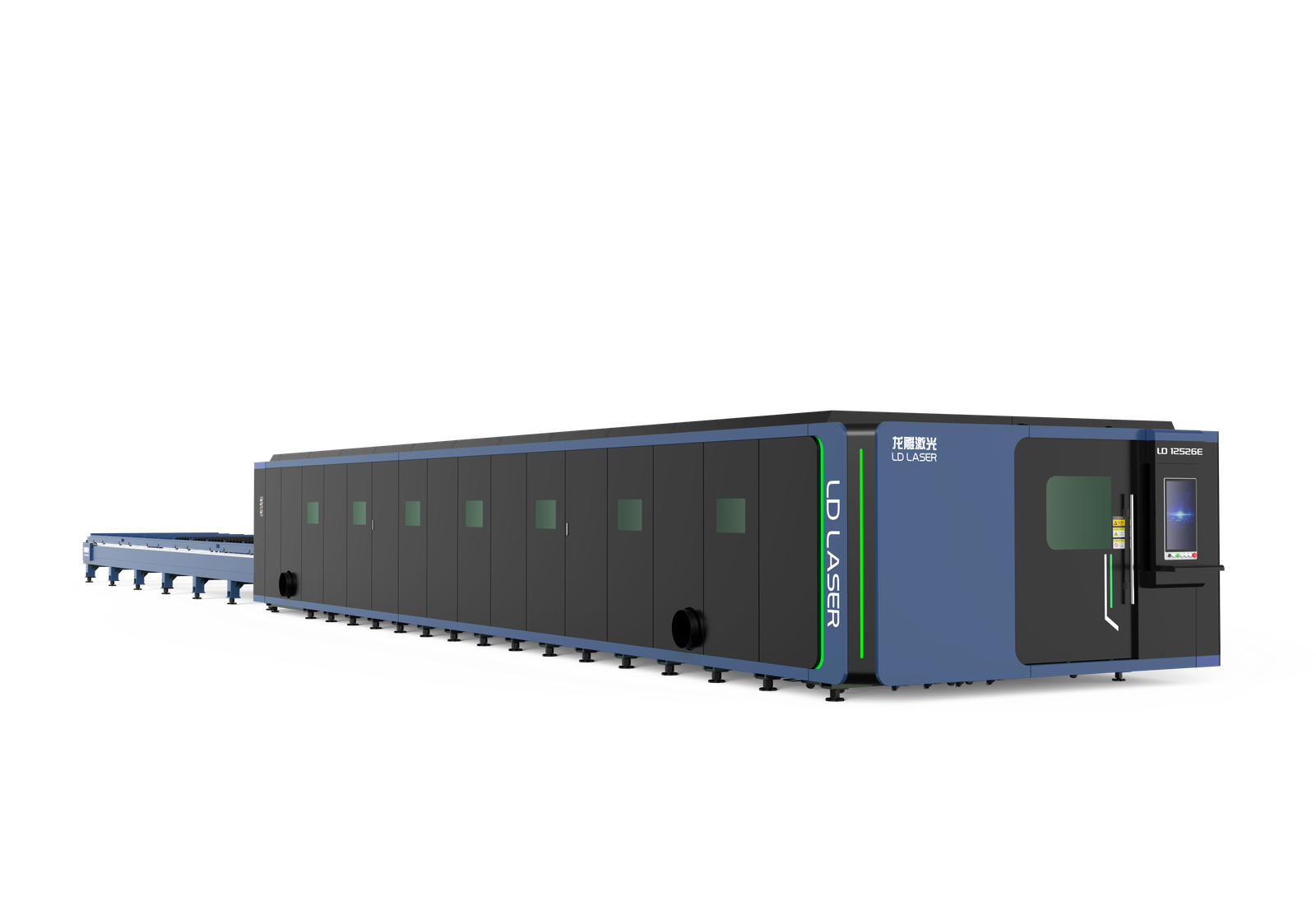
You’re witnessing welding preparation evolve from approximate to absolute. When you examine traditional beveling methods—mechanical cutting, flame cutting, plasma—you’ll find tolerances that drift beyond ±2°, surfaces requiring extensive grinding, and heat-affected zones compromising material integrity. Laser bevel cutting eliminates these variables entirely, delivering mathematical precision with ±0.5° accuracy and Ra 6.3μm surface finishes straight from the cutting head. The implications for your welding operations extend far beyond simple time savings.
Ključne ugotovitve
Laser bevel cutting achieves ±0.5° angular precision with surface roughness below Ra 1.6μm, eliminating secondary machining operations.
Direct-to-weld capability reduces handling time by 60% while maintaining consistent kerf width of ±0.025mm for superior joint quality.
Nitrogen assist gas prevents oxidation and heat-affected zones remain under 2mm, preserving base material properties for welding.
Multi-axis programming enables complex geometries with micron-level accuracy, achieving mathematical precision within ±0.1mm tolerances consistently.
Automated systems deliver 40-60% faster cycle times with real-time monitoring for immediate error correction and repeatable results.
Traditional Beveling Methods: Limitations and Performance Gaps
When you examine conventional beveling methods, you’ll find that mechanical processes like milling, grinding, and plasma cutting consistently fall short of modern manufacturing demands. Traditional beveling techniques suffer from inherent performance limitations that compromise your production efficiency and weld quality.
Mechanical milling produces inconsistent bevel angles due to tool wear and vibration, while grinding operations generate excessive heat that alters material properties near cut edges. You’ll encounter surface roughness values exceeding Ra 6.3 μm with these methods, requiring additional finishing steps that increase cycle times by 40-60%.
Plasma cutting delivers poor edge quality with heat-affected zones extending 2-4mm into base material. You’re also limited to basic bevel geometries, preventing complex joint preparations required for critical applications. Setup times consume 15-25% of total production cycles, while consumable costs escalate rapidly. These traditional beveling approaches can’t meet today’s precision tolerances or throughput requirements.
Laser Bevel Cutting Technology: Core Principles and Mechanics
When you direct a laser beam at specific angles through precision optics, you’re manipulating photon convergence points to create controlled material removal along predetermined bevel geometries. The focused beam’s energy density interacts with your workpiece through thermal absorption, vaporization, and melt ejection processes that occur within microsecond timeframes. You’ll achieve ideal bevel quality by controlling beam diameter, power density distribution, and traverse speeds that match your material’s thermal conductivity and melting characteristics.
Beam Focus Physics
Precision in laser bevel cutting depends fundamentally on controlling the focal point geometry in . beam characteristics throughout the cutting process. You’ll need to manage beam divergence carefully as it directly affects cut quality and edge precision. The focal point’s position determines kerf width in . penetration depth, while beam divergence influences the taper angle throughout material thickness.
Your laser optics system must maintain consistent focal diameter across varying cutting angles. As you adjust the cutting head’s angular position for bevel operations, the effective focal length changes, requiring real-time compensation. You’ll optimize power density by controlling spot size – typically 0.1-0.3mm diameter for precision applications.
Monitor focal shift during angular cuts, as beam path length variations affect energy concentration. Proper beam collimation and focusing lens selection guarantee consistent cutting performance across different bevel angles and material thicknesses.
Material Interaction Dynamics
As laser energy encounters material surfaces during bevel cutting, you’ll observe distinct interaction zones that determine cut quality and thermal effects. Understanding material behavior during these interactions enables precise control over cutting parameters and geometric accuracy.
The interaction analysis reveals critical zones where energy transfer occurs:
Absorption zone – Direct laser energy converts to thermal energy within material depth
Melt pool formation – Localized heating creates controlled molten material removal
Vapor pressure dynamics – Rapid vaporization generates assist gas flow efficiency
Heat-affected zone (HAZ) – Surrounding material experiences temperature gradients affecting metallurgy
Kerf geometry control – Material removal rate determines bevel angle precision and surface finish
You’ll achieve ideal results by monitoring these interaction parameters continuously, adjusting power density and feed rates based on real-time material behavior feedback for consistent weld preparation geometry.
Precision Advantages: Mathematical Accuracy Vs Conventional Techniques
Medtem ko conventional cutting methods rely on operator skill and manual adjustments that introduce variability, laser bevel cutting achieves mathematical precision through computer-controlled positioning systems that maintain tolerances within ±0.1mm. You’ll find that plasma and oxyfuel cutting typically produce angle deviations of ±2-3°, while laser systems deliver ±0.5° accuracy consistently.
Your productivity increases markedly when you eliminate the secondary machining operations that conventional methods often require. Laser bevel cutting produces surfaces with roughness values below Ra 6.3μm, compared to Ra 25-50μm from plasma cutting. You’ll achieve repeatable bevel angles across entire production runs without manual recalibration.
The mathematical precision extends to complex geometries where you can program multi-axis movements with micron-level accuracy. Your material utilization improves by 15-20% since precise cut paths eliminate excessive kerf allowances. When you compare setup times, laser systems require minimal adjustment between cuts, while conventional methods demand frequent operator intervention for maintaining cut quality and dimensional accuracy.
Surface Quality Improvements: Mirror-Smooth Finishes and Reduced Post-Processing
Beyond achieving dimensional precision, laser bevel cutting delivers surface finishes that approach mirror-quality smoothness, with roughness values reaching Ra 1.6μm or better on steel and aluminum substrates. You’ll eliminate traditional grinding, filing, and deburring operations that consume valuable production time.
These surface treatment innovations transform your manufacturing workflow:
Heat-affected zone control – Optimized parameters minimize thermal distortion while maintaining edge integrity
Oxide layer management – Nitrogen assist gas prevents oxidation, delivering clean, weld-ready surfaces
Kerf width consistency – ±0.025mm tolerance maintains uniform edge geometry throughout cut depth
Dross elimination – Advanced cutting protocols virtually eliminate molten material adhesion
Edge perpendicularity – Achieves ±0.1° straightness without secondary machining
Your welders can begin joint preparation immediately without additional surface conditioning. This direct-to-weld capability reduces handling time by 60% compared to plasma cutting systems. Modern finishing techniques integrated within laser processing eliminate bottlenecks, streamlining production from cutting through final assembly while maintaining consistent metallurgical properties.
Time Efficiency Gains: Setup Reduction and Faster Cycle Times
When production schedules demand maximum throughput, laser bevel cutting systems deliver setup times under 15 minutes compared to traditional mechanical methods requiring 2-3 hours of tooling changes and fixture adjustments. You’ll achieve setup optimization through programmable bevel angles that eliminate manual tool positioning and complex workholding configurations.
Your cycle time reduction becomes immediately measurable when switching between different bevel profiles. Laser systems execute angle changes through software commands while mechanical beveling requires physical tool swaps, height adjustments, and feed rate recalibration. You’re looking at 40-60% faster production cycles on complex geometries requiring multiple bevel angles.
The technology’s automation capabilities extend beyond basic cutting. You can program sequential operations including pierce points, lead-in paths, and bevel shifts without operator intervention. Real-time monitoring systems track cutting parameters and automatically adjust power settings, ensuring consistent performance across extended production runs while maintaining dimensional accuracy within ±0.002 inches.
Cost Analysis: ROI and Production Savings Across Heavy Industries
These operational improvements translate directly into quantifiable financial returns across heavy manufacturing sectors. You’ll achieve substantial cost savings through reduced labor requirements, eliminated secondary machining operations, and minimized material waste. Your profitability analysis will reveal significant gains from decreased setup times and improved throughput rates.
Key financial benefits include:
Labor cost reduction: 40-60% decrease in operator time per part through automated bevel processing
Material optimization: 15-25% waste reduction from precise cut quality and elimination of rework
Equipment consolidation: Single-pass operations replace multiple machining steps, reducing capital requirements
Quality-driven savings: 90% reduction in weld defects translates to lower inspection and repair costs
Energy efficiency: Modern laser systems consume 30% less power than conventional plasma cutting methods
Your ROI calculations will typically show payback periods between 12-18 months, depending on production volume and current process complexity. Heavy industries report average annual savings of $200,000-$500,000 per system implementation.
Quality Control Benefits: Eliminating Human Error and Ensuring Consistency
Medtem ko financial returns provide compelling justification for laser bevel cutting adoption, the technology’s most transformative impact lies in its ability to deliver unprecedented quality control through automated precision. You’ll eliminate dimensional variations that plague manual operations, achieving repeatability tolerances within ±0.1mm across thousands of cuts.
Automated systems reduce your dependence on operator skill levels while maintaining consistent bevel angles, surface finishes, and edge geometries. You can program exact specifications once and reproduce them indefinitely, removing subjective interpretation from the cutting process. Real-time monitoring systems provide continuous feedback, enabling immediate error mitigation before defects propagate through production runs.
CNC integration guarantees your cutting parameters remain constant regardless of shift changes or operator experience. With minimal human oversight required, you’ll maintain quality standards that manual processes simply can’t match. This consistency translates directly into superior weld quality, reduced rework rates, and enhanced structural integrity across your fabricated components.
Industrial Applications: Shipbuilding, Aerospace, and Structural Steel Fabrication
Našli boste laser bevel cutting‘s precision capabilities transform critical manufacturing processes across shipbuilding, aerospace, and structural steel fabrication industries. When you’re assembling ship hulls, the technology delivers angular cuts within ±0.1° tolerance, ensuring watertight seam integrity that meets maritime safety standards. In aerospace component preparation, you can achieve beveled edges with surface roughness values below Ra 3.2 μm, eliminating secondary finishing operations while maintaining the strict dimensional accuracy required for flight-critical assemblies.
Precision Hull Assembly
Complex hull assemblies demand exact angular cuts where traditional cutting methods fall short of achieving the tight tolerances required for watertight seals and structural integrity. You’ll find that laser bevel cutting transforms hull design precision by delivering consistent beveled edges that eliminate gaps and misalignments. This technology greatly enhances assembly efficiency by reducing fit-up time and minimizing rework cycles.
Automated angle compensation maintains ±0.5° tolerance across varying plate thicknesses from 6mm to 50mm
Edge quality optimization eliminates manual grinding operations, reducing assembly time by 40%
Heat-affected zone control preserves material properties within 2mm of cut edges
Real-time thickness sensing adjusts cutting parameters automatically for uniform bevel geometry
Multi-axis positioning enables complex contour cutting for curved hull sections
You’re achieving superior weld preparation that directly translates to stronger, more reliable maritime vessels.
Aerospace Component Preparation
When aerospace manufacturing demands component tolerances measured in thousandths of an inch, laser bevel cutting delivers the exacting precision that conventional machining can’t match. You’ll achieve consistent bevel angles within ±0.1° accuracy across titanium, aluminum, and composite materials critical to aerospace design.
The technology eliminates heat-affected zones that compromise component durability in high-stress applications. You’re processing wing spars, fuselage frames, and engine mounts with edge preparations that meet AS9100 certification standards. Laser systems maintain repeatability across production runs, ensuring each component matches specifications exactly.
Your quality control benefits from real-time monitoring systems that track cutting parameters and detect deviations instantly. This eliminates costly rework and maintains the structural integrity essential for aerospace applications where failure isn’t an option.
Safety and Compliance: Meeting Critical Standards for Structural Integrity
Most aerospace and defense manufacturers require laser bevel cutting operations to meet stringent structural integrity standards that directly impact component performance and safety certification. You’ll need thorough safety protocols in . compliance regulations to guarantee consistent quality throughout your manufacturing process.
Your quality assurance framework must address critical validation requirements:
Material traceability documentation – Track every component from raw material certification through final inspection
Dimensional tolerance verification – Maintain ±0.001″ accuracy across all bevel angles and edge preparations
Heat-affected zone monitoring – Control thermal impact within 0.1mm to preserve base material properties
Non-destructive testing protocols – Implement ultrasonic and penetrant testing for crack detection
Real-time process monitoring – Deploy laser power sensors and cutting speed feedback systems
You’ll achieve regulatory compliance by establishing documented procedures that align with AS9100D aerospace standards and NADCAP welding specifications. This systematic approach guarantees your bevel cuts consistently meet structural load requirements while maintaining full certification traceability.
Implementation Strategy: Equipment Integration and Workforce Training Requirements
You’ll need to establish clear equipment selection criteria that prioritize beam quality, cutting speed capabilities, and automation compatibility with your existing production systems. Your workforce training program must address both technical operator skills and maintenance protocols, requiring structured competency assessments and certification timelines. Strategic integration planning demands precise scheduling that minimizes production disruptions while ensuring quality standards aren’t compromised during the changeover phase.
Equipment Selection Criteria
Three fundamental categories define equipment selection criteria for laser bevel cutting systems: cutting specifications, integration compatibilityin operational efficiency metrics.
When evaluating equipment types, you’ll need to assess specific performance parameters against your production requirements. Different laser configurations deliver varying capabilities, directly impacting operational costs and throughput efficiency.
Consider these critical evaluation factors:
Power output range – Match laser wattage to material thickness requirements
Bevel angle precision – Verify ±0.1° accuracy for weld preparation standards
Cutting speed capabilities – Calculate throughput against production targets
Automation integration – guarantee compatibility with existing CNC systems
Maintenance accessibility – Evaluate component replacement frequency and costs
You’ll want to prioritize systems offering ideal cost-per-cut ratios while maintaining precision tolerances. Advanced fiber laser systems typically provide superior energy efficiency compared to CO2 alternatives, reducing long-term operational expenses.
Staff Skill Development
While equipment procurement represents the initial investment, successful laser bevel cutting implementation depends critically on developing operator competencies that match system capabilities. You’ll need thorough staff training programs covering laser safety protocols, CAD/CAM software proficiency, and material-specific cutting parameters. Operators must master beam angle adjustments, focal point positioning, and real-time quality monitoring systems.
Skill enhancement requirements include understanding metallurgical effects of laser processing, thermal management principles, and dimensional tolerance maintenance. You should establish certification benchmarks measuring cutting accuracy within ±0.1mm tolerances and bevel angle precision of ±0.5 degrees. Training modules must address troubleshooting procedures, preventive maintenance schedulesin process optimization techniques. Continuous education guarantees operators adapt to evolving laser technologies and maintain consistent weld preparation quality standards.
Integration Timeline Planning
Coordinating equipment installation s spletno stranjo . workforce development requires a structured timeline spanning 12-18 months for complete laser bevel cutting implementation. You’ll need to address integration challenges systematically while maintaining production continuity. Technology adoption success depends on parallel execution of hardware deployment and operator training phases.
Your implementation roadmap should include:
Months 1-3: Equipment procurement, site preparation, and initial operator selection
Months 4-8: Installation, calibration, and baseline training program launch
Months 9-12: Production trials, skill certification, and process optimization
Months 13-15: Full-scale deployment with advanced technique development
Months 16-18: Performance validation, quality audits, and continuous improvement protocols
You’ll minimize downtime by scheduling installations during planned maintenance windows and cross-training existing welders on conventional methods while they’re developing laser bevel cutting expertise.
Zaključek
You’re standing at the crossroads of manufacturing evolution, where laser bevel cutting becomes your Excalibur against traditional limitations. With ±0.5° tolerances and Ra 6.3μm surface finishes, you’ll eliminate secondary operations while achieving 40% faster cycle times. Your implementation requires strategic equipment integration and targeted workforce development, but the precision gains—from aerospace to shipbuilding—deliver measurable ROI. You’re not just adopting technology; you’re wielding the future of weld preparation with mathematical certainty.