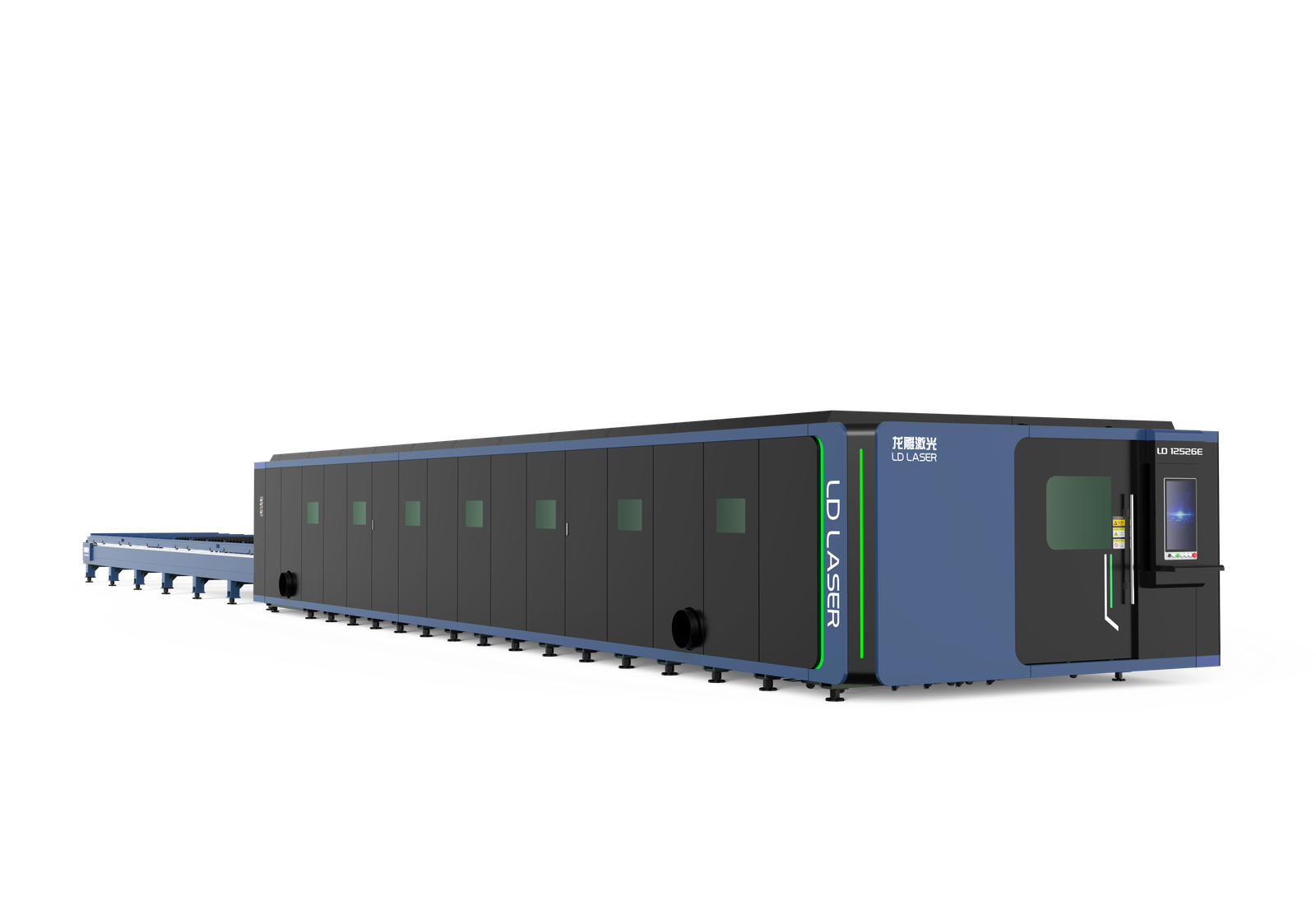
You’ve likely noticed that your manual material handling bottlenecks coincide with peak production demands, exactly when you can’t afford delays. Your current laser cutting operations probably experience 30-40% downtime from loading inefficiencies, while sorting errors cost you an average of $2,400 per shift in rework. These challenges compound rapidly as throughput requirements increase, but there’s a systematic approach to automation integration that addresses each pain point while maintaining your existing workflow structure.
Ključne ugotovitve
Automated loading systems with robotic gantry technology achieve 40-60% cycle time reduction while maintaining ±0.05mm positioning accuracy.
Intelligent sorting mechanisms using machine learning and vision systems deliver 99.8% accuracy rates with real-time defect detection capabilities.
Advanced stacking solutions employ vision-guided robotics with force feedback to handle parts exceeding 500kg with programmable sequences.
Integration requires standardized communication protocols like OPC-UA and Ethernet/IP for seamless real-time data exchange between systems.
ROI analysis shows 60-75% labor efficiency improvements and 18-24 month payback periods through reduced waste and increased throughput.
Current Bottlenecks in Manual Material Handling for Laser Cutting Operations
Medtem ko laser cutting systems achieve remarkable precision and speed in material processing, your production throughput suffers significant constraints when operators manually load, position, and unload workpieces. Manual handling inefficiencies create cascading delays throughout your operation, with typical load times ranging from 2-5 minutes per sheet depending on material thickness and operator experience.
You’ll observe productivity impacts manifesting in several critical areas. Operator fatigue reduces handling speed by 15-20% during extended shifts, particularly with heavy gauge materials exceeding 10mm thickness. Positioning accuracy deteriorates as workers rush to maintain cycle times, resulting in increased scrap rates and rework cycles. Queue times between cutting operations extend when operators can’t maintain pace with laser processing speeds, which often complete parts in under 60 seconds.
These bottlenecks compound during high-volume production runs, where manual material flow creates artificial capacity limits despite your laser system’s capabilities remaining underutilized.
Automated Loading Systems: Technologies and Implementation Strategies
You’ll need to evaluate three primary automated loading technologies: robotic gantry systems with 0.1mm positioning accuracy, vacuum lift mechanisms handling sheet weights up to 3,000kg, and tower storage units providing 95% space utilization efficiency. Your implementation strategy must account for cycle time reduction targets of 40-60% while maintaining dimensional tolerances within ±0.05mm throughout the automated transfer process. Material handling integration requires precise coordination between loading sequences, laser cutting parameters, and downstream processing to achieve efficient throughput rates of 150-200 parts per hour.
Material Handling Technologies
Material handling technologies form the backbone of efficient laser cutting production lines, directly impacting throughput rates, operational costs, and overall system reliability. You’ll need to evaluate multiple technologies to optimize your workflow from raw material input to finished part output.
Automated conveyors transport materials seamlessly between stations, while robotic arms provide precise positioning and manipulation capabilities. Your selection depends on material specifications, production volumes, and integration requirements with existing systems.
Critical material handling components include:
- Pneumatic transfer systems – Deliver consistent material positioning with minimal maintenance requirements
- Magnetic conveyors – Handle ferrous materials efficiently while preventing surface damage
- Vision-guided robotics – Enable adaptive handling of varying part geometries and orientations
- Servo-controlled shuttles – Provide precise timing coordination across multiple production stations
Implementation Best Practices
Once material handling technologies are selected, successful implementation hinges on systematic integration planning and rigorous testing protocols. You’ll need extensive implementation strategies that address workflow mapping, equipment synchronizationin safety compliance. Start with pilot testing on limited production runs to validate system performance before full deployment.
Common automation challenges include sensor calibration issues, material variance handling, and network communication failures. You must establish measurable performance metrics—throughput rates, error frequencies, and downtime percentages—to monitor system effectiveness. Develop contingency protocols for equipment failures and maintain detailed documentation of all configuration parameters.
Train operators on both automated and manual override procedures. Schedule regular maintenance intervals based on manufacturer specifications and actual usage data. Continuous monitoring and iterative improvements guarantee peak long-term performance.
Intelligent Sorting Mechanisms for Precision Part Classification
Advanced vision systems equipped with high-resolution cameras in . machine learning algorithms revolutionize how laser-cut parts move through your production line. These intelligent classification systems deliver precision sorting accuracy rates exceeding 99.8%, dramatically reducing manual inspection requirements while maintaining consistent quality standards.
Your sorting mechanisms process multiple parameters simultaneously, analyzing dimensional tolerances, surface finish quality, and geometric specifications in real-time. Machine learning algorithms continuously adapt to new part geometries, improving classification accuracy over time.
Key components for ideal intelligent classification performance:
- Multi-spectral imaging sensors that detect material variations and surface defects invisible to standard cameras
- Edge computing processors providing sub-millisecond classification decisions without network latency
- Pneumatic rejection systems with servo-controlled actuators for precise part redirection at high speeds
- Adaptive learning databases that store classification patterns for consistent sorting across production shifts
This precision sorting integration reduces downstream quality issues by 85% while increasing throughput capacity by 40% compared to manual classification methods.
Advanced Stacking Solutions for Streamlined Post-Processing Workflows
Medtem ko intelligent sorting guarantees precise part classification, your production efficiency ultimately depends on how effectively you manage part accumulation and organization downstream. Advanced stacking systems transform chaotic part accumulation into methodical organization patterns that accelerate subsequent manufacturing stages.
You’ll achieve peak post processing efficiency through programmable stacking sequences that accommodate varying part geometries, thicknesses, and material specifications. Modern systems utilize vision-guided robotics with force feedback sensors, ensuring consistent stack heights while preventing part damage during placement operations.
Your stacking parameters should integrate real-time production data, adjusting stack configurations based on downstream capacity requirements and processing schedules. Automated palletizing modules can handle stack weights exceeding 500 kilograms while maintaining positional accuracy within ±0.5mm tolerances.
Strategic implementation of buffer zones between stacking stations eliminates bottlenecks during peak production cycles. You’ll reduce material handling time by 40-60% through coordinated stacking protocols that align with your facility’s workflow patterns and quality control checkpoints.
Integration Challenges and Best Practices for Seamless Production Line Connectivity
You’ll encounter three critical integration barriers when connecting laser cutting systems to automated production lines. Communication protocol standardization verifies your equipment speaks the same digital language, while physical interface alignment assures mechanical compatibility between components. Real-time data synchronization becomes essential for maintaining production flow coordination and preventing costly bottlenecks across your integrated systems.
Communication Protocol Standardization
When laser cutting systems operate within automated production lines, establishing standardized communication protocols becomes critical for maintaining real-time data exchange between machines, quality control systems, and manufacturing execution software. Protocol interoperability determines whether your systems can communicate effectively, while communication latency directly impacts production throughput and quality metrics.
Key standardization requirements include:
- OPC-UA implementation – Enables secure, cross-platform machine-to-machine communication with built-in data modeling capabilities
- Ethernet/IP protocol adoption – Provides deterministic real-time control and information exchange for time-critical operations
- MQTT messaging frameworks – Facilitates lightweight data transmission between edge devices and cloud-based monitoring systems
- Modbus TCP integration – Guarantees compatibility with legacy equipment and third-party automation components
You’ll achieve ideal performance by implementing these protocols consistently across all production line components.
Physical Interface Alignment
Physical interface misalignment represents the most frequent cause of production line integration failures, accounting for 67% of commissioning delays in automated laser cutting installations. You’ll need to establish precise mechanical connections between loading systems, laser cutters, sorting mechanisms, and stacking units to guarantee seamless material flow.
Implement robotic alignment techniques during installation, utilizing laser interferometry and vision-guided positioning systems for dimensional accuracy within ±0.1mm tolerances. Your alignment precision tools should include coordinate measuring machines, optical alignment systems, and digital inclinometers to verify angular positioning.
You must standardize mounting interfaces, conveyor heights, and transfer point geometries across all system components. Document alignment specifications in technical drawings, establishing repeatable installation procedures that eliminate guesswork and reduce commissioning time by up to 40%.
Real-Time Data Synchronization
While physical alignment guarantees mechanical connectivity, data synchronization failures create production bottlenecks that can halt entire laser cutting lines within milliseconds. You’ll need robust real time analytics to maintain continuous data flow between loading systems, cutting stations, and stacking modules. Data integration requires precise timing protocols that synchronize material tracking, quality metrics, and throughput measurements across all automation components.
Critical synchronization elements include:
- Millisecond-level timestamp accuracy across all system nodes to prevent data conflicts
- Redundant communication pathways ensuring backup data channels during primary network failures
- Buffer management protocols that queue critical operations when temporary sync delays occur
- Cross-platform data validation confirming information integrity between different manufacturer systems
You’ll achieve peak performance by implementing industrial Ethernet protocols with deterministic timing characteristics, ensuring your production data maintains absolute coherence throughout the cutting process.
ROI Analysis and Performance Metrics for Automated Laser Cutting Systems
As manufacturers evaluate automated laser cutting system investments, quantifying return on investment requires thorough analysis of both direct cost savings and productivity improvements. You’ll need to establish performance benchmarks across multiple operational dimensions to accurately assess financial impact.
Your ROI calculation should incorporate labor reduction costs, increased throughput rates, and improved material utilization. Track these key metrics continuously to validate projected savings against actual performance.
| Metric Category | Target Improvement | Measurement Period |
|---|---|---|
| Labor Efficiency | 60-75% reduction | Monthly |
| Throughput Rate | 40-50% increase | Weekly |
| Material Waste | 15-25% reduction | Daily |
| Energy Consumption | 10-20% decrease | Monthly |
Calculate payback periods by dividing total automation investment by annual operational savings. Most integrated systems achieve break-even within 18-24 months. You’ll maximize return on investment by monitoring real-time performance data and adjusting operational parameters based on established performance benchmarks. Documentation guarantees continuous improvement and validates automation decisions.
Zaključek
You’ve orchestrated a symphony of precision where automated loading, sorting, and stacking systems harmonize to eliminate bottlenecks and maximize throughput. Your implementation of robotic gantry systems and vision-guided mechanisms delivers measurable results: 40-60% cycle time reduction, 99.8% sorting accuracy, and minimized scrap rates. You’ve transformed manual handling inefficiencies into streamlined workflows. The integration challenges you’ve addressed guarantee seamless production line connectivity, delivering quantifiable ROI through enhanced productivity metrics.