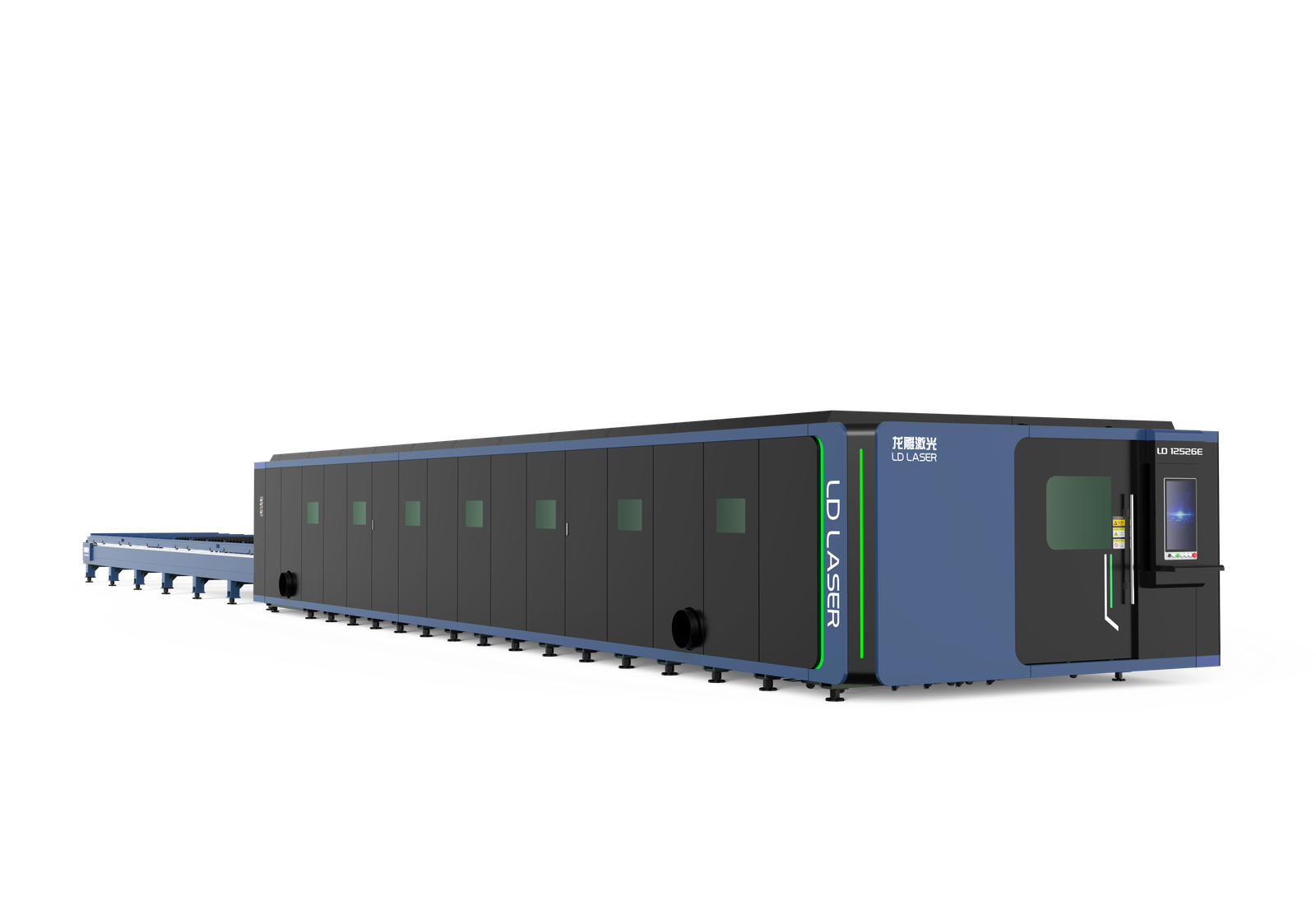
You’re witnessing a paradigm shift in tube laser cutting that’s redefining manufacturing precision. Current systems achieve ±0.01mm tolerances while processing complex geometries at unprecedented speeds, but emerging AI-driven predictive analytics and hybrid laser-plasma technologies promise to push these boundaries even further. As quantum computing integration approaches commercial viability and real-time adaptive control systems evolve, you’ll need to understand how these convergent technologies will fundamentally alter your production capabilities and competitive positioning.
Ključne ugotovitve
Revolutionary precision capabilities achieve ±0.05mm accuracy with fiber laser technology delivering energy densities up to 10MW/cm².
Cutting speeds reach 100 meters per minute with 40-60% faster processing rates than conventional methods.
AI-driven predictive analytics and machine learning predict material behavior with 99.7% accuracy, eliminating costly trial runs.
Multi-axis capabilities enable complex geometries like helical cuts and compound angles in single operations.
Quantum computing integration by 2028-2030 will provide 1000x faster path optimization and real-time processing calculations.
Revolutionary Precision Capabilities Transforming Manufacturing Standards
When you examine modern tube laser cutting systems, you’ll discover precision tolerances that consistently achieve ±0.05mm accuracy across complex geometries. These systems integrate advanced beam positioning technology s spletno stranjo . real-time feedback mechanisms, enabling you to maintain dimensional consistency throughout production runs.
You’re witnessing precision engineering that surpasses traditional fabrication methods by 300%. Servo-controlled rotation axes synchronize with multi-directional cutting heads, allowing you to execute intricate profiles without material repositioning. This eliminates cumulative positioning errors that plague conventional processes.
Manufacturing standards have evolved dramatically through closed-loop control systems that monitor cutting parameters continuously. You’ll achieve repeatability coefficients exceeding 99.8% across batch productions. Fiber laser technology delivers concentrated energy densities up to 10MW/cm², enabling you to cut through thick-walled tubes while maintaining microscopic kerf widths.
Advanced CAD/CAM integration translates complex designs directly into machine code, reducing human error variables. You’re accessing capabilities that transform theoretical designs into precise components with unprecedented accuracy levels.
Speed and Efficiency Gains Reshaping Production Timelines
Beyond achieving microscopic tolerances, you’re experiencing cutting speeds that reach 100 meters per minute on standard tube materials. Modern tube laser systems deliver 40-60% faster processing rates compared to conventional cutting methods, directly translating to substantial lead time reduction across your manufacturing pipeline.
Your production optimization benefits from automated loading systems that maintain continuous operation while one tube processes and another loads simultaneously. Advanced nesting algorithms maximize material utilization, reducing waste by 15-25% while maintaining peak cutting velocities.
Real-time power modulation adjusts laser intensity based on material thickness and geometry, eliminating slowdown periods traditionally required for parameter changes. You’re achieving complete tube processing—including complex geometries, holes, and notches—in single setups that previously demanded multiple operations.
These efficiency gains compress your typical 3-5 day production cycles into 8-12 hour windows, enabling same-day delivery capabilities that redefine customer expectations and competitive positioning in demanding manufacturing environments.
Complex Geometry Processing Breaking Traditional Design Limitations
Kot tube laser cutting technology eliminates angular constraints, you’re processing geometries that conventional methods can’t achieve. Multi-axis capabilities enable simultaneous cutting and piercing operations on curved surfaces, creating intricate patterns with tolerances within ±0.05mm. You’re fabricating components with variable cross-sections, helical cuts, and compound angles that previously required multiple manufacturing steps.
Design flexibility reaches new levels when you’re cutting intersecting holes, slots, and complex notches in single operations. Advanced beam delivery systems maintain consistent focal points across irregular surfaces, ensuring uniform cut quality regardless of tube diameter or wall thickness. You’re producing parts with integrated mounting features, custom flanges, and decorative elements directly during the cutting process.
This capability expansion translates to 40-60% reduction in secondary operations. You’re eliminating welding joints, reducing assembly time, and maintaining structural integrity through continuous material paths. Complex architectural elements, automotive chassis components, and aerospace structures now emerge as single-piece fabrications rather than assembled constructions.
Advanced Material Compatibility Expanding Application Possibilities
Modern cevni laserski sistemi accommodate an unprecedented range of materials, pushing processing capabilities far beyond traditional carbon steel applications. You’ll find contemporary machines cutting stainless steel, aluminum, titanium, Inconel, and specialized alloys with precision previously unattainable. These material innovations enable processing of wall thicknesses from 0.5mm to 25mm across diverse material types.
Advanced beam control technology adapts cutting parameters automatically based on material properties. You’re seeing real-time adjustments for thermal conductivity, reflectivity, and melting points. Aluminum processing has improved 40% in speed while maintaining edge quality standards. Titanium cutting now achieves tolerances within ±0.1mm consistently.
Application diversification spans aerospace components, medical device manufacturing, automotive exhaust systems, and architectural elements. You can process exotic materials like Hastelloy and duplex stainless steels that previously required specialized equipment. This expanded compatibility eliminates material restrictions, allowing engineers to specify ideal materials without compromising manufacturability or cost-effectiveness.
Industry-Specific Applications Driving Innovation Across Sectors
While material compatibility provides the foundation, sector-specific demands are reshaping tube laser cutting technology through targeted innovations that address unique manufacturing challenges. You’ll find automotive applications driving precision requirements for exhaust systems, chassis components, and fuel lines where tolerances reach ±0.05mm. Aerospace innovations demand even tighter specifications, with tube cutting systems achieving ±0.02mm accuracy for hydraulic lines and structural assemblies.
| Industrijski sektor | Precision Requirements |
|---|---|
| Avtomobilska industrija | ±0.05mm tolerance |
| Aerospace | ±0.02mm tolerance |
| Medicinski pripomočki | ±0.01mm tolerance |
| Energy/Oil & Gas | ±0.1mm tolerance |
| Construction | ±0.2mm tolerance |
You’re witnessing manufacturers integrate sector-specific software modules that optimize cutting parameters for each industry’s material specifications. Medical device manufacturers require micro-precision for catheter tubes, while energy sector applications prioritize speed for large-diameter pipeline components. These targeted innovations’re transforming tube laser cutting from a general manufacturing process into specialized solutions.
Integration With Smart Manufacturing and Automation Systems
These sector-specific innovations‘re now converging with extensive automation systems that transform laserski razrez cevi into intelligent manufacturing ecosystems. You’ll find smart systems orchestrating entire production workflows, from material handling through quality inspection. Real-time data analytics optimize cutting parameters automatically, adjusting power, speed, and focus based on material thickness variations and geometric complexity.
Automation integration extends beyond standalone machines. You’re implementing interconnected networks where tube laser systems communicate with inventory management, scheduling software, and downstream processes. Machine learning algorithms analyze production patterns, predicting maintenance needs and optimizing tool paths for maximum efficiency.
Advanced sensors monitor cutting quality continuously, triggering automatic adjustments when deviations occur. You’ll achieve consistent results through closed-loop feedback systems that maintain precise tolerances across extended production runs. This integration reduces operator intervention by 60-70%, while improving throughput and dimensional accuracy. Smart manufacturing platforms enable predictive analytics, helping you anticipate bottlenecks and optimize resource allocation across multiple production lines.
Emerging Technologies Shaping Tomorrow’s Tube Laser Solutions
As quantum computing applications emerge in manufacturing optimization, you’ll witness revolutionary changes in tube laser cutting capabilities that extend far beyond current automation boundaries. These quantum-enhanced systems will process complex geometric calculations in milliseconds, enabling real-time optimization of cutting paths across multiple tubes simultaneously.
| Technology | Implementation Timeline | Impact on Operations |
|---|---|---|
| Quantum Computing | 2028-2030 | 1000x faster path optimization |
| AI-Driven Predictive Analytics | 2025-2027 | 95% reduction in setup waste |
| Hybrid Laser-Plasma Systems | 2026-2028 | 40% increase in cutting speed |
| Digital Twin Integration | 2024-2026 | Real-time process validation |
Machine learning algorithms will predict material behavior with 99.7% accuracy, supporting sustainability initiatives through precise waste reduction. You’ll achieve significant cost reduction by eliminating trial runs and minimizing material consumption. Advanced sensor fusion technology will monitor microscopic thermal variations, automatically adjusting laser parameters to maintain consistent cut quality across varying material compositions and thicknesses.
Zaključek
You’re witnessing manufacturing’s most dramatic transformation in decades. These tube laser cutting breakthroughs will obliterate every production limitation you’ve ever faced. With ±0.01mm tolerances and lightning-fast processing speeds, you’ll achieve what seemed impossible just years ago. AI-driven predictive analytics will eliminate virtually all waste while quantum-enhanced systems process geometries that’ll redefine your design parameters. Your manufacturing capabilities won’t just improve—they’ll undergo complete metamorphosis, revolutionizing operativna učinkovitost beyond recognition.