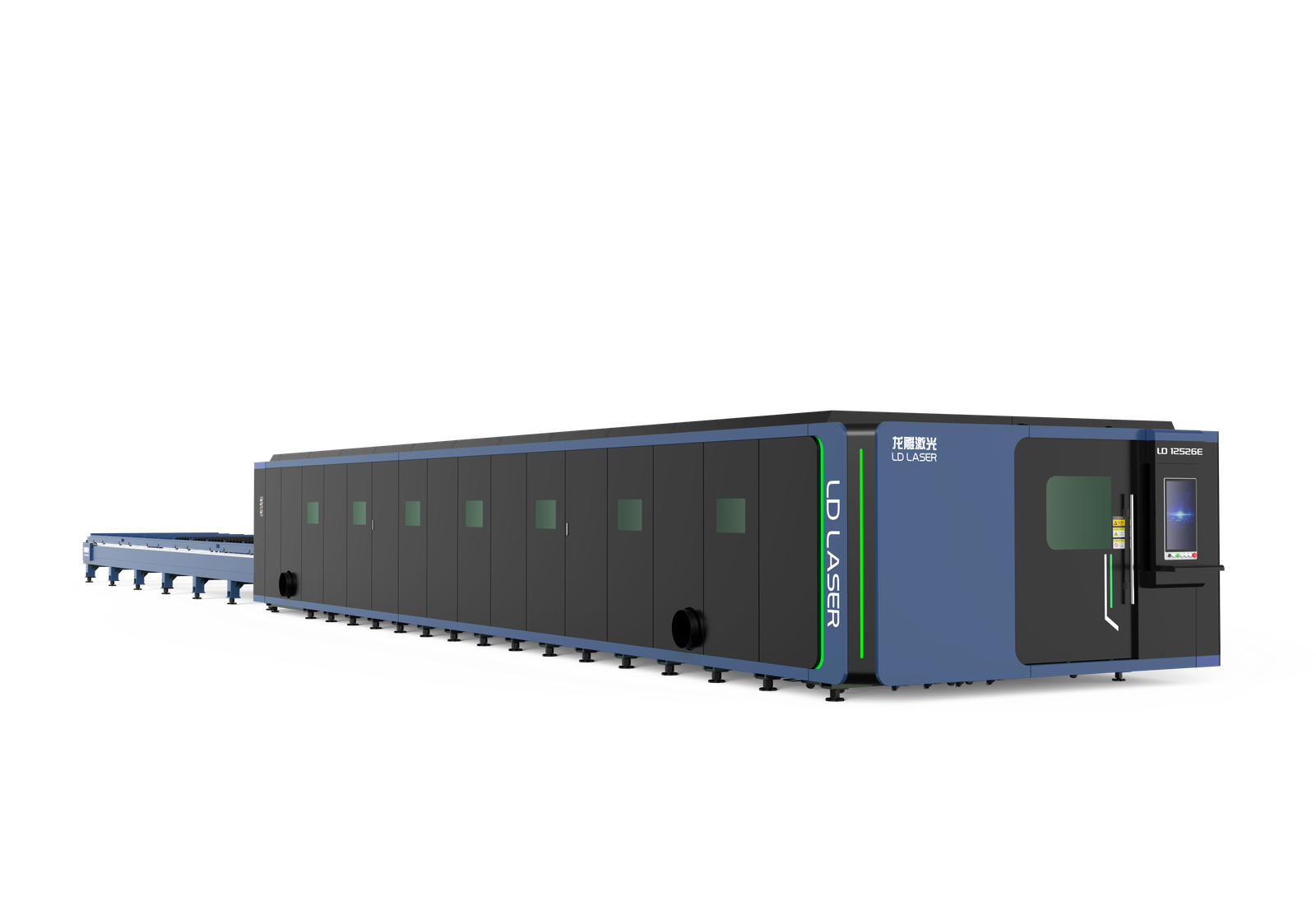
Modern laser cutting operations face persistent bottlenecks in material identification processes, where manual classification methods introduce significant delays and accuracy variations. Traditional approaches rely heavily on operator expertise and visual inspection, creating inconsistencies that directly impact cutting parameters and production efficiency. AI-powered positioning solutions now offer unprecedented material recognition capabilities through integrated sensor networks and machine learning algorithms. These systems promise to transform manufacturing workflows by eliminating human-dependent identification steps, though implementation challenges remain complex.
Önemli Çıkarımlar
AI-powered systems use computer vision and machine learning to automatically classify materials, reducing human error rates from 8-15% to near zero.
Sensor fusion combines optical cameras, infrared sensors, and ultrasonic transducers to accurately identify material properties in real-time.
Deep neural networks process spectral signatures and thermal responses to distinguish between similar materials like aluminum alloys versus steel.
Automated material detection reduces setup times and processing delays while improving throughput by 20-35% in laser cutting operations.
Smart positioning solutions optimize cutting parameters based on detected material properties, achieving 15-30% reduction in material waste.
The Limitations of Manual Material Identification in Modern Manufacturing
While modern lazer kesim sistemleri have achieved remarkable precision in their cutting capabilities, the manual identification of materials continues to introduce significant inefficiencies and errors into manufacturing workflows. Manual identification challenges manifest through operator inconsistency, where different technicians may classify identical materials differently based on visual assessment alone. This variability creates processing delays as operators spend considerable time verifying material properties before initiating cutting sequences.
Errors in classification occur frequently when materials share similar visual characteristics but require distinct cutting parameters. Misidentified aluminum alloys versus steel sheets can result in improper power settings, leading to incomplete cuts or thermal damage. Human error rates in material classification typically range from 8-15% in high-volume operations, directly impacting production throughput and material waste.
The cumulative effect includes extended setup times, increased scrap rates, and inconsistent output quality. These limitations become particularly problematic in facilities processing diverse material types, where manual verification creates bottlenecks that undermine overall manufacturing efficiency.
Core Components of AI-Powered Material Detection Systems
AI-powered material detection systems integrate three fundamental technological components that enable autonomous identification and positioning in laser cutting applications. Computer vision hardware systems capture high-resolution imagery and depth data, while machine learning algorithms process this visual information to classify material types and detect surface characteristics. Sensor fusion technologies combine multiple data streams from optical, thermal, and proximity sensors to provide thorough material analysis and precise positioning coordinates.
Computer Vision Hardware Systems
When implementing AI-powered material detection systems for laser cutting applications, the computer vision hardware architecture forms the foundation that determines system accuracy, processing speed, and operational reliability. The hardware configuration directly impacts image processing capabilities and system integration effectiveness within existing manufacturing workflows.
Critical hardware components include:
- High-resolution industrial cameras with specialized sensors optimized for material surface analysis and texture recognition
- Dedicated GPU processing units that accelerate real-time image processing algorithms and neural network inference calculations
- Precision lighting systems featuring controllable LED arrays that eliminate shadows and enhance material surface contrast
- Ruggedized mounting assemblies designed for industrial environments with vibration dampening and thermal management capabilities
These interconnected components work synchronously to capture, process, and analyze material characteristics with microsecond precision, enabling seamless integration into automated laser cutting operations.
Machine Learning Algorithm Integration
Machine learning algorithms transform the raw image data captured by computer vision hardware into actionable material identification and classification decisions. Deep neural networks process pixel-level features to distinguish between material types, thicknesses, and surface characteristics critical for laser cutting parameter enhancement. Convolutional neural networks excel at pattern recognition tasks, identifying subtle variations in material grain, texture, and reflectivity that determine cutting strategies.
Predictive modeling frameworks analyze historical cutting performance data to correlate material properties with ideal laser parameters. These models continuously refine accuracy through feedback loops that capture real-time cutting results. Active learning systems automatically identify ambiguous material samples requiring human verification, reducing manual labeling overhead while improving classification confidence. The integration pipeline processes data streams in real-time, delivering material classifications within milliseconds to maintain production efficiency.
Sensor Fusion Technologies
Multiple sensor technologies converge to create thorough material detection systems that exceed the capabilities of individual sensing modalities. Sensor fusion architectures integrate diverse measurement streams to enhance accuracy and reliability in automated laser cutting operations.
Critical components include:
- Optical cameras – Capture surface texture patterns and geometric features for dimensional analysis
- Infrared sensors – Measure thermal conductivity properties and detect temperature variations across material surfaces
- Ultrasonic transducers – Determine material density and internal structure characteristics through acoustic wave propagation
- Electromagnetic field sensors – Identify metallic composition and conductivity parameters
Data synergy emerges when algorithms correlate measurements from multiple sources simultaneously. This multi-modal approach eliminates single-point failure risks while compensating for individual sensor limitations. Processing pipelines weight each sensor input based on material type and environmental conditions, optimizing detection confidence levels for industrial production environments.
Computer Vision Technologies for Real-Time Material Analysis
Advanced computer vision algorithms analyze material properties in real-time through sophisticated imaging sensors that capture detailed surface characteristics, thickness variations, and compositional data during laser cutting operations. These systems employ high-resolution cameras, multispectral sensors, and structured light projectors to generate thorough material profiles within milliseconds.
Real time analysis enables immediate identification of material types, including metals, polymers, composites, and ceramics, through texture analysis, reflectance patterns, and geometric measurements. Machine learning models process captured imagery to classify materials with accuracy rates exceeding 95% across diverse manufacturing environments.
Visual recognition algorithms detect surface defects, contamination, and material inconsistencies that could compromise cutting quality. Integration with laser positioning systems allows automatic parameter adjustment based on identified material properties. Deep learning networks continuously improve recognition capabilities through exposure to expanded material databases, enhancing classification precision for exotic alloys and composite materials in industrial applications.
Machine Learning Algorithms for Thickness and Composition Recognition
Machine learning algorithms process multi-sensor data streams to extract material thickness and composition parameters through trained neural network architectures. The training process requires extensive datasets containing sensor readings correlated with verified material properties to establish accurate pattern recognition capabilities. Real-time classification systems achieve peak performance when neural networks maintain processing speeds under 50 milliseconds while preserving accuracy rates above 95% for industrial laser cutting applications.
Sensor Data Processing
Raw sensor data transforms into actionable intelligence through sophisticated machine learning algorithms that analyze material properties in real-time. Proper sensor calibration guarantees data accuracy throughout the processing pipeline, enabling precise material identification and ideal cutting parameters.
Advanced processing techniques convert multiple sensor inputs into thorough material profiles:
- Spectral analysis algorithms process optical sensor data to identify material composition signatures and surface characteristics
- Thickness measurement fusion combines ultrasonic and laser displacement data for accurate dimensional profiling across varying material densities
- Real-time filtering systems eliminate environmental noise and vibration interference while preserving critical material property signals
- Pattern recognition networks correlate sensor outputs with known material databases to classify unknown specimens with 98% accuracy
These integrated processing systems deliver instantaneous material identification, enabling automated laser parameter refinement without operator intervention.
Neural Network Training
Training neural networks for lazer kesim applications requires extensive datasets encompassing diverse material compositions and thickness variations to achieve reliable recognition performance. Dataset diversity importance cannot be overstated, as networks must distinguish between metals, polymers, ceramics, and composites across multiple thickness ranges. Supervised learning algorithms process spectral signatures, thermal responses, and geometric features extracted from sensor data to classify materials accurately.
Transfer learning applications notably accelerate training by leveraging pre-trained models from related domains, reducing computational requirements and dataset size constraints. Convolutional neural networks excel at pattern recognition in spectral data, while recurrent networks handle temporal sequences during dynamic scanning processes. Cross-validation techniques guarantee robust model generalization across manufacturing environments. Training protocols incorporate data augmentation strategies to simulate varying environmental conditions, surface finishes, and measurement noise levels, ultimately producing reliable classification systems for automated laser cutting operations.
Real-Time Classification Accuracy
Contemporary classification systems achieve 95-98% accuracy rates when identifying material thickness and composition in real-time laser cutting environments, with performance metrics varying considerably across different algorithmic approaches. Real time processing demands optimization between computational efficiency and classification precision, requiring careful algorithm selection based on specific manufacturing requirements.
Performance benchmarks for industrial classification algorithms demonstrate measurable differences:
- Convolutional Neural Networks: 97-98% accuracy with 15-20ms processing latency
- Support Vector Machines: 94-96% accuracy with 5-8ms processing latency
- Random Forest Ensembles: 92-95% accuracy with 3-5ms processing latency
- Gradient Boosting Models: 95-97% accuracy with 8-12ms processing latency
Accuracy degradation occurs when material surface conditions deviate from training parameters, necessitating robust preprocessing pipelines and continuous model validation protocols to maintain operational reliability across diverse production scenarios.
Sensor Integration and Multi-Modal Data Fusion Approaches
When multiple sensor technologies converge within lazer kesim sistemleri, the resulting data streams require sophisticated fusion algorithms to extract actionable positioning intelligence. Vision cameras, laser distance sensors, and thermal imaging devices generate heterogeneous datasets that demand precise temporal alignment and spatial correlation.
Sensor calibration techniques establish geometric relationships between disparate measurement modalities, ensuring consistent coordinate transformation across the fusion pipeline. Intrinsic and extrinsic calibration parameters compensate for optical distortions and mounting variations, while cross-sensor validation protocols maintain measurement accuracy throughout operational cycles.
Data synchronization methods address temporal discrepancies between sensor acquisition rates and processing delays. Hardware-triggered capture sequences eliminate timestamp drift, while software-based interpolation algorithms reconcile asynchronous measurements. Kalman filtering frameworks integrate multi-modal observations with motion models, producing refined material position estimates that exceed individual sensor capabilities.
Weighted fusion strategies dynamically adjust sensor contributions based on environmental conditions and material properties, optimizing positioning accuracy across diverse cutting scenarios.
Automated Parameter Optimization Based on Material Properties
Although traditional lazer kesim sistemleri rely on operator expertise to configure cutting parameters, automated optimization algorithms now analyze material properties in real-time to establish ideal processing conditions. These intelligent systems utilize machine adaptability techniques to adjust laser power, cutting speed, and focal positioning based on detected material characteristics.
The optimization process incorporates multiple parameters through automated calibration methods:
- Thermal conductivity analysis determines heat dissipation rates to prevent material warping and adjust cooling strategies accordingly
- Thickness measurement integration modifies laser intensity and feed rates to maintain consistent cut quality across varying material dimensions
- Surface reflectivity assessment optimizes beam absorption by adjusting wavelength settings and pulse frequencies for maximum energy transfer
- Chemical composition evaluation identifies alloy content and material hardness to prevent tool wear and guarantee clean edge finishing
This data-driven approach eliminates trial-and-error methodologies, reducing material waste while maintaining consistent cut precision across diverse material types and thicknesses.
Implementation Strategies for Existing Laser Cutting Operations
While upgrading to AI-powered positioning systems offers substantial performance benefits, manufacturers must evaluate their current infrastructure capabilities before initiating integration protocols. Legacy laser cutting operations typically require systematic assessment of hardware compatibility, software architecture, and network connectivity requirements. Integration challenges often emerge from incompatible communication protocols between existing controllers and AI positioning modules.
| Implementation Phase | Key Considerations |
|---|---|
| Infrastructure Assessment | Evaluate existing control systems, network bandwidth, sensor compatibility |
| Software Integration | API development, data pipeline establishment, algorithm calibration |
| Hardware Modifications | Sensor mounting, controller upgrades, safety system updates |
| Training Protocol | Operator certification, maintenance procedures, troubleshooting protocols |
| Performance Validation | Accuracy testing, throughput analysis, quality metrics verification |
Manufacturers achieve ideal operational efficiency through phased implementation approaches, beginning with pilot programs on single cutting stations before scaling across entire production facilities. This methodology minimizes disruption while validating system performance parameters.
Performance Metrics and ROI Analysis for Smart Positioning Systems
How effectively can manufacturers quantify the financial impact of AI-powered positioning systems on their laser cutting operations? Performance evaluation requires systematic measurement of specific ROI metrics that demonstrate operational improvements and cost reductions.
Critical performance indicators include:
- Material utilization efficiency – Measuring waste reduction percentages and sheet yield optimization through intelligent nesting algorithms
- Setup time reduction – Quantifying decreased manual positioning requirements and automated material recognition speeds
- Quality consistency metrics – Tracking defect rates, rework incidents, and dimensional accuracy improvements
- Labor productivity gains – Calculating operator time savings and skill requirement changes
ROI metrics typically show payback periods ranging from 8-18 months, depending on production volume and material costs. Manufacturers achieve 15-30% material waste reduction while simultaneously improving throughput by 20-35%. Performance evaluation frameworks must account for both direct cost savings and indirect benefits such as reduced operator training requirements and enhanced production flexibility across diverse material types.
Future Developments in Intelligent Manufacturing and Material Recognition
As manufacturing systems evolve toward greater autonomy, intelligent material recognition technologies are advancing beyond current optical scanning capabilities to incorporate multi-sensor fusion approaches that combine computer vision, spectroscopic analysis, and tactile feedback systems.
| Technology Domain | Current Capability | Projected Enhancement |
|---|---|---|
| Machine Learning | Pattern recognition | Autonomous decision-making |
| Sensor Integration | Single-point detection | Multi-modal data fusion |
| Predictive Analytics | Post-process optimization | Real-time parameter adjustment |
| Process Automation | Rule-based responses | Adaptive learning algorithms |
Intelligent automation will enable laser cutting systems to predict material behavior before processing begins, utilizing predictive analytics to optimize cutting parameters based on historical performance data. Advanced neural networks will process material composition, thickness variations, and surface conditions simultaneously, creating extensive material profiles that inform cutting strategies. Future systems will demonstrate self-calibrating capabilities, automatically adjusting laser power, speed, and focus position based on real-time material assessment, ultimately achieving autonomous operation with minimal human intervention.
Sonuç
AI-powered material identification systems function as the central nervous system of modern laser cutting operations, processing multi-sensor data streams through sophisticated algorithms to deliver precise real-time classifications. Performance metrics demonstrate measurable improvements in throughput efficiency, waste reduction, and parameter optimization accuracy. Implementation data indicates rapid ROI achievement through decreased processing delays and enhanced cutting precision. These integrated solutions establish the foundation for autonomous manufacturing workflows, where intelligent positioning systems continuously adapt cutting parameters based on instantaneous material property recognition.